


More news on this day
Russian air travel is facing fresh turbulence as a wave of cancellations and delays at Saint Petersburg’s Pulkovo Airport and Moscow’s Vnukovo Airport disrupts journeys for thousands of passengers and underscores the growing fragility of the country’s aviation network.
Get the latest news straight to your inbox!
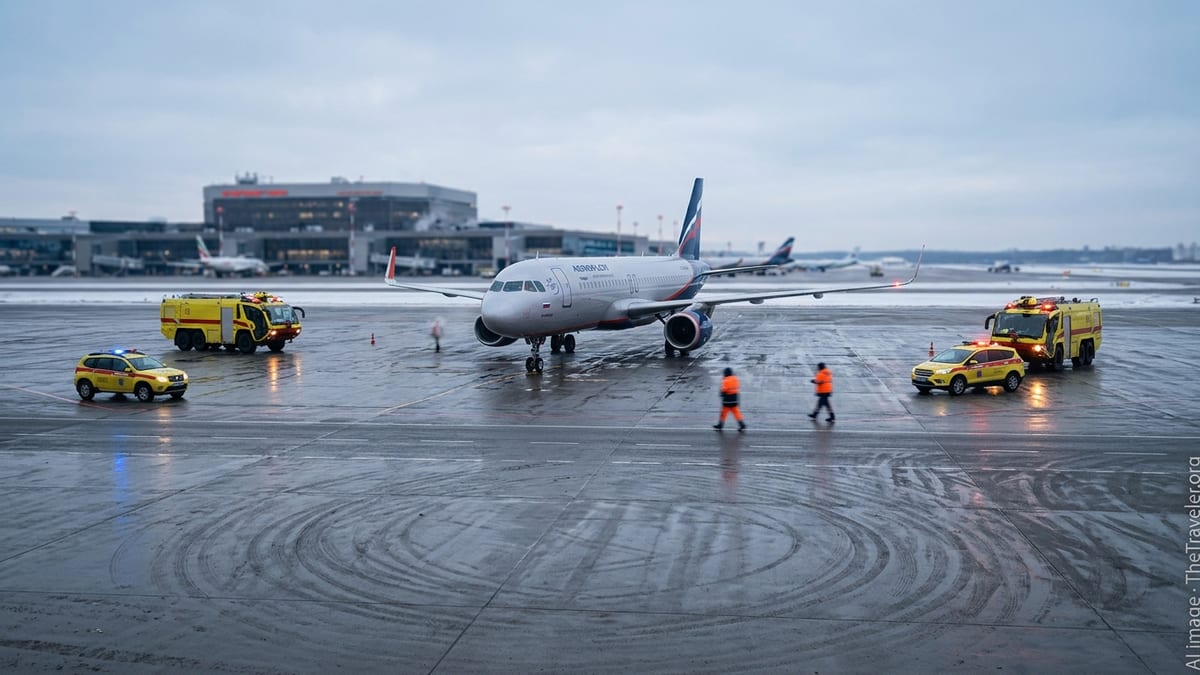
Disruptions Cascade Across Pulkovo and Vnukovo
Flight operations at Pulkovo and Vnukovo have come under renewed strain in early June, with publicly available data and local media reports indicating around 40 flights canceled or heavily disrupted across the two hubs within a short window. Departure boards at both airports showed clusters of scrapped services alongside long lists of delays, leaving passengers grappling with missed connections and rapidly changing itineraries.
In Saint Petersburg, reports from regional outlets describe Pulkovo repeatedly moving into a restricted mode of operation as airspace closures were introduced and then lifted. One recent episode on June 6 led to the airport suspending arrivals and departures for several hours, before later resuming normal activity. The early morning shutdown translated into dozens of delayed services and contributed to a spike in cancellations on routes linking Russia’s northern capital with Moscow and other domestic destinations.
In Moscow, Vnukovo’s operating pattern has alternated between partial closures and a so called coordinated regime in which each takeoff and landing requires additional approval. Coverage from Russian business and city news platforms notes that Vnukovo, along with other Moscow airports, has periodically halted or sharply restricted traffic as airspace rules tighten, with some of the most recent disruptions concentrated in the second half of May and the first half of June.
Data collated by aviation observers and specialist travel media shows that, across several waves of restrictions in May and June, roughly 40 flights were canceled outright at Moscow airports, with Vnukovo accounting for a significant share. When combined with the cancellations and missed rotations at Pulkovo during its temporary shutdowns, the result has been a sustained spell of disruption felt across Russia’s domestic network.
Security Concerns Drive Repeated Airspace Closures
The latest operational turmoil is closely linked to security measures in western Russia, particularly the response to Ukrainian drone activity. Publicly available information from aviation regulators and coverage by Russian and international outlets describe how temporary flight restrictions have been introduced around major cities following suspected drone strikes or perceived threats, prompting authorities to close or heavily limit access to the skies.
Saint Petersburg’s Pulkovo has been at the center of several such episodes since the spring, with local press recounting short notice decisions to halt arrivals and departures as airspace above and around the city was closed. On some occasions, the restrictions have coincided with reported attacks on energy infrastructure in the wider region, triggering heightened caution in the management of air traffic.
Vnukovo, one of Moscow’s key international gateways, has frequently appeared in notices about adjusted flight regimes. Reports indicate that at various points in recent weeks, Vnukovo has only been able to accept flights that were individually cleared in advance, a practice that sharply reduces capacity and increases the risk of last minute delays and cancellations. Similar measures have, at times, also affected other Moscow airports, reinforcing the sense of a system operating in a state of rolling contingency.
Analysts following the Russian aviation sector note that these disruptions are not isolated incidents but part of a pattern established since the start of the full scale war in Ukraine in 2022. Several airports in southern Russia remain completely closed to commercial traffic, and major hubs such as Pulkovo and the Moscow airports continue to face intermittent interruptions whenever security concerns intensify.
Impact on Passengers, Airlines and Regional Connectivity
For travelers, the practical effects of this instability are becoming increasingly visible. Russian travel media and social channels have featured accounts of passengers stranded overnight or diverted to distant cities as flight plans change with little warning. In some cases, aircraft have been routed to alternative airports hundreds of kilometers away when primary gateways such as Vnukovo or Pulkovo suddenly restricted operations.
Airlines are left to manage the operational fallout, juggling aircraft and crew assignments in a network already constrained by sanctions and limited access to spare parts and new jets. Published commentary by aviation specialists suggests that carriers serving Russia have had to build in greater schedule slack and contingency planning, accepting lower aircraft utilization in order to preserve reliability in a volatile operating environment.
The repeated airspace closures and cancellations also carry broader economic implications. Pulkovo functions as the main air bridge between Saint Petersburg and the rest of Russia, while Vnukovo serves both domestic and international routes, including popular leisure links to Turkey and other nearby markets. Each wave of disruption complicates cargo flows, business travel and tourism at a time when Russia’s transport system is already adjusting to new geopolitical and commercial realities.
Regional connectivity is particularly vulnerable, as smaller cities that rely on transfers via Moscow or Saint Petersburg can find themselves suddenly cut off when key hub flights are withdrawn. Observers point out that when a cluster of departures from Vnukovo or Pulkovo is canceled, it can sever onward links to provincial destinations, forcing travelers onto overnight trains or long distance road journeys instead.
New Rules and Long Term Questions for Russian Aviation
Beyond the immediate disruptions, recent regulatory changes hint at a more permanent reshaping of flight operations in western Russia. A proposal highlighted by aviation organizations and international media would bar most civilian aircraft from flying below a certain altitude in the Moscow air zone from early June, effectively tightening control over low level traffic around the capital. While scheduled and charter flights are expected to receive exemptions, industry observers warn that such measures increase complexity for pilots and air traffic controllers.
At the same time, Russia’s aviation infrastructure is under pressure from sanctions, financing constraints and evolving ownership structures. Studies by transport researchers have already emphasized how Pulkovo’s resilience has been tested by a loss of international routes and heightened security demands since 2022. The latest interruptions at Pulkovo and Vnukovo illustrate how these structural challenges now intersect with acute security concerns in the airspace above them.
Travel experts who monitor Russian routes say that passengers planning to use these airports in the coming weeks should be prepared for short notice schedule changes, longer connection times and potential diversions. Publicly available guidance from airlines operating to and from Russia increasingly stresses the importance of checking flight status close to departure and building in additional time when connecting through Moscow or Saint Petersburg.
With the summer travel season approaching, the outlook for Russian aviation remains uncertain. If security tensions persist and further airspace restrictions are introduced, episodes of mass delays and waves of cancellations at hubs like Pulkovo and Vnukovo may become a recurring feature of the country’s travel landscape, rather than isolated shocks. For now, the latest bout of disruption stands as a stark reminder of how quickly Russia’s flight network can be thrown into chaos.