


More news on this day
Operations at Hangzhou Xiaoshan International Airport have been severely disrupted as a wave of 153 delayed flights triggered cascading congestion, long queues and widespread schedule changes across one of eastern China’s busiest aviation hubs.
Get the latest news straight to your inbox!
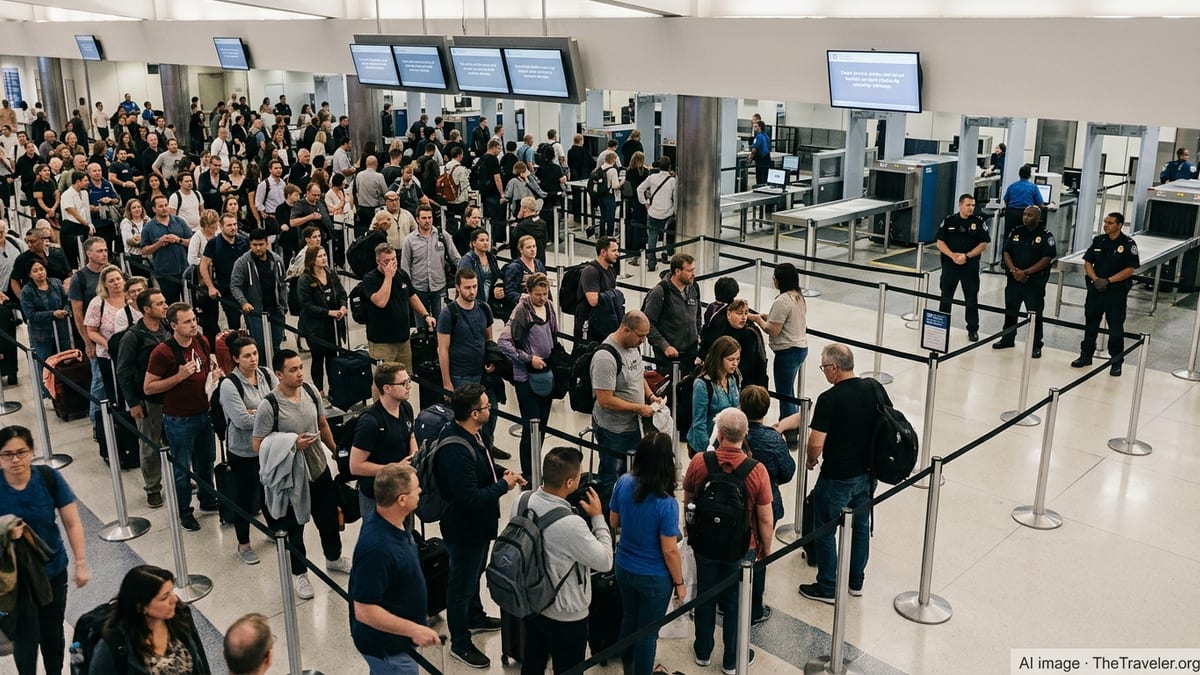
Major East China Hub Buckles Under Intense Strain
Hangzhou Xiaoshan International Airport, which serves the capital of Zhejiang province and forms a key node in the Yangtze River Delta air network, has faced growing operational pressure in recent months. Publicly available information shows that the airport’s T4 terminal was designed to handle tens of millions of passengers a year, yet surging demand and tight scheduling have left little room to absorb shocks when disruption occurs.
The latest wave of 153 delayed flights has pushed the system beyond its limits, with departure halls filling rapidly and passengers reporting hours of uncertainty as departure times were repeatedly revised. Tracking data and aviation dashboards indicate that both domestic and international services have been affected, including routes linking Hangzhou with Seoul, Tashkent and other regional hubs.
In some cases, flights into Hangzhou experienced rolling delays that rippled through outbound schedules. Real time status updates for services such as Juneyao Airlines’ Seoul Hangzhou route and Qanot Sharq’s Tashkent Hangzhou link show late arrivals, gate changes and compressed turnaround windows, compounding pressure on ground operations.
The sheer volume of late running flights has also strained connections to other Chinese hubs, including Shanghai and Beijing, as airlines struggled to reassign aircraft and crews while maintaining already tight timetables.
Regulatory Scrutiny and Earlier Warning Signs
The disruption has not emerged in isolation. Earlier this year, China’s aviation regulator publicly highlighted performance issues at several large airports, including Hangzhou Xiaoshan, after repeated episodes of congestion and flight delays. Public statements from the regulator indicated that approvals for new routes and additional services would be restricted at underperforming hubs until on time performance and passenger handling improved.
Those measures were widely interpreted within the industry as a warning that key airports were operating near or beyond sustainable capacity. Hangzhou’s latest episode of 153 delays appears to confirm that the system remains vulnerable when adverse conditions or operational bottlenecks align.
Aviation analysts note that Hangzhou has rapidly grown into an important alternative gateway to nearby Shanghai, attracting both full service and low cost carriers. This growth has helped disperse traffic in the Yangtze River Delta but has also created new coordination challenges when flight banks overlap and bad weather, crew shortages or technical issues emerge at multiple airports simultaneously.
The current disruption is likely to invite fresh scrutiny of how flight slots, ground handling resources and runway usage are managed at Hangzhou, especially during peak morning and evening waves when schedule density is highest.
Knock On Effects Across Asian and Global Networks
The Hangzhou turmoil is unfolding against a backdrop of wider turbulence across global aviation. Recent coverage has documented severe travel chaos at major airports from Shanghai Pudong and Houston Bush Intercontinental to European hubs such as Amsterdam, London and Paris, where clusters of cancellations and hundreds of delays have become increasingly common.
Within Asia, recent thunderstorms in northern Taiwan temporarily halted ground operations at Taipei Songshan Airport, triggering delays across carriers and disrupting services on short haul regional routes. Separately, Shanghai Pudong International Airport has reported more than 100 combined cancellations and delays in a single episode, underscoring how quickly congestion at one hub can radiate through interconnected networks.
Hangzhou’s 153 delayed flights are feeding into this broader pattern. Regional arrivals into the city are running late, forcing airlines to compress ground times or reschedule onward departures. Some China bound itineraries that previously routed through other hubs have been shifted through Hangzhou as carriers recalibrate their networks, adding further complexity when irregular operations strike.
This web of interdependence means that today’s disruption in Hangzhou can lead to missed connections in Seoul or Singapore, late evening arrivals in Europe, or early morning knock ons at North American airports, as aircraft and crews arrive hours behind schedule.
Passenger Experience: Queues, Missed Connections and Uncertain Timelines
For travelers on the ground, the operational picture translates into crowded terminals, long check in and security lines, and repeated gate changes. Images shared via social platforms from previous disruption episodes at Chinese and international airports suggest that passengers often spend extended periods waiting for updates as airlines juggle aircraft rotations and crew duty limits.
With 153 flights running late at Hangzhou Xiaoshan, travelers are likely confronting similar conditions. Publicly accessible delay dashboards commonly show rolling expected departure and arrival times, making it difficult for passengers to predict whether tight connections can be maintained or whether overnight accommodation and rebooking will be required.
Consumer advocacy organizations frequently advise passengers caught in such events to monitor airline apps and airport information boards closely, keep boarding passes and receipts, and document disruptions in case compensation or reimbursement is available under carrier policies or applicable regulations. In China, compensation practices can vary by airline and by cause of disruption, and observers note that complex weather and operational scenarios often blur the lines of responsibility.
Families traveling with children or elderly passengers, as well as those on long haul itineraries connecting onward to Europe or North America, face particular stress when a concentrated wave of delays reduces options for same day recovery flights.
Capacity, Weather and Structural Pressures Raise Future Risks
The Hangzhou delays highlight structural pressures that extend beyond a single airport. Industry reporting in recent weeks has pointed to global themes of rising demand, tight aircraft and crew availability, and more frequent weather related disruptions across key travel seasons. Jet fuel price volatility and cautious capacity planning have also limited spare buffers in airline networks.
In Europe, recent storms led to more than two thousand delays and over one hundred cancellations in a single day, while separate events in North America and the Middle East have seen hundreds of flights disrupted in concentrated windows. These patterns suggest that even well equipped hubs can quickly become overwhelmed when several risk factors coincide.
For Hangzhou, the immediate priority is to clear the backlog created by 153 delayed services and to stabilize departure and arrival flows. In the longer term, aviation specialists are likely to focus on whether additional investments in airside capacity, terminal processes and data driven traffic management can reduce the likelihood that similar disruption cascades through the airport during future peaks.
As airlines and regulators review performance data from this latest episode, passengers across the region may continue to face a period of heightened unpredictability, where even routine journeys are vulnerable to sudden, large scale schedule breakdowns.