


More news on this day
Persistent monsoon rain and fresh alerts from the India Meteorological Department have prompted airlines to issue travel advisories for passengers flying to and from Mumbai and Delhi, as waterlogging, low visibility and weather-related restrictions continue to disrupt busy domestic and international routes.
Get the latest news straight to your inbox!
Monsoon intensifies over western and northern India
Published coverage indicates that the southwest monsoon has strengthened across large parts of India in early July, with Mumbai and the wider Maharashtra coast among the worst affected. The India Meteorological Department (IMD) has maintained higher-level alerts for the Mumbai region across several days, highlighting the risk of heavy to very heavy rainfall and localised extremely heavy spells.
In Mumbai, reports describe prolonged downpours leading to flooded roads, disrupted suburban rail services and delays to airport operations. Local authorities have closed schools on select days as a precaution, while residents have shared images of submerged streets and vehicles in multiple neighbourhoods.
Further north, IMD forecasts and national broadcasts point to continued rain over Delhi and adjoining areas, with a series of yellow alerts in place for light to moderate showers, thunderstorms, lightning and gusty winds. While rainfall intensity in the capital has generally been lower than in Mumbai, intermittent heavy spells have still affected surface traffic and arrivals at Indira Gandhi International Airport.
IMD’s extended-range outlook through mid-July indicates that unsettled conditions are likely to persist over parts of western and northern India, raising the likelihood of further day-to-day disruption along key air corridors linking Mumbai and Delhi with the rest of the country and overseas destinations.
Airlines issue advisories for Mumbai and Delhi flights
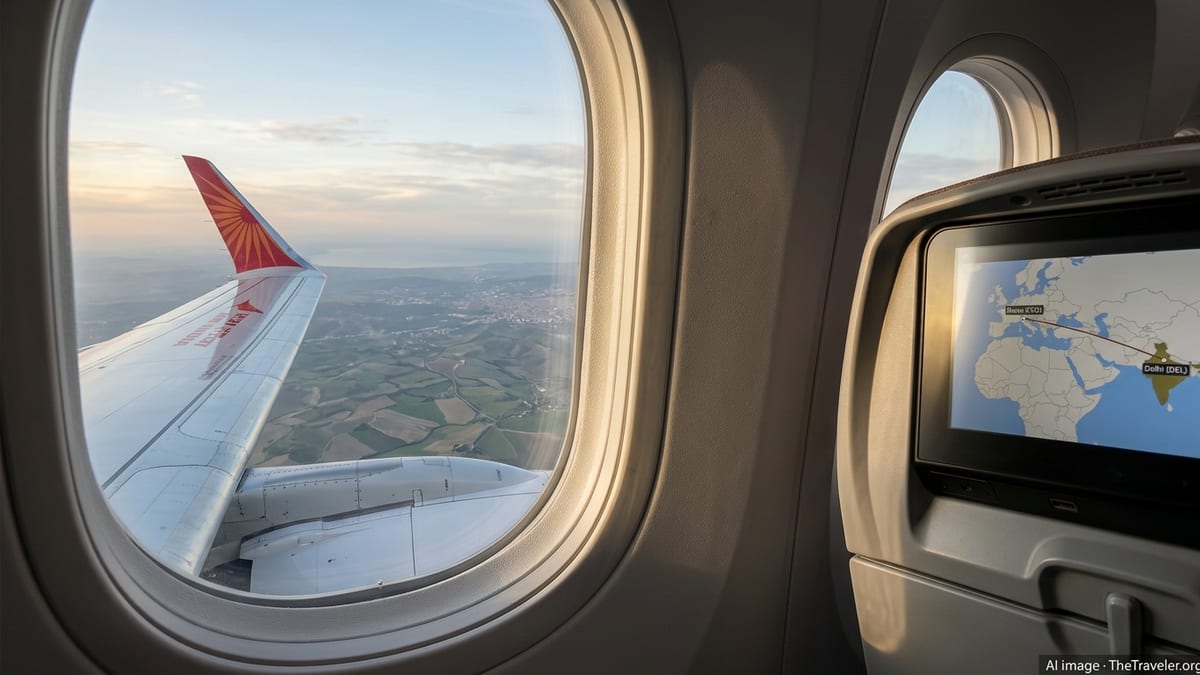
Against this backdrop, multiple carriers have updated travel advisories for passengers booked on Mumbai and Delhi services. According to recent news reports, Air India has urged travellers flying to and from both cities to monitor their flight status closely and allow extra time to reach the airport. The advisory highlights the potential for delays, rescheduling and short-notice cancellations caused by weather-related constraints.
Separate coverage from aviation and business outlets notes that IndiGo and Akasa Air have also warned of disruptions at Mumbai’s Chhatrapati Shivaji Maharaj International Airport, citing the cumulative impact of heavy rain, waterlogged access roads and air-traffic flow controls. Advisories emphasise that flight timings may change repeatedly through the day as airport operations adjust to shifting conditions.
While Delhi has not seen the same level of rainfall as Mumbai, published updates indicate that airlines are keeping a close watch on IMD’s outlook for thunderstorms and strong winds around the capital. Carriers typically factor in weather margins for both departure and arrival airports, which means instability in either city can ripple across the busy Mumbai–Delhi shuttle and onward connections.
Industry commentary suggests that the objective of these advisories is primarily to encourage passengers to verify schedules in real time, use digital channels for check-in and rebooking where available, and avoid unnecessary congestion at terminals during periods of disruption.
Operational impact at Mumbai and Delhi airports
Operational data released through media reports shows that Mumbai Airport has borne the brunt of recent weather, with several hundred flights delayed or cancelled on some of the wettest days. Intermittent runway closures, reduced arrival rates and temporary holds for aircraft on the ground and in the air have all been reported as heavy showers move across the coastal city.
Travel coverage from Gulf and South Asian outlets cites delays on international routes linking Mumbai with West Asia, as well as knock-on effects on domestic connections. Passengers transiting through the city have been advised to plan for longer layovers or flexible itineraries in case onward flights are rescheduled.
In Delhi, the impact has been more uneven but still notable. On days with intense cloudbursts or prolonged thunderstorms, visibility and wind conditions have constrained movements at Indira Gandhi International Airport, contributing to delays and, in some cases, precautionary diversions. Publicly available information from aviation trackers indicates that congested time bands in the morning and evening rush can be particularly sensitive to even short periods of adverse weather.
Airport operators in both cities have reminded travellers through public channels that weather-related constraints can affect baggage delivery, security queuing and ground transport access, even when flights ultimately operate close to schedule.
IMD alerts guide passenger expectations and planning
For travellers, the colour-coded alerts issued by the IMD have become an important guide to likely disruption. Red and orange alerts in Mumbai in recent days have signalled a high probability of heavy to extremely heavy rainfall over limited time windows, conditions that tend to trigger surface flooding, slower road traffic and infrastructure strain.
In Delhi, yellow alerts for rain and thunderstorms indicate lower overall rainfall totals but still point to potential short bursts of intense weather that can coincide with peak travel hours. National radio and television bulletins have highlighted the possibility of lightning and strong gusts, both of which can influence air-traffic management decisions.
Travel analysts note that the growing availability of radar imagery, short-term forecasts and city-specific warnings has made it easier for passengers to anticipate when the risk of disruption is highest. However, the fast-changing nature of monsoon systems means that conditions can improve or deteriorate within a few hours, and advisories are typically framed as cautionary rather than definitive predictions.
For this reason, experts recommend that travellers treat IMD alerts as broad indicators of risk while relying on official airline and airport channels for operational updates on specific flights, gates and terminal changes.
What passengers flying to and from Mumbai and Delhi should know
Given the current pattern of heavy rain and evolving IMD alerts, passengers planning to travel via Mumbai or Delhi in the coming days are likely to encounter a degree of uncertainty around departure and arrival times. Reports indicate that many airlines are waiving certain change fees during periods of severe disruption, particularly where schedules have already been significantly altered.
Travel coverage suggests that reaching the airport early, especially in Mumbai, can mitigate some of the stress associated with weather-related queues at security, check-in and immigration. At the same time, arriving too far in advance carries its own inconvenience when terminals are crowded and seating is limited, prompting calls for better real-time communication from carriers and airport operators.
Passengers with tight connections, including those heading onward to Europe, North America or the Gulf, are being encouraged by travel advisors quoted in the media to build additional buffer time into itineraries during the peak monsoon weeks. Those with non-essential trips may find it easier to reschedule away from days when red or orange alerts coincide with historically busy travel periods.
For now, the message from airlines, forecasters and travel commentators is consistent: the monsoon is firmly established over western and northern India, and while most flights are still operating, the combination of heavy rain, saturated infrastructure and safety-driven air-traffic controls means that flexibility and up-to-the-minute information are essential for anyone flying through Mumbai and Delhi.