


More news on this day
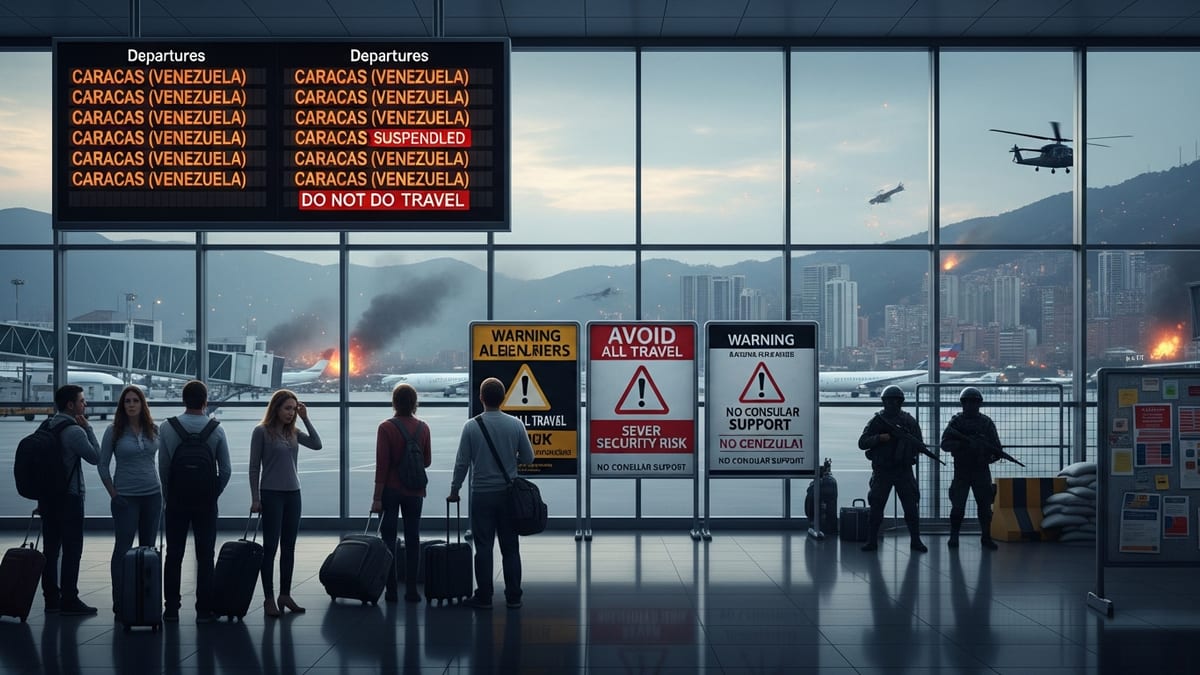
U.S. travel guidance has shifted again as the government updates its strictest Level 4 “Do Not Travel” advisories, underscoring mounting security risks, conflict and fragile infrastructure across several destinations where assistance to Americans may be severely limited.
Get the latest news straight to your inbox!
Latest Changes Highlight Escalating Instability
Recent updates on the U.S. government’s travel advisory site show a renewed emphasis on Level 4 “Do Not Travel” warnings for countries facing armed conflict, pervasive crime and political unrest. The adjustments arrive amid ongoing crises from the Middle East to parts of Africa and the Caribbean, where violence and institutional fragility continue to disrupt daily life.
Country pages reviewed in July 2026 indicate that destinations such as Haiti, the Democratic Republic of the Congo, the Central African Republic and Syria remain under Level 4 advisories due to overlapping threats that include crime, terrorism, kidnapping, civil unrest and health-system strain. Publicly available information shows that the list is periodically refreshed as conditions change on the ground.
In West Africa, the travel advisory for Côte d’Ivoire was updated on July 9, 2026, and now carries a Level 4 “Do Not Travel” designation. The notice cites security concerns and urges travelers to have independent evacuation plans that do not rely on U.S. government support, signaling how volatile the situation is considered to be.
In Eastern Europe and Central Asia, Russia continues under a Level 4 warning, reflecting security concerns linked to the war in Ukraine, military measures inside Russia and a heightened risk landscape in certain regions. The advisory stresses that conditions can deteriorate without warning, complicating travel and the ability to safely depart.
What a Level 4 ‘Do Not Travel’ Warning Really Means
According to explanatory materials on the State Department’s advisory framework, Level 4 is the highest alert the United States issues for foreign destinations. It is reserved for places where the threat environment is considered extreme enough that American travelers are urged not to go at all, or to leave as soon as it is safe to do so if already present.
The criteria for Level 4 often involve multiple, overlapping risks: widespread violent crime, insurgency or war, terrorism, kidnapping, civil unrest, or natural disasters that have severely disrupted basic services. In many cases, transportation, healthcare and communications are unreliable or damaged, and local authorities may have limited capacity to maintain order.
Publicly available information also stresses that Level 4 status reflects the very limited ability of the U.S. government to provide emergency services in those locations. Security restrictions on embassy personnel, staff reductions or even temporary closures of diplomatic missions can mean slower response times, constrained consular support or the absence of an on-the-ground presence altogether.
Travel guidance documents emphasize that travelers remain responsible for their own safety planning. Even where commercial transport is still operating, people are advised to consider how rapidly routes could close or become unsafe if the situation worsens.
Regional Flashpoints and Country-Specific Risks
The recent advisory landscape highlights several regional flashpoints, with the Middle East and parts of Africa especially prominent. Public reporting notes that Iran, Iraq, Lebanon, Syria, Gaza and Yemen are among the destinations where Americans are urged not to travel due to the potential for attacks, armed conflict and unpredictable security incidents.
In Africa, Level 4 advisories apply to countries such as the Democratic Republic of the Congo and Central African Republic, where reports point to armed groups, political tensions, sporadic clashes and longstanding infrastructure challenges. These conditions can make movement outside major cities particularly hazardous and complicate any potential evacuation.
In the Caribbean, Haiti has remained under a strict Level 4 warning as gang violence, kidnappings and political instability continue to disrupt normal life. Public coverage describes severe constraints on transportation networks and health care, factors that can leave visitors stranded or without access to basic services during emergencies.
Elsewhere, selected regions within otherwise lower-level countries are also subject to “Do Not Travel” sub-warnings. For example, some border areas or provinces inside countries rated Level 2 or Level 3 overall may carry Level 4 guidance because of localized armed conflict, landmines, or cross-border tensions that elevate risk beyond the national baseline.
How Travelers Can Interpret and Use the Updated Guidance
While the Level 4 label is unambiguous in advising against travel, the broader system of four advisory levels is designed to help travelers weigh relative risk. Level 1 signals that normal precautions are sufficient, Level 2 calls for increased caution, Level 3 urges travelers to reconsider plans, and Level 4 marks destinations that should be avoided altogether.
Travel experts often encourage Americans to treat Level 4 notices as an indication that even well-prepared visitors may face dangers they cannot reasonably mitigate, or may find themselves unable to secure help if things go wrong. Airline disruptions, sudden border closures and curfews are more likely, and personal safety decisions may need to be made quickly under stressful conditions.
For those who must travel to or remain in higher-risk locations, official materials highlight practical steps such as keeping travel documents updated and accessible, maintaining emergency cash and supplies, and monitoring local media for rapid changes. Travelers are also urged to identify safe shelter options in advance and to think through how they might leave a country if commercial routes abruptly shut down.
Advisory pages consistently remind readers that private insurance policies, not government resources, often form the backbone of evacuation and medical support in crises. Policies with explicit coverage for political unrest, terrorism or medical evacuation can be crucial in Level 4 environments.
Planning Ahead in a Shifting Security Environment
The expansion and refinement of Level 4 “Do Not Travel” warnings come at a time of broader global uncertainty, including ongoing conflict in parts of the Middle East, sporadic unrest across several regions and lingering economic strains that can exacerbate instability. As a result, travel conditions may shift more quickly than in previous years.
Prospective travelers are increasingly advised by public-facing guidance to check advisories at multiple stages: before booking, shortly before departure and repeatedly while on the ground. Shifts from Level 2 to Level 3, or from Level 3 to Level 4, can occur with little lead time following political events, security incidents or natural disasters.
Industry observers note that airlines, cruise lines and tour operators often adjust their own policies in response to Level 4 declarations, sometimes canceling routes, revising itineraries or imposing additional conditions on passengers. Travelers who understand the implications of a Level 4 alert may be better positioned to negotiate refunds, rebookings or alternate destinations.
As the list of “Do Not Travel” destinations evolves, the underlying message remains consistent: in certain corners of the world, the combination of security threats and limited consular reach now makes nonessential travel a risk many Americans are being urged to avoid entirely.