


More news on this day
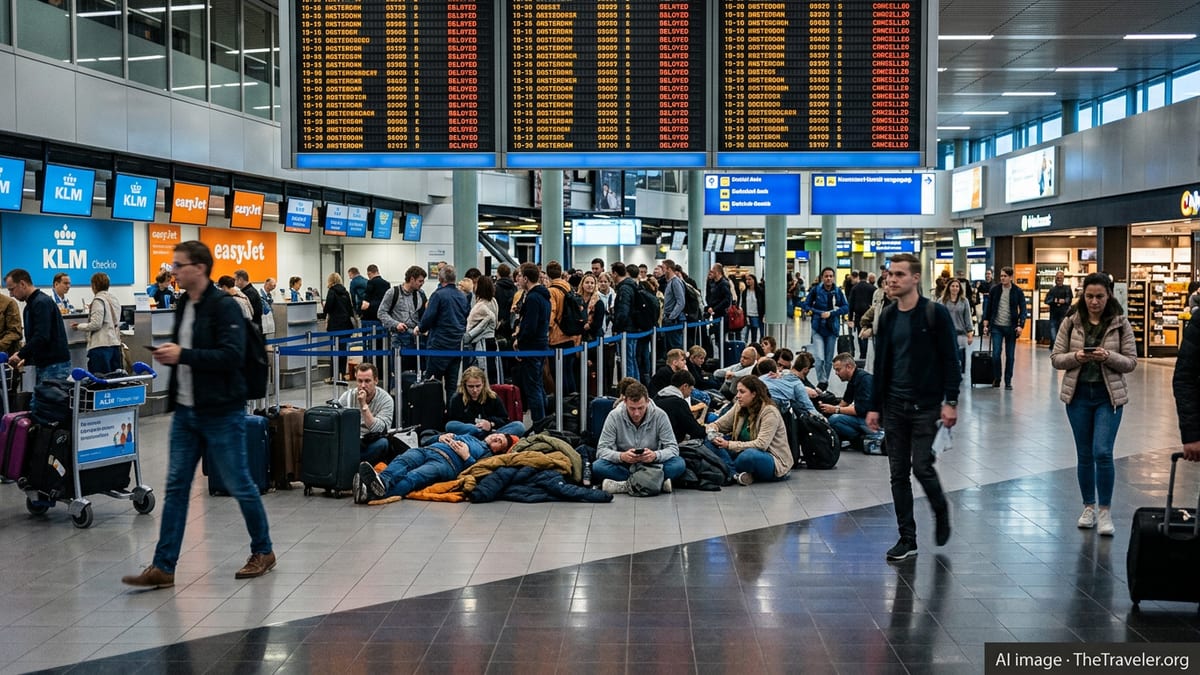
Thousands of passengers across Europe faced hours-long queues, missed connections and overnight airport stays this week as more than 2,400 flights were delayed and at least 80 were cancelled from Spain to Türkiye, disrupting services by major carriers including British Airways, Lufthansa and KLM.
Get the latest news straight to your inbox!
Network Strain Across Key European Hubs
Operational data and airline tracking platforms show that around 2,411 flights were delayed and 82 cancelled across European airspace over a recent 24-hour period, affecting departures and arrivals in Spain, England, Germany, the Netherlands, Türkiye and several neighboring markets. The disruption was concentrated at major hubs and popular leisure gateways handling peak summer traffic.
Barcelona, Munich, Amsterdam and Istanbul reported repeated knock-on delays as late-arriving aircraft and rotation issues rippled through schedules. Publicly available dashboards indicated that a mix of short-haul and medium-haul routes were most affected, particularly those linking holiday destinations in Spain and Türkiye with cities in the United Kingdom, Germany and the Benelux region.
While the absolute number of cancellations remained modest relative to overall traffic, the scale of delays pushed many services outside typical European punctuality benchmarks. Reports from multiple airports described departure boards filled with rolling new times, with even minor holdups compounding into missed connections later in the day.
Travel forums and passenger reports highlighted particular strain on evening departures, where congested airspace and limited spare aircraft made it more difficult for airlines to recover lost time. Once rotations slipped into late-night and early-morning hours, carriers in several countries began trimming schedules rather than operating heavily delayed flights into already crowded airports.
Weather, Staffing and Airspace Capacity Combine
The new disruption comes against a backdrop of wider concerns about European air traffic flow management. Recent overviews from regional aviation bodies point to persistent bottlenecks in parts of the network, with air traffic control capacity and staffing remaining major drivers of en route delays, particularly over France and Spain.
Seasonal weather has also played a recurring role. Earlier in the year, storms over the Netherlands led to hundreds of cancellations and delays at Amsterdam Schiphol, hitting KLM and partner airlines particularly hard. Heavy rain and thunderstorms at Spanish airports, including Palma de Mallorca and Barcelona, have similarly forced diversions and slowed operations, leaving crews and aircraft out of position for subsequent flights.
On top of that, airlines are contending with tighter schedules designed to meet strong post-pandemic demand. Industry analyses show that the combination of dense timetables and limited spare capacity makes the system more vulnerable when individual flights encounter technical checks, local weather cells or temporary airspace restrictions.
Aviation safety agencies have also drawn attention to navigation system interference and the need for more resilient procedures. Workshops hosted in Europe this summer focused on safeguarding satellite-based navigation, reflecting growing concern that even brief disruptions to these systems can add to routing complexities and delays across crowded flight corridors.
Major Carriers and Flagship Routes Affected
Among the airlines most exposed were large European network carriers and their partners. Flights marketed or operated by British Airways, Lufthansa and KLM featured prominently in the lists of delayed services, alongside a range of low cost and leisure operators that funnel traffic into the same congested hubs.
Munich and Frankfurt saw disruptions that affected Lufthansa and codeshare services on routes linking Germany with southern Europe and Türkiye. Some long haul rotations into Munich were reportedly thinned or rescheduled after crew availability issues following previous delays, illustrating how staffing and legal duty-time limits can force cancellations even when aircraft are on the ground.
In the Netherlands, KLM’s Amsterdam hub has already weathered several episodes of large scale disruption this year during severe weather and infrastructure strain. The latest wave of delays again underscored the vulnerability of hub-and-spoke models when a busy transfer point experiences bottlenecks at security, border control or on the airfield itself.
Turkey’s role as a bridge between Europe, the Middle East and Asia meant that Istanbul also featured in the current disruption picture. Schedules into and out of Istanbul from Barcelona and Munich showed irregularities, with some services not operating on their usual days and others experiencing longer than normal ground times as airlines worked to rebalance fleets.
Border Controls and New Systems Add to Bottlenecks
Compounding the operational strain, border processing has emerged as a growing challenge. Industry groups have repeatedly warned that the rollout of new European entry and exit systems is increasing waiting times at passport control, particularly at peak periods in major rail and air gateways.
Recent travel updates from cross channel rail operators referenced delays at Amsterdam Centraal linked to border procedures, and aviation associations have reported similar pressure at airports serving large volumes of non EU passengers. In some cases, queues at border checkpoints have extended for several hours, forcing airlines to hold departing flights or delay boarding while passengers clear formalities.
Publicly available information indicates that these new digital systems, while intended to strengthen border management, are still bedding in across different member states. Variations in staffing levels, terminal layouts and passenger familiarity with biometric checks can translate into significant differences in processing speed from one airport to another.
For passengers flying between the United Kingdom and European Union destinations, these added checks can be especially significant, as nearly every journey now involves full passport inspection. When coupled with summer holiday crowds and indirect knock on effects from train or road disruptions, the result can be last minute no shows at gates and a higher risk of missed connections on complex itineraries.
What Travelers Can Expect in the Coming Days
With European summer travel now in full swing, airlines and aviation bodies are signaling that elevated levels of delay are likely to persist on busy days, even when weather is relatively benign. Traffic statistics for recent months show that overall flight volumes are running above last year’s levels, leaving less margin for schedule recovery when things go wrong.
Operational bulletins point to ongoing pressure points in several air traffic control centers, including those managing routes over Spain and the eastern Mediterranean. Any additional stress, such as isolated thunderstorms around Barcelona, Munich or Istanbul, can therefore quickly translate into restrictions on departures, holding patterns in the air and sequencing delays on arrival.
For now, cancellation rates remain far below the heights seen during past large scale IT outages or national strikes, but the combination of modest cancellations and widespread delays is still enough to significantly disrupt individual travel plans. Travelers transiting through major hubs or connecting between airlines face the highest risk of misconnecting and needing rebooking onto later services.
Passenger advocacy groups and travel advisers are recommending that flyers build in extra time for connections, arrive earlier at airports where border queues have been reported, and monitor airline apps closely on the day of departure. Given the current pattern of rolling delays, same day schedule checks and flexible planning are expected to remain essential for anyone flying through Europe’s busiest airports in the days ahead.