


More news on this day
Record passenger volumes and stubborn flight delays are turning airports into pressure cookers, where small breaches of etiquette can quickly escalate already frayed nerves.
Get the latest news straight to your inbox!
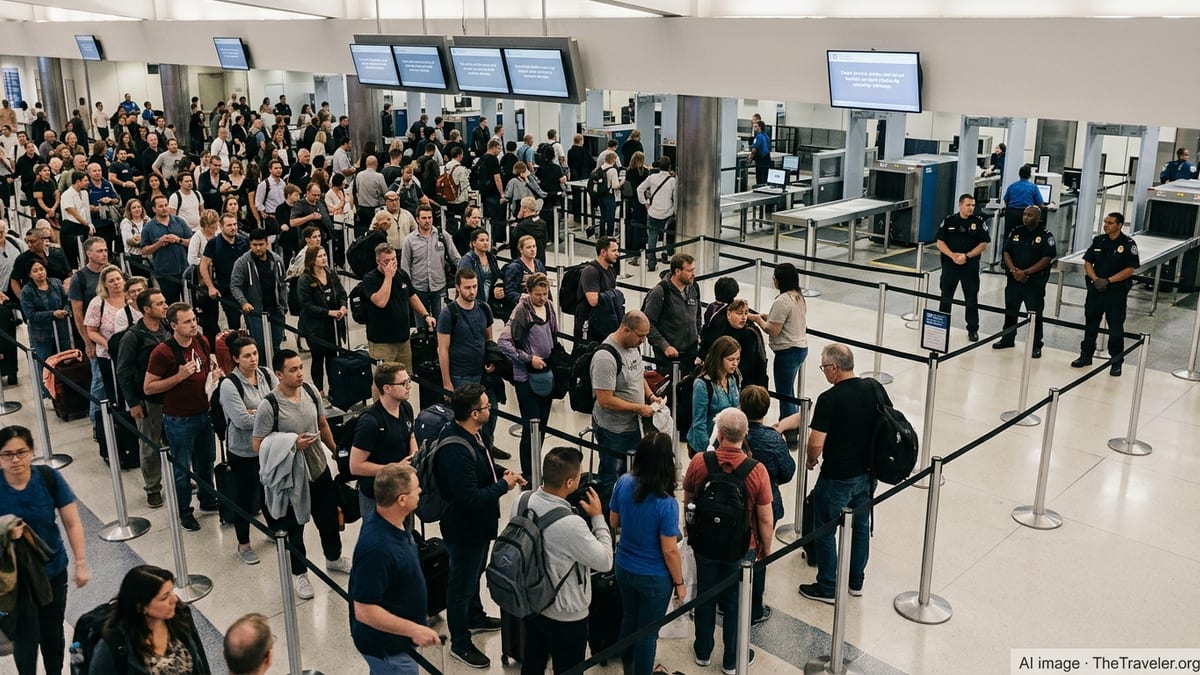
Record Volumes, Slower Journeys
Airports across the United States and beyond are navigating some of the busiest travel periods on record at the same time as persistent operational bottlenecks. Transportation Security Administration figures compiled by the U.S. Travel Association indicate that during the peak 2024 summer season from Memorial Day through Labor Day, security checkpoints screened almost 279 million travelers, a nearly 6 percent increase on the previous year, underscoring how full terminals have become even when schedules are disrupted.
Public on-time performance data from the Bureau of Transportation Statistics shows that weather, volume and airspace constraints continue to drive late arrivals and missed connections for millions of passengers each month. Industry analyses drawing on these datasets report that airlines are still struggling to absorb disruptions quickly, so modest thunderstorms or computer outages can ripple through the system for days. For travelers, the result is more time waiting at gates and in customer service queues, and more opportunities for tensions to rise.
Alongside operational delays, official consumer reports point to growing frustration. U.S. Department of Transportation Air Travel Consumer Reports for 2024 show delays have remained among the top categories of passenger complaints, with spikes following major disruption events such as large-scale technology outages or severe-weather-related cancellations. The combination of crowded concourses, longer journeys and unresolved service issues is heightening the importance of airport etiquette as a practical tool to keep shared spaces functioning.
While airlines and regulators debate structural fixes, etiquette practices are becoming part of the conversation among travel publications and passenger advocacy groups. Guidance that might once have been framed as courtesy is increasingly described as a way to reduce stress for fellow travelers and staff who have limited control over systemic delays.
Security Lanes Under Strain
The security checkpoint remains one of the most visible flashpoints. With volumes at or near records on peak days, publicly available information from TSA shows that wait times at some major hubs regularly stretch past 30 minutes during busy periods, and can be significantly longer during holiday surges. Reports indicate that even small breakdowns in line discipline, such as passengers reaching the front of the queue unprepared, can slow an entire lane.
Travel and etiquette coverage from outlets focused on airport operations increasingly emphasizes preparation before entering the screening line. That includes having identification ready, understanding restrictions on liquids and electronics, and keeping carry-on bags organized so that required items can be removed quickly. When travelers arrive at the checkpoint distracted or disorganized, agents must spend more time repeating instructions, which contributes to a sense of chaos and fuels impatience behind them.
Another recurring theme in recent advice is how passengers navigate privileges such as PreCheck or priority access. With more travelers holding expedited screening or premier status, journalists covering airport etiquette note that confusion arises when people block clearly marked lanes or attempt to cut lines during irregular operations. Clear signage is only effective when passengers respect it, and courteous behavior, such as asking staff where to queue and avoiding arguments over perceived status, can prevent confrontations that slow everyone down.
Experts writing on airport behavior also highlight how travelers manage their belongings in tight spaces. Placing multiple bins on the belt and then stepping away to rearrange luggage can create bottlenecks. Current guidance tends to recommend that passengers move promptly to the re-composure area after screening, so others can use the conveyor space, a small step that can have an outsized impact during peak hours.
Gate Areas: Shared Space Under Pressure
Once through security, many travelers encounter another stress point at the gate. Published airport etiquette articles describe gate seating as a frequent source of conflict in an era when capacity is squeezed and delays are common. Using empty seats for bags, sprawling across multiple chairs or blocking power outlets can provoke sharp exchanges when flights are oversold or passengers have been waiting for hours.
As airlines adjust boarding processes to handle fuller flights, waiting areas have become more crowded. Coverage of boarding trends notes that carriers have increased the number of boarding groups or emphasized smaller batches to speed up the process, but these changes only work when travelers cooperate. Lining up prematurely, standing in front of the boarding lanes before a group is called or ignoring instructions to remain seated can cause confusion in an already time-pressured phase of the journey.
Disruptions also tend to magnify tensions around information flow. When delays extend repeatedly, passengers cluster around podiums in search of updates, sometimes blocking access for those who are being called for rebooking or stand-by seats. Travel guidance increasingly recommends keeping a respectful distance from the desk unless one’s name or group is announced, relying on apps and display boards for routine updates where possible to keep the area clear.
Noise levels at crowded gates add another layer of stress. With more travelers taking video calls or watching entertainment on personal devices, etiquette commentators encourage the use of headphones and keeping conversations at reasonable volumes. In an environment where many people are dealing with disruptions to work and family plans, lowering the ambient noise can meaningfully reduce collective strain.
Boarding and Overhead Bins in a Packed Cabin
Once boarding starts, the competition for overhead bin space and the rush to get settled often reflect broader systemic pressures. Reports on airline operations point to high load factors, meaning most flights operate with very few empty seats, especially during peak seasons. This leaves less flexibility for accommodating large carry-on bags, which can fuel disputes in the aisle when bins fill up quickly.
Recent travel coverage advises travelers to follow published carry-on limits and to anticipate that late-boarding passengers may have to gate-check bags on full flights. Boarding efficiently by stowing luggage promptly, placing smaller items under the seat and moving out of the aisle quickly is presented as an essential courtesy at a time when any delay can lead to missed departure slots in congested airspace.
Articles focusing on in-flight civility also note that small gestures at the start of a flight can set the tone for the journey. Asking politely before reclining, avoiding abrupt seat movements, and keeping aisles clear of personal items are cited as ways to prevent minor irritations from escalating during long delays on the tarmac or in holding patterns. With official statistics documenting thousands of extended tarmac events each year, passengers are spending more time confined in cabins and sharing limited personal space.
Unruly passenger incidents, while a small fraction of total journeys, have attracted heightened scrutiny. Public statements and dashboards from aviation regulators highlight efforts to enforce existing rules against disruptive behavior. In this setting, social expectations around volume, sobriety and respect for crew instructions have taken on new urgency as part of a broader effort to maintain safety and order in crowded skies.
Customer-Service Bottlenecks and Digital Workarounds
When flights are delayed or cancelled, the etiquette stakes shift to customer-service lines and digital channels. According to published summaries of U.S. Department of Transportation complaint data, service issues, refunds and delays remain significant drivers of consumer grievances. Major disruption events in late 2022 and mid-2024 led to pronounced surges in formal complaints, demonstrating how quickly frustration can crystallize when travelers feel stranded without clear options.
During large-scale disruptions, images of snaking queues at airport service desks have become familiar. Analysts and travel columnists note that while anger can be understandable in such circumstances, verbal abuse of frontline staff does not accelerate rebooking and may hinder staff capacity to assist others. Queue etiquette, such as respecting line order, giving space to those being helped and preparing alternative flight options in advance, is increasingly framed as practical strategy in addition to basic courtesy.
Digital tools are changing expectations as well. Airlines and government agencies have launched online dashboards to clarify passenger rights and track disruptions, while carrier apps often allow self-service rebooking in irregular operations. Travel reporting suggests that passengers who use these channels reduce the pressure on physical service points, which can shorten waits for those who do not have digital access or who require special assistance.
Across terminals and cabins, etiquette in 2026 is less about rigid rules and more about adaptive behavior in a strained system. With passenger volumes projected to keep rising faster than infrastructure upgrades in many markets, the small decisions travelers make at checkpoints, gates, in aisles and in queues are increasingly central to whether long days at the airport feel merely tiring or unmanageable.
U.S. Travel Association: Commission on Seamless and Secure Travel
U.S. DOT: Air Travel Consumer Reports 2024
Bureau of Transportation Statistics: On-Time Performance Data