


More news on this day
Akasa Air has launched a new non-stop route between Mumbai and Hanoi, introducing four weekly flights that expand the carrier’s Southeast Asia network and deepen air links between India and Vietnam.
Get the latest news straight to your inbox!
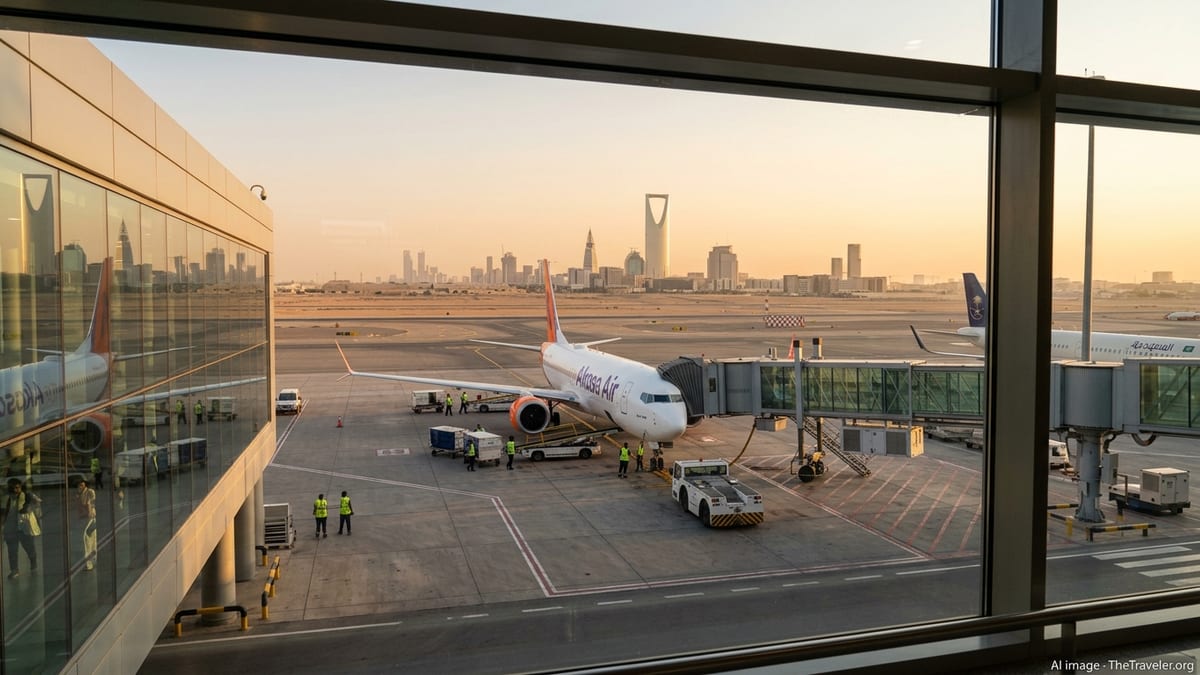
Details of the New Mumbai–Hanoi Connection
Publicly available schedules indicate that Akasa Air is operating four weekly non-stop services between Mumbai’s Chhatrapati Shivaji Maharaj International Airport and Hanoi’s Noi Bai International Airport, using Boeing 737 MAX 8 aircraft. The launch date for the route is listed as September 4, 2026, with bookings available across the airline’s digital channels and major online travel platforms.
Timetable data compiled by aviation schedule services shows the outbound flight, QP625, departing Mumbai in the early morning and arriving in Hanoi around midday, with the return leg, QP626, scheduled for early afternoon departure from Hanoi and late-afternoon arrival in Mumbai. The block flight time is published at just under five hours, offering a relatively short non-stop link between the financial capital of India and the political capital of Vietnam.
Route-tracking platforms list Akasa Air alongside Vietnam Airlines and VietJet as carriers currently offering direct services between Mumbai and Hanoi. With seven or more weekly non-stop departures now available on the city pair across all airlines, travelers have a wider set of options on timing, pricing, and onboard product than in previous years.
Seventh International Destination and Regional Strategy Shift
According to industry reports, Hanoi becomes Akasa Air’s seventh international destination and its second point in Southeast Asia after Phuket. The move is part of a broader push into short- and medium-haul international markets as the airline scales up from a primarily domestic Indian network to a more regionally focused operation.
Specialist aviation coverage notes that Akasa had previously signaled ambitions to add more Gulf routes but has rebalanced its near-term growth toward Southeast Asia, with Vietnam emerging as a priority. Analysis from sector observers links this shift to evolving geopolitical and airspace conditions, as well as a desire to capture strong leisure flows within a four- to five-hour flying radius of India.
Industry commentary also points out that the Mumbai–Hanoi launch fits into Akasa’s stated strategy of leveraging India’s largest metropolitan regions as hubs for international expansion. By building a mix of domestic feed and point-to-point demand on high-growth routes such as Vietnam, the carrier is seeking to strengthen its position in a competitive Indian aviation market where low-cost and full-service airlines are both targeting outbound regional travel.
Rising Demand for India–Vietnam Travel
Recent tourism and aviation reports highlight Vietnam as one of the fastest-growing outbound destinations for Indian travelers, citing a combination of relatively short flight durations, visa facilitation measures, and competitive package pricing. Cities such as Hanoi, Da Nang, and Ho Chi Minh City have been heavily promoted in the Indian market as alternatives to more established short-haul leisure staples in Thailand and Singapore.
Travel industry coverage indicates that Indian visitor numbers to Vietnam have increased notably over the last few years, supported by new air links from multiple Indian cities and promotional campaigns by Vietnamese tourism authorities. This growth has coincided with a broader trend of Indian travelers seeking new cultural, culinary, and nature-focused experiences across Southeast Asia.
The addition of a non-stop Mumbai–Hanoi service is expected by analysts to further support this trend, making it easier for travelers from western India and beyond to access northern Vietnam’s attractions, including the capital’s Old Quarter and nearby destinations such as Ha Long Bay and Sapa. The timing of Akasa’s flights, with midday arrivals and departures, is described in some network analyses as tailored to leisure travelers, aligning more closely with hotel check-in and check-out windows.
Strengthening Bilateral Business and Aviation Links
Information published by Noi Bai International Airport describes Akasa Air’s entry as a contribution to the airport’s growing international network, adding another direct link between Vietnam and one of India’s key commercial centers. The airport operator’s coverage frames the launch as part of a wider effort to diversify carriers and destinations in its long- and medium-haul portfolio.
Business-focused travel reports suggest that improved connectivity between Mumbai and Hanoi is likely to support expanding trade and investment ties between the two countries, particularly in sectors such as manufacturing, information technology services, pharmaceuticals, and tourism infrastructure. More frequent and direct air links are often cited by analysts as a catalyst for increased business travel, short-notice trips, and cross-border project work.
The route launch also aligns with India’s broader aviation and economic engagement with Southeast Asia, in which new services to Vietnam are being added by multiple Indian carriers. Additional capacities between major Indian cities and Vietnamese gateways are seen by industry observers as a sign that airlines expect sustained demand on both leisure and business segments in the coming years.
Competitive Landscape on the Mumbai–Hanoi Route
Route-analysis platforms show that Akasa Air enters a market already served by Vietnam-based carriers, but with room for capacity growth as demand matures. Vietnam Airlines and VietJet are both listed as operating non-stop flights between Mumbai and Hanoi, creating a three-airline competitive environment on the route.
Aviation analysts note that competition tends to benefit travelers through sharper pricing, promotional fares, and differentiated onboard offerings. For Akasa, the Mumbai–Hanoi link provides an opportunity to showcase its product and service on a longer regional sector compared with many of its domestic Indian routes, potentially enhancing its brand recognition among international travelers.
Network commentary further suggests that if the Mumbai–Hanoi service performs well, it could open the door to additional India–Vietnam routes or higher frequencies in future seasons. Capacity adjustments, seasonal scheduling, and potential partnerships or interline arrangements with other carriers in the region are all viewed as possible next steps, depending on market response and aircraft availability.