


More news on this day
The United States has escalated its travel advisory for Kenya to Level 3, urging citizens to reconsider travel to one of Africa’s flagship safari destinations as health, security, and safety concerns converge around the country’s key tourism corridors.
Get the latest news straight to your inbox!
Advisory Raised to Level 3 Amid Health and Security Concerns
According to publicly available information on the U.S. State Department website, Kenya’s overall travel advisory was updated on October 19, 2026, from Level 2 “Exercise increased caution” to Level 3 “Reconsider travel.” The change reflects an assessment that a combination of risks now warrants stronger guidance for American travelers.
Published coverage of the advisory notes that the U.S. government cites crime, kidnapping, terrorism, civil unrest, health issues, and road safety as key factors behind the higher alert level. The wording highlights the possibility of incidents occurring without warning in both urban and rural areas, including locations commonly frequented by visitors such as shopping centers, hotels, transport hubs, and entertainment districts.
Media reports also point to the regional public health situation, with particular reference to Ebola Bundibugyo virus disease in East and Central Africa. While Kenya is not described in official travel-health sources as an epicenter, a recently confirmed cluster of cases associated with an imported infection in Nairobi has added a health dimension to the security-driven concerns.
Travel-risk analysts observe that the move places Kenya in a more restrictive category alongside several other destinations where American travelers are asked to reconsider nonessential trips. The Level 3 status does not prohibit travel but signals that some forms of leisure tourism may now fall outside many organizations’ and insurers’ routine risk thresholds.
Key Risk Areas: Nairobi, Coast, and Border Counties
The updated advisory distinguishes between different parts of Kenya, identifying specific counties and neighborhoods where risk is assessed as significantly higher. Public summaries of the advisory indicate that U.S. citizens are urged not to travel to areas along the Somalia border, including Mandera, Wajir, and Garissa counties, as well as parts of Lamu and coastal stretches in Tana River and Kilifi, due to a history of militant attacks, kidnappings, and roadside bomb incidents.
Nairobi, the country’s primary aviation gateway and starting point for most safaris, is also under closer scrutiny. Reports referencing the State Department text note particular concern around certain neighborhoods where criminal activity, carjackings, and sporadic unrest have affected both residents and visitors. The advisory emphasizes that patterns such as routine commutes, repeated use of the same venues, and predictable itineraries can increase exposure to opportunistic crime or targeted attacks.
Recent domestic media coverage and security assessments for East Africa describe an elevated threat environment linked to militant groups operating in the wider region, particularly near Kenya’s north-eastern frontier. Analysts highlight a continued risk of attacks on soft targets, from roadside checkpoints to public venues, even as Kenyan security agencies maintain a visible presence on major highways and in commercial districts.
Road safety is another element of the advisory that carries practical implications for travelers transiting between Nairobi and key safari regions. Official country information and health-travel resources underline the risks associated with night driving, overloaded vehicles, and variable road conditions, especially on secondary routes connecting to parks and reserves.
Safari Heartlands Remain Open but Face New Scrutiny
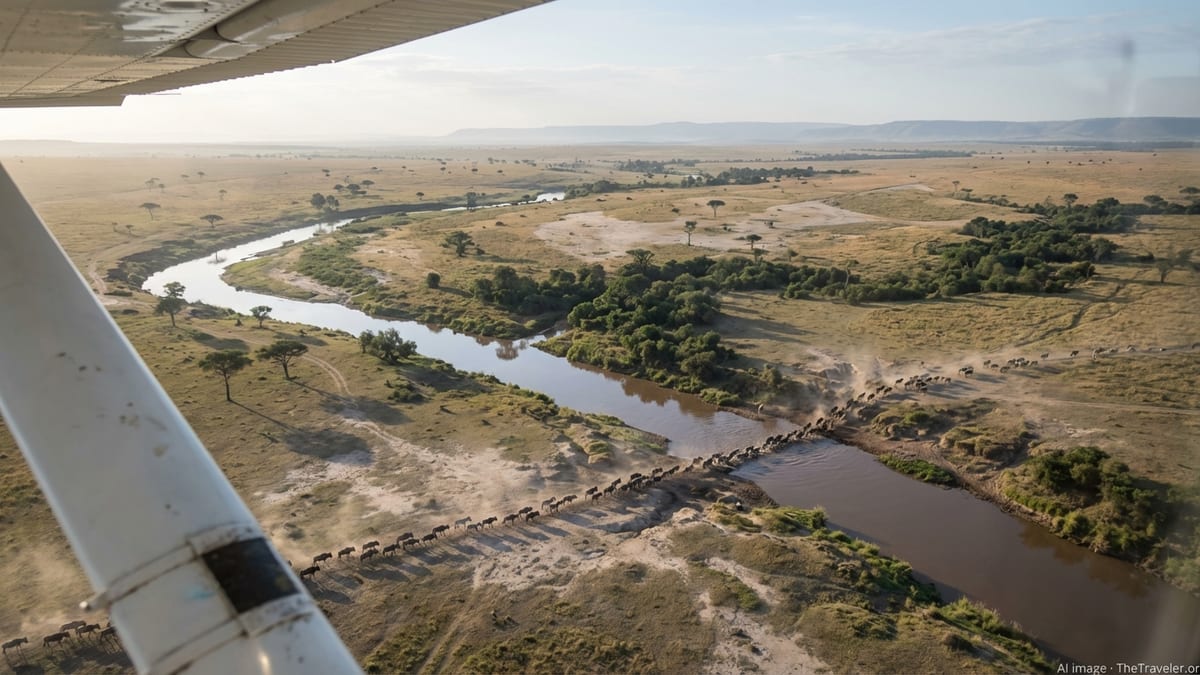
Despite the stronger U.S. warning, Kenya’s major wildlife destinations, including the Maasai Mara, Amboseli, Samburu, and the private conservancies of Laikipia, remain open and continue to welcome international guests. Recent reports from tourism investment and strategy documents describe Kenya as a leading African safari hub, with international arrivals rebounding and sector earnings projected in the multi-billion-dollar range as of 2024.
Industry commentary gathered since the new advisory indicates that most scheduled international flights into Nairobi’s Jomo Kenyatta International Airport and coastal airports such as Mombasa and Malindi are operating normally. Lodges, tented camps, and tour operators report that they are honoring existing bookings, though some are adjusting routing to avoid high-risk transit corridors or overnight stays in certain urban districts.
Risk consultants note that many core safari circuits lie far from the border zones singled out in the advisory. Travel itineraries typically use domestic flights to connect Nairobi with bush airstrips in the Maasai Mara or conservancies in central and northern Kenya, limiting time spent on long overland drives. However, the overall Level 3 classification can still affect travelers whose employers, universities, or insurers apply blanket restrictions based on countrywide advisory levels.
Insurance alerts issued after the advisory change show that some policies now treat Kenya as a higher-risk destination, particularly for nonessential leisure travel. Travelers are being encouraged, through open-source advisories and industry bulletins, to check whether medical evacuation, trip interruption, and epidemic-related disruptions remain covered under existing plans, especially in light of the evolving Ebola-related precautions.
Economic Jolt for a Tourism Powerhouse
Kenya’s tourism sector is a critical pillar of the national economy, and recent government planning documents underscore the importance of long-haul markets such as the United States. Official strategy papers report that the U.S. has been Kenya’s single largest source market in recent years, supplying hundreds of thousands of visitors and significant per-capita spending, particularly on high-end safaris and beach stays.
The timing of the Level 3 advisory is sensitive for the industry. Kenya has been actively promoting its Big Five reserves, Indian Ocean coastline, and growing portfolio of eco-lodges as part of a broader effort to regain and surpass pre-pandemic arrival numbers. Investment guides published in 2026 highlight strong recovery momentum, with international arrivals increasing and total tourism earnings projected around 5 billion U.S. dollars.
Local media coverage following the U.S. announcement points to concerns that some American travelers may postpone or redirect trips to competing safari destinations in Tanzania, Botswana, or South Africa. Tour operators quoted in regional business reports describe a spike in inquiries about safety, cancellation policies, and alternative routing, even if large-scale cancellations have not yet been widely documented.
Analysts caution that the reputational impact of a Level 3 advisory can extend beyond the U.S. market, as other countries and private-sector risk teams often monitor changes in American guidance when updating their own assessments. For a destination that has positioned itself as a stable gateway to East Africa’s wildlife and conference tourism, prolonged inclusion in a higher-risk category could complicate investment plans and marketing strategies.
What the Warning Means for Travelers Considering Kenya
For U.S. citizens with upcoming safaris or business trips, the new advisory does not amount to a ban, but it does shift the calculus around acceptable risk. Travel guidance resources explain that a Level 3 classification signals serious safety and security concerns and recommends avoiding nonessential trips, while still allowing individuals and organizations to make case-by-case decisions.
Publicly available risk guidance suggests that travelers who choose to proceed should pay careful attention to the location-specific details in the advisory. That includes avoiding the identified border counties, monitoring information about any unrest or health measures in Nairobi and Mombasa, and using reputable operators that follow robust security protocols for ground transfers and excursions.
Health agencies emphasize standard preventive steps for East African travel, from ensuring vaccinations and malaria prophylaxis are up to date to following updated information on Ebola Bundibugyo virus disease. The latest notices from travel-health authorities stress that risk is closely tied to contact with bodily fluids and affected medical settings, and that safari travelers typically spend most of their time in remote wildlife areas rather than dense urban hospitals or border communities.
Online forums and traveler discussions in October 2026 reflect a mixed reaction. Some visitors report continuing with trips to the Maasai Mara and other reserves, arguing that the benefits of travel outweigh the risks once precautions are taken. Others indicate that employer policies tied to State Department levels, or worries about possible changes in airline or border regulations, have led them to defer or reroute journeys planned for late 2026 and early 2027.
Travel specialists note that the advisory is likely to prompt more detailed pre-departure planning, with emphasis on flexible bookings, comprehensive insurance, and careful selection of routes and accommodation. For Kenya’s safari industry, the coming months will test how effectively operators, airlines, and destination marketers can reassure cautious travelers while adapting to a more demanding global risk environment.