


More news on this day
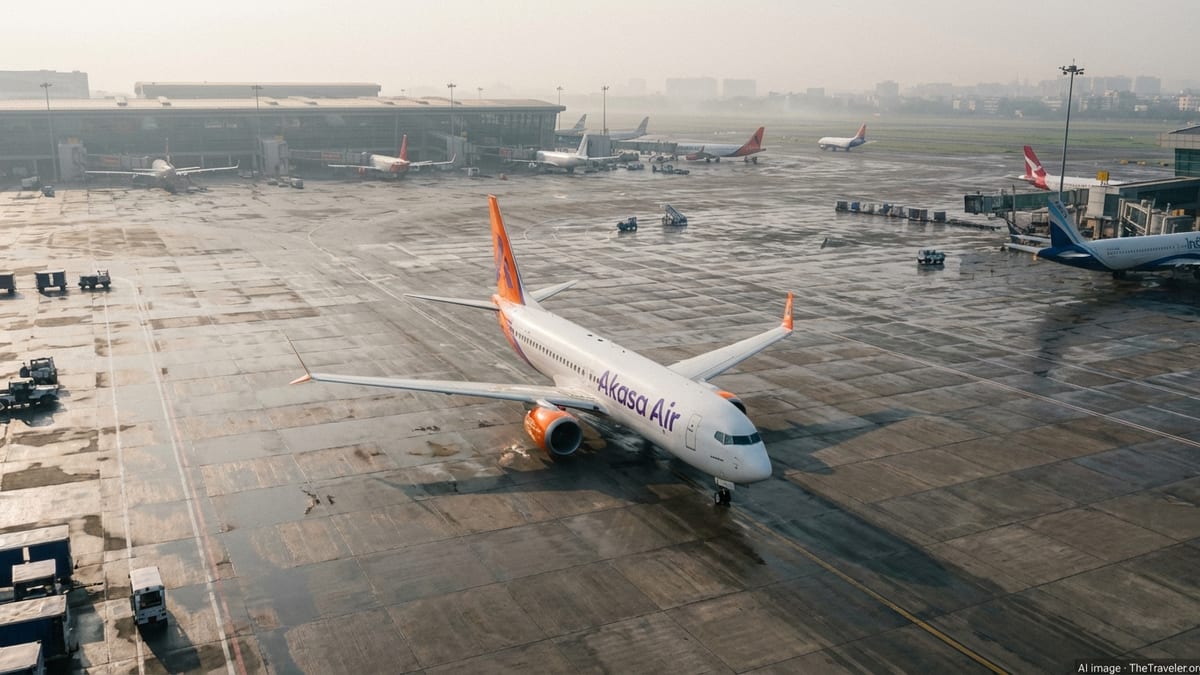
Akasa Air is rolling out an ambitious new disruption-defense program, branded the “SkyCadet Defense Grid,” in a bid to shield travelers from large-scale operational meltdowns and chronic flight cancellations that have rattled global aviation in recent years.
Get the latest news straight to your inbox!
A Strategic Response to a Year of Turbulence
The SkyCadet Defense Grid is positioned as Akasa Air’s most comprehensive effort yet to insulate its network from cascading failures and sudden schedule shocks. Publicly available information on recent industry disruptions, from pilot shortages to IT outages, shows how quickly small problems can spiral into days of chaos for passengers worldwide. Against that backdrop, the new grid is framed as a proactive reset of how the carrier anticipates, absorbs, and recovers from disruption.
Akasa Air, which began operations in August 2022, has already experienced its own turbulence. Published coverage in India has documented how a wave of pilot resignations in mid-2023 coincided with hundreds of flight cancellations and a temporary slide in market share, even as regulators’ datasets showed overall cancellation percentages remaining relatively low by industry standards. The public message from the airline since then has consistently emphasized building stronger contingency planning and operational resilience.
Within that context, the SkyCadet initiative is being presented as both a technical and cultural shift. It bundles new tools for forecasting and decision support with tighter coordination across scheduling, crew planning, and customer service teams. The goal is to detect stress points early, contain disruption to the smallest possible number of flights, and communicate options to travelers before problems become headline-grabbing crises.
The move comes as passengers across major markets grow more sensitive to reliability. High-profile breakdowns at large carriers in North America, Europe, and Asia have underscored how vulnerable airline networks can be to a mix of staffing constraints, adverse weather, and digital system failures. By naming and packaging its response as a defense grid rather than a back-office upgrade, Akasa Air is signaling that resilience is now a central part of its brand proposition.
Inside the ‘SkyCadet’ Defense Grid
According to descriptions released by the airline, the SkyCadet Defense Grid is not a single piece of software but a layered framework that combines real-time data feeds, predictive analytics, and decision rules designed to prevent small operational glitches from cascading. It is built around a central operations hub that continuously monitors aircraft rotations, crew availability, airport conditions, and weather, looking for combinations of risk factors that could trigger wider disruption.
One layer focuses on crew and aircraft pairing, an area that proved particularly fragile during Akasa Air’s pilot shortfall in 2023. By tightening forecasting of pilot rosters, training cycles, and legal duty-time limits, the grid is intended to flag emerging shortages days in advance rather than hours before departure. That lead time allows schedulers to rebalance capacity, reroute aircraft, or trim select frequencies before passengers are stranded at the airport.
A second layer targets irregular operations, the industry term for days when storms, infrastructure issues, or airspace restrictions sharply limit flying. The SkyCadet architecture is designed to simulate different recovery scenarios, ranking them by how many passengers can still reach their destinations the same day and how much knock-on disruption might spill into subsequent rotations. This is meant to guide choices about which flights to prioritize, which to combine, and where to position spare crews and aircraft.
On the customer-facing side, Akasa Air is tying the grid to more proactive rebooking rules and messaging. When the system predicts that a specific flight is at high risk of cancellation or severe delay, the airline aims to alert travelers earlier and offer alternative same-day options where available. While execution will depend on operational realities on any given day, the design principle is to shift from last-minute, airport-only notifications to earlier, data-driven outreach.
Learning from Global Meltdowns and Homegrown Disruptions
The SkyCadet Defense Grid also reflects lessons drawn from destabilizing events across global aviation. High-impact disruptions linked to technology outages, scheduling failures, or staffing gaps have repeatedly demonstrated how interdependent modern airline networks are. Once a certain threshold of cancellations is crossed, crew and aircraft quickly fall out of position, making it hard to recover within a single operating day.
In the Indian market, official government data on cancellations by carrier shows that even a modest uptick in disruption can erode passenger confidence if it clusters around major holidays or on routes with limited alternatives. For a young airline like Akasa Air, which built its business model around rapid growth and high load factors, any perceived fragility becomes a reputational risk that can outweigh short-term financial pressures.
Akasa’s experience during the 2023 pilot-resignation episode highlighted these stakes. Public reports at the time described hundreds of cancellations and schedule cuts, while concurrent regulatory filings painted a more granular picture of operational strain spread across multiple weeks. Analysts noted that even as overall cancellation rates remained within single digits, the concentration of disruption on certain sectors left a lasting impression among affected travelers.
By emphasizing disruption defense as a core strategic pillar, the airline is attempting to move beyond that narrative. The SkyCadet branding signals that the carrier sees reliability not as a cost center but as a differentiator in an increasingly crowded marketplace, especially as it expands into international routes where competition from established low-cost and full-service operators is intense.
Implications for Travelers and the Wider Market
For passengers, the practical success of the SkyCadet Defense Grid will be judged in familiar metrics: fewer last-minute cancellations, more consistent on-time performance, and clearer communication when things do go wrong. While no airline can eliminate weather disruptions or infrastructure constraints, travelers have become more vocal about avoiding preventable chaos caused by internal planning failures or brittle IT systems.
If the grid performs as intended, Akasa Air could see a gradual shift in customer perception from “fast-growing newcomer” to “reliable network carrier” in key domestic and regional markets. That, in turn, could support higher repeat-business rates on trunk routes and encourage more travelers to trust the airline for time-sensitive trips. Over time, such improvements can also reduce compensation costs, hotel placements, and other expenses associated with large-scale disruption days.
For the wider Indian aviation sector, Akasa’s move may add pressure on rivals to showcase their own resilience architectures more visibly. While many carriers already maintain sophisticated operations centers and recovery playbooks, few have branded them as explicitly as Akasa Air is doing with SkyCadet. As regulators and consumer bodies scrutinize disruption patterns more closely, airlines that can document and explain their prevention strategies may find it easier to defend their performance.
Industry observers note that the next major test will not be a routine day of flying but the inevitable high-stress events: monsoon-season storms, airspace closures, or sudden staffing constraints. When those moments arrive, the SkyCadet Defense Grid will face its real-world exam, measured not in promotional language but in how many passengers make it to their destinations without becoming part of the next wave of travel-chaos headlines.
A High-Stakes Bet on Predictability
Akasa Air’s embrace of a named disruption-defense system underlines how central operational predictability has become to airline strategy. In a sector where margins are thin and external shocks are frequent, investing in resilience can appear risky in the short term, particularly for a young carrier still scaling its fleet and network. Yet the cost of inaction can be higher, as seen in global cases where mass cancellations eroded loyalty and invited regulatory scrutiny.
By embedding SkyCadet into its public messaging, Akasa Air is effectively tying its reputation to the grid’s performance. Should the airline navigate upcoming peak seasons with fewer high-profile disruptions, the initiative could strengthen its standing with both travelers and industry partners. Conversely, any repeat of concentrated cancellation waves would raise questions about whether the grid is robust enough or has been fully integrated into day-to-day decision-making.
For now, the launch of the SkyCadet Defense Grid marks a notable shift in how a rising Indian carrier talks about reliability. It moves the conversation from reactive explanations after disruption to a forward-looking commitment to shielding passengers from the worst effects of aviation’s inevitable volatility. Travelers watching their options in the Indian market will be looking to see whether this new framework translates into a smoother, more predictable journey at the gate.