


More news on this day
As the 2026 World Cup kicks off across stadiums in the United States, Canada and Mexico, a growing string of border controversies is threatening to overshadow the action on the pitch and raising fresh doubts about how welcoming the United States really is to the global game.
Get the latest news straight to your inbox!
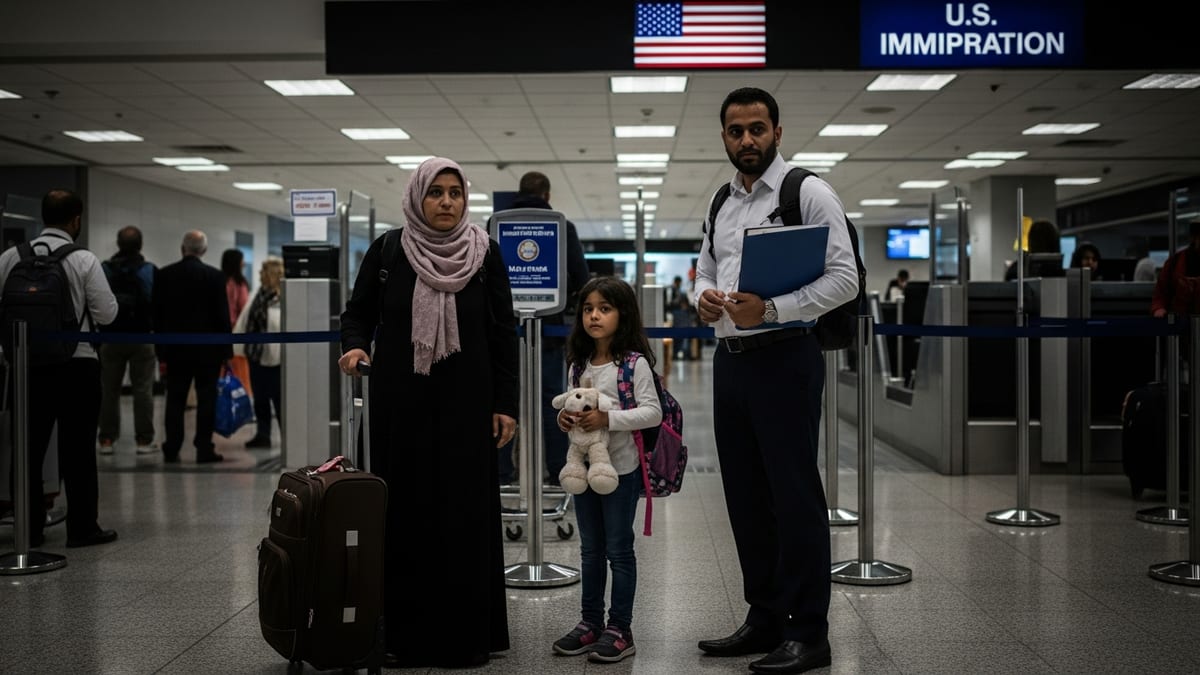
A referee’s blocked entry becomes a flashpoint
The clearest symbol of the tensions surrounding US border policy emerged days before the opening whistle, when Somali match official Omar Abdulkadir Artan was denied entry at Miami International Airport despite holding FIFA accreditation and a valid visa, according to multiple news reports. He had been selected as one of just 52 referees for the tournament and was poised to become the first Somali to officiate at a men’s World Cup.
Publicly available information indicates that US Customs and Border Protection cited unspecified “vetting concerns” after holding Artan for hours of questioning, before revoking his entry and returning him overseas. Soccer’s governing body then confirmed that he would not be able to train or officiate in the United States, effectively ending his World Cup dream days before it began.
Coverage from international outlets shows that Artan’s treatment has sparked outrage among players’ unions, fan groups and African football officials, who view the decision as undermining the principle that World Cup officials are chosen on merit. Commentators have warned that if a highly vetted referee endorsed by FIFA and continental bodies can be turned away at the border, lower-profile athletes and support staff may be even more vulnerable.
European and African federations have since moved to honor Artan with prominent appointments in other competitions, framing the gesture as a statement of support for referees and athletes who face heightened scrutiny when crossing US borders.
Athletes and officials face delays, denials and new conditions
The Somali referee’s case is not isolated. In recent weeks, reports from major US and international outlets have detailed additional World Cup-related visa problems, including an Iraqi team photographer who was detained and denied entry after arrival at Chicago O’Hare, and football officials from several federations who remain stuck abroad awaiting decisions on their paperwork.
The head of the Palestinian Football Association has said publicly that he is stranded in Mexico City after failing so far to secure permission to enter the United States with other national federation leaders. Published coverage indicates that several accredited delegates have had visas delayed or rejected, complicating FIFA’s long-planned program of meetings and ceremonies meant to run alongside the matches.
Policies are also reshaping how entire squads move. Reporting from US public media and regional outlets shows that Iran’s national team, cited as a special security concern, was told it could not stay overnight on US soil, prompting a relocation of its base camp to neighboring Mexico. Other national teams arriving from politically sensitive regions have reportedly faced tighter questioning and additional documentation demands when crossing into the United States for group-stage fixtures.
Immigration lawyers and sports governance experts quoted in recent analysis argue that these cases reflect a broader pattern in which security-first border rules, intensified by travel bans and evolving vetting protocols, collide with the World Cup’s promise of relatively frictionless movement for accredited participants.
Fans confront a maze of visas, screenings and warnings
For ordinary supporters, the picture is more mixed but increasingly fraught. Official guidance from FIFA and government agencies stresses that a match ticket does not guarantee a visa or admission to the United States, and that each traveler remains subject to standard screening and vetting. Millions of visitors are still expected to arrive, but the journey is proving more complicated for some fan bases than others.
Public-radio and European news outlets have reported that groups of organized supporters from countries such as Morocco and Ghana have seen visa applications rejected or left in limbo. In some cases, dozens of members of fan associations reportedly had travel plans derailed after interviews or document checks did not end in approvals.
Civil liberties organizations in the United States have responded by issuing detailed travel advisories for players, journalists and spectators headed to World Cup host cities. The guidance highlights the broad discretion of border officers, warns that language barriers and lack of legal support can disadvantage visitors during secondary inspections, and urges travelers from marginalized communities to prepare for possible electronic device searches and prolonged questioning.
US hospitality and tourism groups, meanwhile, have voiced concern in industry surveys and trade coverage that a perception of “hard” borders, combined with already high airfares and lodging prices, may dampen the anticipated surge in international visitors. Analysts say that even if most fans ultimately clear immigration without incident, widely publicized detentions and denials risk discouraging travelers who are undecided or coming from regions already subject to stricter rules.
World Cup ideals collide with security politics
At the heart of the controversy is a clash between two narratives. Tournament organizers promote the World Cup as a festival of openness and unity, emphasizing that the 2026 edition spans three countries and dozens of host cities. At the same time, US border and immigration systems are operating within a political climate that has prioritized aggressive vetting, expanded travel bans and heightened scrutiny of visitors from specific regions.
Public statements from US agencies stress that all travelers, including athletes, officials and ticket holders, must meet admissibility standards and can be refused entry if they trigger security or immigration concerns. FIFA, for its part, has noted in official communications that it does not control host-country immigration decisions and that governments retain sole authority over visas and admission.
Critics across human-rights groups, fan organizations and academic circles argue that this division of responsibility creates gaps in accountability. When an official like Artan is barred despite pre-tournament screening, or when an entire delegation struggles with last-minute visa hurdles, there is no clear mechanism to challenge or review decisions in time for them to participate.
Scholars of sport and politics writing in recent commentaries describe the 2026 tournament as a “paradox”: an event marketed as a global celebration yet embedded in a security architecture that often treats certain passports, ethnicities or political affiliations as inherently suspect. They warn that such contradictions can erode trust in both the host nation and the institutions that govern world football.
Long-term implications for future mega-events
The fallout from the current World Cup is also being watched closely by organizers of upcoming global competitions in North America, particularly the 2028 Olympic and Paralympic Games in Los Angeles. Analysts writing in European and North American outlets suggest that the treatment of referees, athletes and fans in 2026 could set precedents for how border controls are applied to future sports travelers.
Diplomatic reactions are already visible. Canadian politicians in World Cup host cities have publicly invited Artan to attend matches north of the border in a symbolic gesture, while several foreign football associations have requested clarification on how their delegations can avoid similar problems at US entry points. These moves indicate growing sensitivity among co-hosts and partners about how tightly the United States is drawing its lines.
Experts in sports governance say the current controversies may push international federations to negotiate stronger mobility guarantees when bidding out future tournaments, or to favor hosts where customs and immigration frameworks are seen as more predictable. Some have floated the idea of standardized, event-specific travel credentials that would operate alongside national visas to reduce uncertainty for accredited participants.
For now, however, the lived experience of the 2026 World Cup is being shaped not only by goals and upsets, but also by what happens in airport interview rooms and at land-border inspection booths. Each denied entry, prolonged detention or abandoned trip adds another layer to the debate over whether the United States can fully live up to the open, festival atmosphere that the world’s biggest sporting event promises to deliver.