


More news on this day
Akasa Air has issued a travel advisory warning of potential delays across its network as intense monsoon rain disrupts flight operations in Mumbai, Pune and Goa, adding to wider transport disruption across western India.
Get the latest news straight to your inbox!
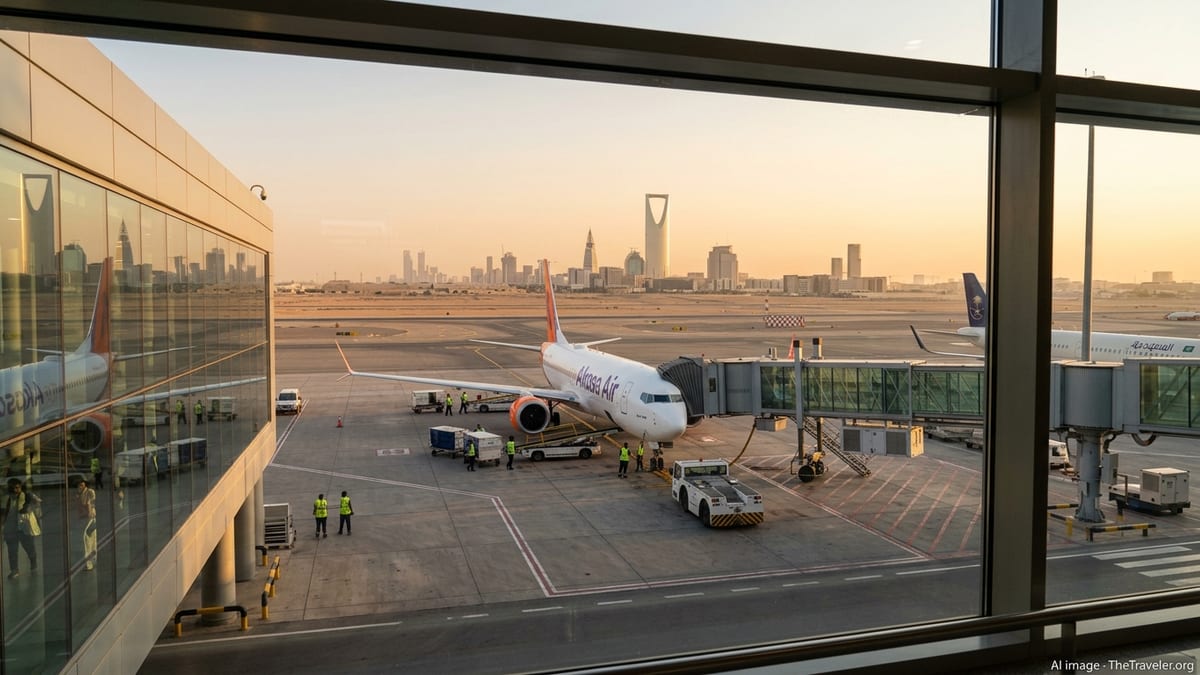
Monsoon disruption hits western India’s aviation hubs
Publicly available information from multiple news outlets indicates that heavy overnight and early morning rain on July 6 has severely affected operations at Mumbai’s Chhatrapati Shivaji Maharaj International Airport, one of India’s busiest aviation hubs. Reports describe poor visibility, strong winds and waterlogging on airport access roads, contributing to widespread delays and a growing backlog of flights.
Coverage from Indian media outlines a difficult weekend for airlines, with earlier downpours already forcing the temporary suspension of runway operations and multiple diversions at Mumbai. Data cited from flight tracking services shows average delays running from several dozen minutes to more than an hour at peak disruption, highlighting the fragile operating environment as the monsoon intensifies.
The impact is not confined to Mumbai. Reports from regional outlets note that continued heavy rainfall has also affected travel in Pune and Goa, two important points on Akasa Air’s domestic network. Disruptions at these airports, combined with constraints in Mumbai, have raised the risk of knock-on delays as aircraft and crews rotate through the system.
According to published coverage, the India Meteorological Department has maintained warnings for further heavy rain in parts of Maharashtra and along the Konkan coast, raising the prospect that operational challenges for airlines could persist over the coming days.
Akasa Air advisory highlights network-wide knock-on effects
Akasa Air has used its public channels to caution passengers that flights “across” its network may be delayed as a result of adverse weather in Mumbai, Pune and Goa. Reports summarizing the airline’s advisory emphasize that the carrier is flagging weather as the primary driver of disruption, while acknowledging the inconvenience for travelers.
News coverage notes that Akasa Air has urged customers to verify their flight status through official digital channels before traveling to the airport. The airline is also encouraging passengers to allow additional time to reach departure terminals, particularly in Mumbai, where waterlogged roads and local transport disruptions have slowed surface travel.
Analysts point out that hubs such as Mumbai play a central role in Akasa Air’s point-to-point network. When weather curtails capacity or introduces extended holding patterns and diversions, aircraft can be left out of position, complicating schedules in seemingly unrelated city pairs. This dynamic helps explain why an advisory centered on three rain-affected cities references potential delays “across” the wider network.
Recent reports on the carrier’s growth trajectory add further context. Akasa Air has been expanding its fleet of Boeing 737 MAX aircraft and increasing frequencies on several domestic and short international routes. While that growth improves connectivity, it also means the airline is operating a relatively tight schedule where prolonged weather events can ripple quickly through daily rotations.
Mumbai, Pune and Goa face broader transport strain
The aviation disruption is unfolding alongside broader strain on transport infrastructure in western India. News reports from Mumbai highlight a red alert for heavy rain, with extensive waterlogging, localized flooding and several incidents of landslides in surrounding districts. At Mumbai airport, these conditions have combined with low visibility and strong winds to reduce runway throughput and force precautionary spacing between arrivals and departures.
In parallel, regional coverage indicates that key road and rail links have been hit, particularly on the busy Mumbai Pune corridor and on routes connecting Mumbai and Pune to Goa. Landslides and flooding have led to the suspension of some train services and partial or temporary closures on portions of the Mumbai Pune Expressway and other highways, complicating access to airports and adding uncertainty for travelers with early morning or late night departures.
For Goa, where Akasa Air operates services into the state’s airports, persistent rain and reduced visibility have required airlines to adjust approach and departure profiles and, in some instances, to delay or re-time flights. Aviation-focused outlets report a rise in go-arounds and diversions at rain-affected airports over the weekend, underscoring the challenges crews are facing in maintaining regular schedules while adhering to safety margins.
These overlapping pressures on air, road and rail networks mean that even when individual flights operate close to schedule, passengers may struggle to reach airports on time, prompting calls from carriers and local authorities alike for non-essential travel to be deferred where possible.
What passengers flying Akasa Air should expect
Travel industry observers suggest that passengers booked on Akasa Air services touching Mumbai, Pune or Goa over the next 24 to 48 hours should be prepared for potential schedule changes, including delayed departures, longer-than-usual ground times and, in some cases, aircraft swaps or route alterations. Information published by Indian aviation news platforms indicates that airlines are attempting to prioritize operational continuity while balancing crew duty limits and turnaround constraints.
Travel advisories reproduced in the media emphasize the importance of regularly checking flight status through official airline channels rather than relying solely on third party aggregators or historical schedules. Given the fluid nature of monsoon weather systems, timings may be adjusted multiple times in a short window as conditions improve or deteriorate.
For those connecting through Mumbai, the combination of possible inbound delays and reduced runway capacity increases the risk of missed onward flights. Analysts note that passengers on separate tickets are especially exposed, as reaccommodation options can be limited when many services are running behind time. Allowing generous connection buffers and considering same-carrier itineraries, where possible, may reduce disruption.
Ground handling and baggage delivery may also be slower than usual during heavy rain, as safety protocols limit ramp activity in periods of lightning, high winds or low visibility. Travelers arriving into rain-affected airports are being advised in public reports to anticipate longer waits at baggage belts and for airport transfer services.
Monsoon season tests resilience of India’s aviation sector
The latest advisory from Akasa Air comes at a time when the resilience of India’s aviation sector is once again being tested by the southwest monsoon. Each year, the arrival of heavy seasonal rain brings a familiar pattern of waterlogged runways, reduced visibility, diversions and extended holding patterns, with Mumbai often at the center of the disruption.
Industry commentators quoted across Indian media have long argued that infrastructure upgrades and improved drainage at major airports are gradually reducing vulnerability to monsoon extremes, yet the events of early July show that sustained downpours can still overwhelm systems. The combination of high traffic volumes, slot-constrained airports and dense urban surroundings leaves limited room to absorb weather-related shocks without some impact on punctuality.
For newer carriers such as Akasa Air, balancing growth with operational resilience in challenging weather is an ongoing task. Fleet expansion and network diversification can help spread risk, but concentration on key hubs like Mumbai means that severe local weather will continue to echo across broader route maps during the wettest weeks of the year.
With meteorological forecasts pointing to further intense showers along India’s west coast, travelers over the coming days are likely to see more advisories from airlines. For now, publicly available information indicates that Akasa Air, alongside other domestic carriers, is urging passengers to stay informed, allow extra time and be prepared for plans to change at short notice as the monsoon asserts itself.