


More news on this day
American Airlines is preparing a sweeping makeover of its narrowbody fleet, outlining plans to install seatback entertainment at every seat, significantly increase premium seating and introduce faster onboard connectivity as part of a multiyear investment in its onboard product.
Get the latest news straight to your inbox!
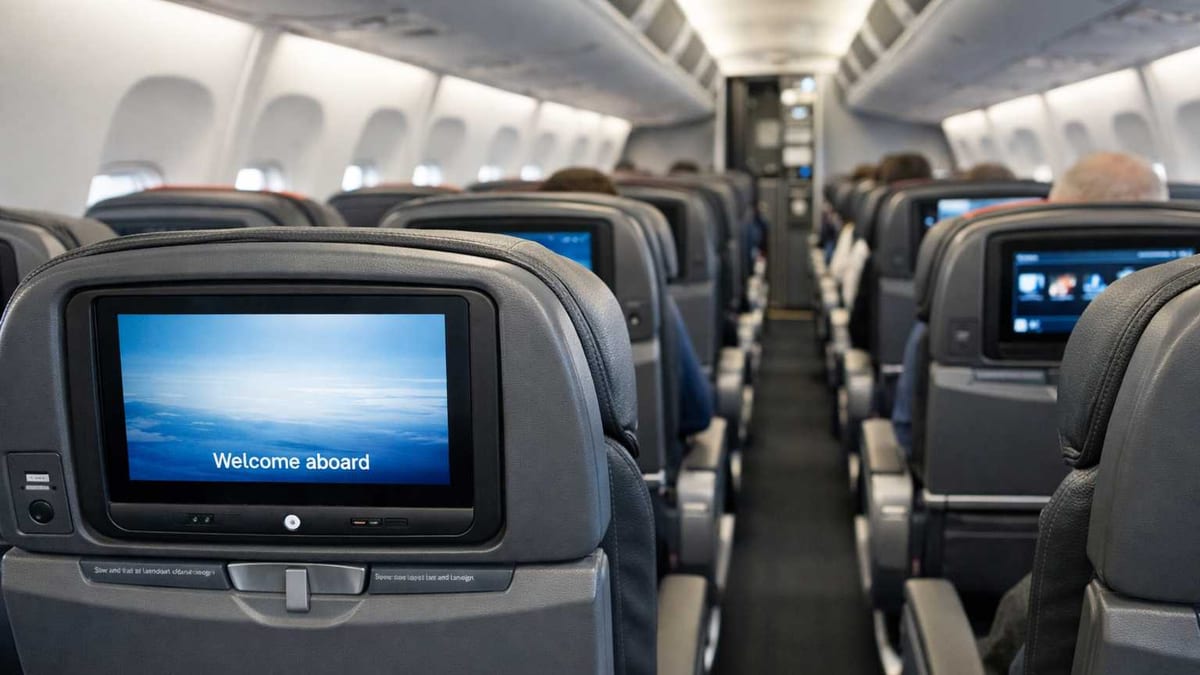
Seatback screens return across more than 800 aircraft
According to recent company disclosures and media reports, American intends to equip more than 800 single aisle aircraft with new seatback entertainment systems, reversing a prior strategy that focused primarily on streaming content to passengers’ personal devices. The retrofit and new delivery program will touch nearly the entire narrowbody operation, one of the largest such fleets in the world.
Published coverage indicates that starting in 2028 all newly delivered Airbus and Boeing narrowbody jets for American will arrive with built in screens, while existing aircraft will be modified over several years. The full program is expected to run into the early 2030s, meaning customers will see the new product gradually rolled out across domestic and short haul international routes.
The move places American more directly in line with competitors that have used embedded entertainment as a key part of their onboard offering. Analysts note that the airline had previously removed many of its screens to save weight and maintenance costs, making this decision a notable shift toward emphasizing passenger experience and perceived value, especially for higher yielding travelers.
The new screens are described in public materials as next generation systems designed to integrate with personal devices, offering on demand content, live information and connectivity tools. The airline is also expected to pair the hardware upgrade with expanded power outlets and USB charging at seats to support a range of passenger electronics.
More first class and extra legroom seating on core narrowbodies
Alongside the technology upgrades, American is dramatically reshaping the cabin layout of its narrowbody jets to increase the share of premium seating. Reports indicate that the proportion of first class and extra legroom seats on these aircraft will rise from roughly one quarter of capacity today to around 40 percent once the program is complete.
Key to this shift is a retrofit of the Airbus A319 and A320 fleets, where publicly available investor presentations and subsequent coverage show plans to add an extra row of domestic first class and expand the Main Cabin Extra section. Internal configuration charts cited in financial documents point to 12 first class seats on the A319 and 16 on the A320 after modification, together with a sizable block of extra legroom economy.
New Boeing 737 MAX 10 aircraft and reconfigured Airbus A321neo jets are also slated to feature larger premium cabins, with several reports noting a standard of 24 domestic first class seats on these types. The expanded premium footprint reflects a broader push to capture higher fares from business travelers and leisure customers willing to pay for more space, earlier boarding and additional amenities.
Industry observers say the cabin layouts illustrate an ongoing shift in the U.S. market, where large network airlines are devoting more square footage to higher yielding products rather than strictly maximizing total seat count. For American, which has trailed some rivals on profitability, the bet is that a richer mix of premium seats will translate into stronger margins over the economic cycle.
High speed connectivity and cabin design upgrades
The cabin overhaul extends beyond seats and screens to include connectivity and interior design. Recent international coverage of the plan highlights American’s intention to deploy SpaceX’s Starlink high speed satellite internet across more than 500 single aisle aircraft starting from 2027, offering faster and more reliable Wi Fi on key domestic and regional routes.
By pairing seatback entertainment with upgraded connectivity, the airline aims to support simultaneous streaming, messaging and work functions for a larger share of passengers. Travel industry analysts note that consistent, high quality Wi Fi has become a differentiator in corporate travel policies, with companies increasingly favoring carriers that provide a dependable onboard connection for employees.
In addition to connectivity, American plans to refresh cabin materials, lighting and storage on many of its narrowbodies. Investor communications and aviation trade reporting describe larger pivoting overhead bins, updated sidewalls and new color palettes intended to bring older aircraft closer in look and feel to recent deliveries. These changes are designed to create a more uniform experience across the fleet, reducing the variability that frequent flyers often encounter.
The airline has already started rolling out redesigned interiors on select A319, A320 and A321neo aircraft, and enthusiasts tracking individual tail numbers have reported the first examples entering regular service on domestic routes. As more frames pass through modification lines, customers are expected to see the new design in a growing share of schedules out of major hubs.
Long timeline and competitive context
The scale of the narrowbody transformation means that travelers will experience a mixture of cabin standards for several years. Reports on the program suggest that while some aircraft types have already begun to receive new seating and interiors, the bulk of screen installations will take place later in the decade as aircraft cycle through heavy maintenance and as new deliveries arrive.
Financial commentary has framed the initiative as part of American’s effort to close a revenue and product gap with Delta Air Lines and United Airlines, both of which have invested heavily in premium cabins, lounges and inflight technology. Recent earnings coverage shows that American’s profitability has lagged those competitors, adding pressure to generate more revenue from each available seat.
Market analysts note that expanding premium capacity can support higher average fares, but also requires careful network planning to ensure that upgraded aircraft are routed on flights where demand for first class and extra legroom seating is strongest. The airline’s hub structure, including large operations at Dallas Fort Worth, Charlotte and Miami, is expected to play a central role in deploying the renewed fleet.
While American has not publicly detailed the total cost of the narrowbody program, external estimates describe it as one of the largest cabin investments in the carrier’s history. Observers will be watching both customer satisfaction metrics and unit revenue performance in the coming years to assess how effectively the changes translate into financial gains.
Implications for travelers
For passengers, the narrowbody refresh promises a noticeably different onboard experience but on a staggered timeline. Travelers flying on retrofitted aircraft can expect a higher chance of securing a first class or extra legroom seat, whether through paid fares, buy up offers or loyalty program upgrades, particularly on busy domestic and short haul international routes.
At the same time, the increase in premium seating is likely to adjust the economics of upgrades and seat selection. Travel advisors point out that as airlines dedicate more rows to higher fare products, they may rely more heavily on dynamic pricing for those seats, potentially reducing the availability of complimentary upgrades for some frequent flyers while expanding paid options for others.
The return of seatback screens will appeal to travelers who prefer a dedicated entertainment device, including families and those who do not wish to rely on personal electronics for long stretches. Combined with expanded power outlets and faster Wi Fi, the upgraded cabins are designed to make it easier to work, stream or relax gate to gate.
With modifications spread over several years, travel planners suggest that customers who prioritize the new interiors pay attention to aircraft type and, where possible, specific configuration notes shared by airlines and third party tools. As American’s narrowbody makeover gathers pace, the gap between older and newly refreshed cabins is likely to become more pronounced before the fleet eventually converges on the updated standard.