


More news on this day
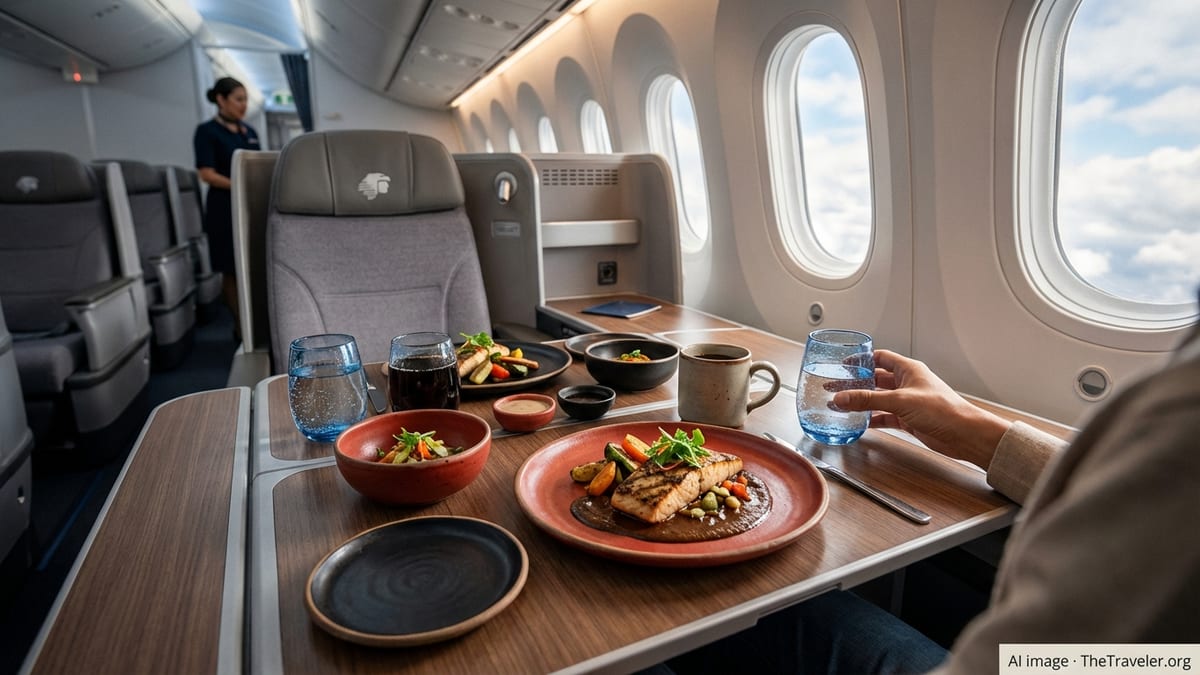
Discover Airlines is introducing a new business class menu created in partnership with Michelin-starred chef Egor Hopp, signaling a renewed focus on culinary quality and regional character across the Lufthansa Group leisure carrier’s network.
Get the latest news straight to your inbox!
A New Culinary Partnership at 30,000 Feet
The collaboration pairs Discover Airlines, the leisure-focused subsidiary within the Lufthansa Group, with Egor Hopp, a chef recognized in the Michelin Guide for his modern, produce-driven cuisine. Publicly available information indicates that the airline intends to translate his restaurant philosophy into an in-flight format tailored to the constraints of high-altitude dining.
Discover Airlines has been steadily emphasizing food and beverage upgrades in its premium cabins, and the partnership with a Michelin-starred chef positions the carrier among a growing group of airlines that lean on high-profile culinary names to differentiate their business class product. The move follows earlier menu refinements across its long-haul operation from Frankfurt and Munich, where the airline already showcases chef-driven dishes on select routes.
According to available coverage of the new initiative, Hopp’s role centers on shaping a cohesive menu identity rather than simply adding a few signature dishes. The collaboration is described as an ongoing project that will evolve with the seasons, mirroring restaurant-style menu cycles while accommodating large-scale airline catering and the logistical realities of global flight schedules.
For Discover Airlines, the new partnership is also a brand statement. As the carrier expands its leisure network to North American, African, and Caribbean destinations, a recognizable culinary figure offers a tangible marker of quality aimed at persuading travelers to pay a premium for business class on typically holiday-focused routes.
Menu Highlights: Seasonal Produce and Modern European Flavors
Early outlines of the Egor Hopp business class menu point to a modern European style with pronounced seasonal elements and a focus on clean, clearly defined flavors. Reports on the launch suggest that cold starters may revolve around lightly cured or seared fish, crisp vegetable garnishes, and bright acidic dressings, designed to remain vivid even in the muted taste environment of a pressurized cabin.
Main courses are expected to follow a similar approach, with slow-braised meats and gently cooked seafood supported by layered garnishes and sauces. Industry observers note that airline partners increasingly emphasize texture variety and strong flavor foundations such as reductions, marinades, and spice blends, techniques that align with the style associated with Hopp’s restaurant work.
The collaboration is also understood to feature at least one vegetarian or plant-forward option on each rotation, reflecting broader shifts in premium-cabin dining. Public information on Discover Airlines’ existing menus shows an increasing reliance on roasted vegetables, grains, and legumes paired with aromatic oils, herbs, and spice mixes, a pattern likely to continue under the new program.
Desserts on the new menu are anticipated to prioritize balanced sweetness and approachable flavor combinations. While detailed recipes have not been made public, airline menu rollouts of similar partnerships often include familiar profiles such as chocolate, citrus, and seasonal fruit, framed in contemporary presentations that can withstand the challenges of chilled storage and reheating on board.
Translating Michelin-Level Cooking to an Airline Galley
Designing a menu for a long-haul business class cabin differs substantially from composing a restaurant tasting menu, and publicly available commentary on comparable airline collaborations underscores the complexity of the task. Dishes must be engineered to hold flavor and texture through large-batch preparation, blast chilling, transport, and final finishing in compact galleys with limited equipment.
Reports on airline catering practices highlight that recipes typically undergo extensive testing at simulated cabin pressure and humidity levels before being approved. Chefs adjust seasoning levels, acidity, and fat content to compensate for dulled taste perception at altitude. For a Michelin-starred chef like Hopp, this means revisiting familiar techniques with an eye on consistency and robustness rather than the fine-grained à la minute adjustments possible in a restaurant kitchen.
Discover Airlines already works with large-scale catering partners used to handling premium menus, and the new project is expected to rely on these facilities for production. The chef’s recipes and plating guidelines are translated into standardized procedures, allowing cabin crews to present dishes that remain close to the original concept while fitting within the strict time windows of in-flight service.
Industry analysts note that one of the key tests for any chef-led airline menu is whether it can maintain its identity at high volume. The Egor Hopp collaboration will be judged by frequent flyers not only on headline ingredients but also on the consistency of execution across different routes and aircraft types.
Positioning Discover Airlines in a Competitive Premium Market
The partnership with Egor Hopp arrives as competition intensifies in the transatlantic and long-haul leisure markets, where several carriers have upgraded business class cabins with new seats, bedding, and expanded entertainment options. Food and beverage programs have become central to these efforts, as airlines seek to add experiential value that cannot be easily replicated by low-cost rivals.
Within the Lufthansa Group ecosystem, Discover Airlines is tasked with serving high-demand holiday destinations while offering a premium option for customers who expect a standard close to that of full-service network carriers. A chef-fronted menu allows the airline to underscore its connection to central European culinary traditions and to the broader trend of high-end dining partnerships in aviation.
Observers of airline product development suggest that such collaborations are aimed not only at current business travelers but also at leisure passengers willing to upgrade for special occasions. Long-haul flights to destinations such as the Caribbean, Southern Africa, and the Indian Ocean are often tied to milestone trips, and a recognizable chef partnership can be a persuasive detail in booking decisions.
How widely the Egor Hopp menu will be deployed across Discover Airlines’ network is expected to influence its overall impact. If the program becomes a consistent feature on core routes from Frankfurt and Munich, it may help anchor the airline’s premium positioning and support its ambition to offer a more upscale leisure experience without fully replicating the service model of its parent carrier.
A Growing Trend of Michelin Chefs in the Sky
The Discover Airlines collaboration with Egor Hopp fits within a broader movement in which airlines enlist Michelin-starred chefs to design menus for premium cabins. Carriers in Europe, Asia, and North America increasingly highlight such partnerships as evidence of their commitment to gastronomy, often cycling guest chefs and seasonal menus to keep the offer fresh.
Analysts point out that this approach serves both marketing and product-development objectives. On the one hand, a Michelin name lends immediate visibility in promotional materials. On the other, continuous menu development driven by professional restaurant chefs tends to elevate baseline quality, pushing airlines to refine sourcing, preparation standards, and presentation.
For travelers, the practical outcome is a noticeable shift from generic international dishes to menus that reflect specific culinary identities and regions. In the case of Discover Airlines, the Egor Hopp partnership appears intended to project a modern, central European sensibility, with carefully structured courses that emphasize balanced flavors and considered plating rather than sheer quantity.
As the program rolls out, frequent travelers will be watching how the new business class menu performs over time, whether seasonal changes remain ambitious, and how closely the in-flight experience matches the expectations set by the Michelin connection. The collaboration positions Discover Airlines to compete more directly with established full-service carriers that already feature chef-driven dining as a cornerstone of their premium cabins.