


More news on this day
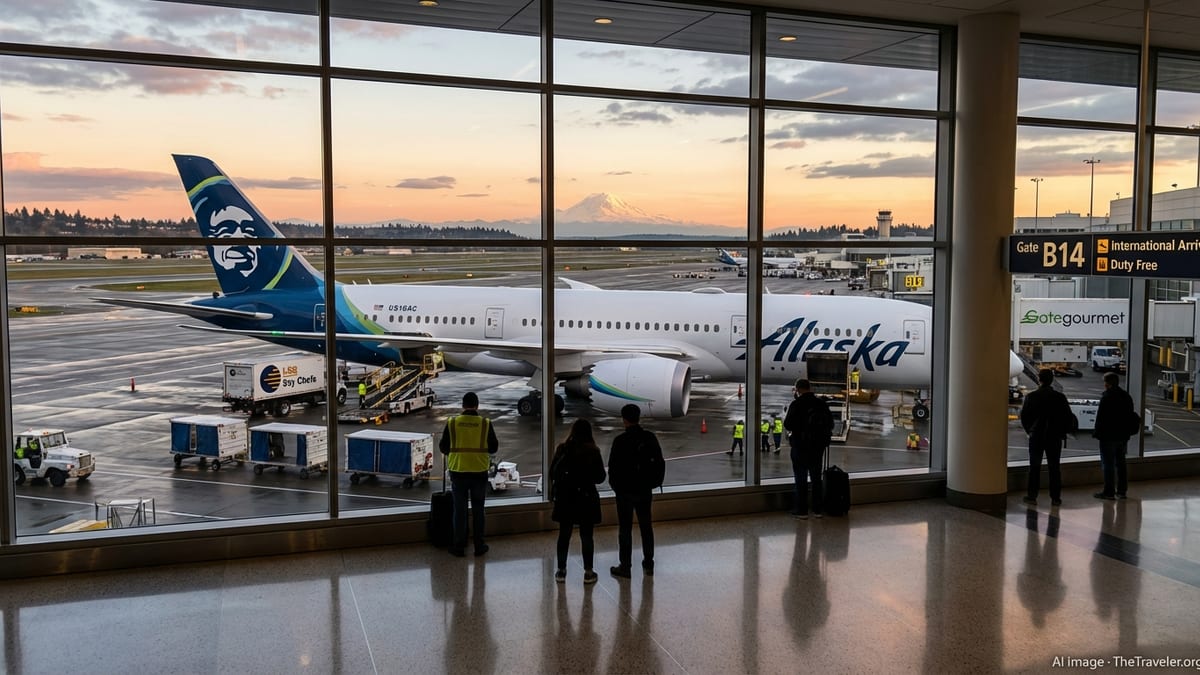
Alaska Airlines is rapidly transforming Seattle-Tacoma International Airport into a fully fledged global hub, adding new nonstop routes to Europe, expanding its long-haul widebody fleet and rolling out an upgraded travel experience aimed at competing in the transatlantic market.
Get the latest news straight to your inbox!
New European Routes Push Seattle Further Onto the Global Map
Recent route announcements show Alaska Airlines moving beyond its traditional West Coast footprint and deepening its presence in Europe from Seattle. In April 2026, the carrier inaugurated its first-ever European destination with nonstop service between Seattle and Rome Fiumicino, a seasonal route that signaled the start of a broader transatlantic strategy from its Pacific Northwest hub.
Just weeks later, the airline advanced that strategy with plans for year-round nonstop Seattle to London Heathrow flights, giving travelers direct access to one of the world’s most important aviation hubs and onward connectivity across Europe through alliance partners. Publicly available schedules indicate the new Heathrow link is designed with late-afternoon departures and early evening same-day arrivals back into Seattle to appeal to both business and leisure travelers.
The expansion continues to build momentum. In August 2025 Alaska detailed new summer-season flights from Seattle to Reykjavik, marketing the Iceland route as both a destination in its own right and a connection point to the wider European continent through partnerships. More recently, a 2027 launch has been outlined for additional European gateways, including new nonstop services from Seattle to Athens and to Paris Charles de Gaulle, reinforcing the airline’s intention to sustain a multi-destination European network from its home hub.
Together, these routes position Seattle as a competitive alternative to other West Coast gateways for transatlantic travel, giving Pacific Northwest travelers more nonstop options and opening new one-stop possibilities for flyers from across Alaska’s broader domestic network.
Widebody Growth Anchors a Long-Haul Strategy
Alaska’s European push is closely tied to a step-change in its fleet. Following its combination with Hawaiian Airlines, Alaska Air Group has gained access to a substantial widebody operation, including Boeing 787-9 Dreamliners and Airbus A330 aircraft. Current fleet disclosures show a mix of 787-9s and A330-200s supporting long-haul flying, with more Dreamliners on firm order.
The airline has described these additional 787-9 aircraft as central to its “Alaska Accelerate” plan, which calls for at least 12 international widebody destinations from Seattle by 2030. A subsequent order for five more 787s, characterized as the largest fleet order in the company’s history, further underlines the intent to grow long-haul capacity. The Dreamliners, with lie-flat business-class suites and upgraded premium economy cabins, are earmarked for flagship intercontinental routes, including Seattle to London and to key Asian and European cities.
While many of Hawaiian’s Airbus A330s continue to serve the islands market, Alaska has indicated that Honolulu-based widebodies will complement Seattle-based 787 operations, providing flexibility as new long-haul markets mature. This dual widebody fleet gives the group more options on route length, seasonality and capacity, which is important as the airline experiments with new European destinations from a single primary gateway.
For Seattle travelers, the arrival of modern long-haul aircraft marks a clear shift from regional hub to global connector, placing the city more firmly on the map for transatlantic and transpacific journeys operated under the Alaska banner.
Seattle Global Hub Vision Extends Beyond Europe
Alaska’s strategy for Seattle is not limited to Europe. The carrier is also developing a broader international portfolio that includes Asia and other long-haul markets, using the same widebody platform that now underpins its transatlantic growth. Investor presentations and airport planning documents highlight new nonstops from Seattle to Tokyo Narita and Seoul Incheon, positioning Seattle as a global gateway that links North America to key markets across the Pacific as well as the Atlantic.
Publicly available information from Alaska Air Group’s strategic roadmap describes Seattle as the flagship global hub, with Portland playing a complementary role. As the international operation from Seattle scales up, Portland is expected to absorb more domestic feed, effectively freeing up Seattle gate and runway capacity for high-value long-haul flying. That network design gives the airline more scope to add Europe and Asia frequencies without compromising its strong West Coast domestic presence.
For the airport itself, Alaska’s growth complements increasing international service from other airlines and amplifies Seattle’s status as a major North American gateway. Updated flight maps from the Port of Seattle depict a steadily expanding constellation of long-haul routes radiating from the city, with Alaska’s new services to Europe and Asia highlighted alongside existing international links.
The result is an emerging hub structure in which Alaska’s domestic network acts as a feeder platform, while widebodies connect Seattle nonstop to a curated set of global cities in Europe and Asia.
Partnerships and Alliance Ties Broaden European Reach
Alaska’s membership in the oneworld alliance is another key component of its European expansion from Seattle. Since formally joining in 2021, the airline has aligned its network and loyalty program with global partners such as British Airways, Iberia, Finnair and Qatar Airways. Industry coverage and alliance statements describe London Heathrow as oneworld’s most-served global hub, a factor that significantly boosts the value of Alaska’s new nonstop service from Seattle to Heathrow.
According to public route announcements, the Heathrow flight will operate into Terminal 3, giving passengers access to a wide range of oneworld and partner connections to destinations across the United Kingdom, continental Europe, the Middle East and Africa. Travelers originating in Alaska’s U.S. network can connect via Seattle onto the Heathrow service, then transfer to alliance partners on a single ticket while earning and redeeming miles through Alaska’s Atmos Rewards loyalty program.
The same partnership logic supports Alaska’s Iceland and Southern Europe strategies. The Seattle Reykjavik route is marketed as a gateway to the continent in collaboration with Icelandair, while future services to Paris and Athens are expected to mesh with oneworld and interline partners that maintain strong networks across Europe and the Eastern Mediterranean. This approach enables Alaska to compete effectively on reach without operating its own aircraft to every European city.
For frequent flyers, alliance membership also brings familiar benefits such as lounge access, priority services and reciprocal mileage accrual, helping Alaska position its new long-haul routes as part of a seamless global journey rather than a standalone transatlantic offering.
Lounge Investment and Premium Upgrades Target Global Travelers
Alongside new routes and aircraft, Alaska is reshaping the ground and onboard experience in Seattle to support its global ambitions. In 2026 the airline outlined plans for a large new global Alaska Lounge at Seattle-Tacoma International Airport, scheduled to open in late 2027. Publicly released details describe the facility as set to become the largest airline lounge in Seattle and among the largest in the United States, signaling a significant upgrade for international and premium travelers.
The lounge project is part of a broader “global experience” initiative that also includes redesigned long-haul cabins, new business-class suites and enhanced premium economy seating on the 787-9 fleet. Early service launches to Asia and Europe are being used to showcase the new product, which the airline portrays as an evolution of its brand tailored for intercontinental journeys out of Seattle.
On the loyalty side, Alaska has introduced higher-status tiers in its Atmos Rewards program with specific benefits tied to international flying, including expanded upgrade opportunities and additional recognition for frequent long-haul customers. The combination of modern cabins, an enlarged lounge footprint and differentiated loyalty perks is aimed at attracting both West Coast-based travelers and connecting passengers who might otherwise choose competing hubs and carriers.
Taken together, the route launches, widebody growth, alliance integration and premium investments indicate that Alaska Airlines is committing to Seattle as a long-term global hub, with Europe at the center of an ambitious international growth push.
Alaska Airlines: European routes and global lounge investment
Alaska Airlines: London, Reykjavik and new global experience