


More news on this day
Overnight rail travel between the Benelux countries and Scandinavia is set to gain a major new link, as European Sleeper prepares a direct night train from Brussels and Amsterdam to Copenhagen and Malmö, targeted to launch in April 2028.
Get the latest news straight to your inbox!
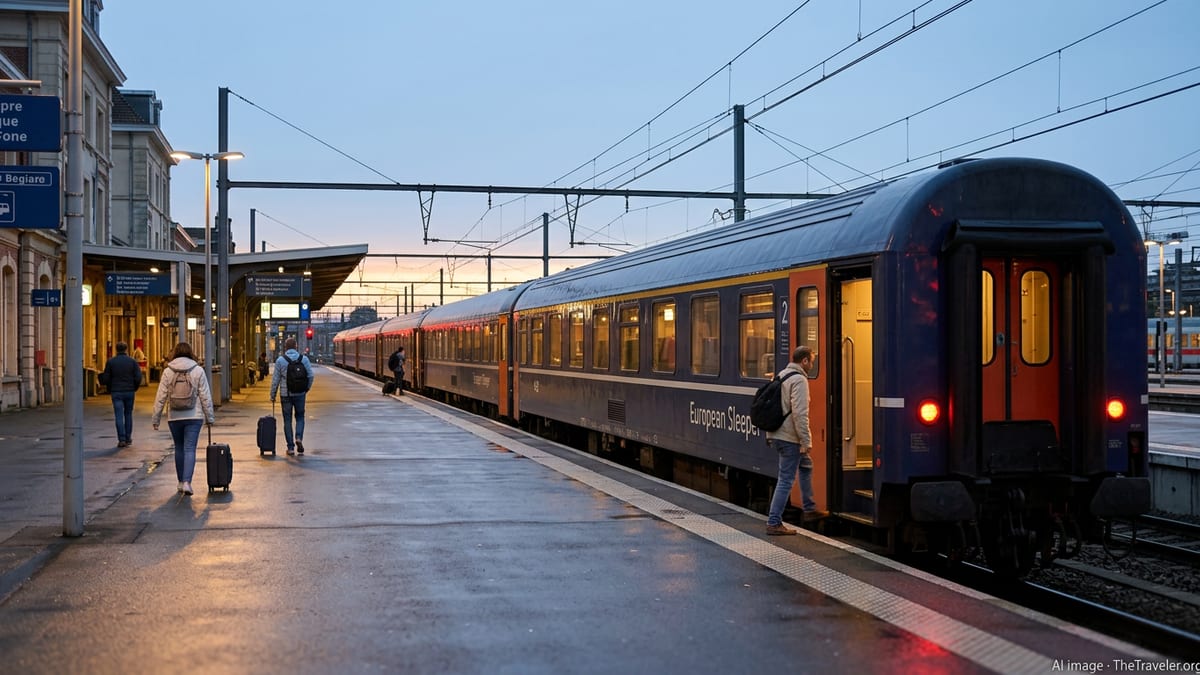
Planned Route Will Directly Connect Four Key City Hubs
According to publicly available information from European Sleeper, the planned overnight service will connect Brussels, Amsterdam, Copenhagen and Malmö on a single through route, creating a continuous rail corridor between the political and cultural capitals of Belgium, the Netherlands and Denmark, and the largest city in southern Sweden. The project is being developed in partnership with German rail operator RDC, which already has experience running international night services in northern Europe.
European Sleeper’s route overview describes the future train as a Brussels to Malmö night service running via Amsterdam and Copenhagen, with branding aligned to its existing “Good Night Train” network. The service is envisaged as an extension of the operator’s growing portfolio, which already includes night trains from Brussels and Amsterdam toward Berlin and Prague, and a forthcoming Brussels–Milan route linking Benelux with the Alps and northern Italy.
Details published by the company and in recent specialist coverage indicate that the train is designed to plug a conspicuous gap in Europe’s night train map. At present, direct overnight links between the Benelux region and Scandinavia are limited, often requiring changes in Germany or daytime connections. A through train linking Brussels, Amsterdam, Copenhagen and Malmö would create a rare single-seat night journey across four major metropolitan areas.
The planned route would also offer new overnight options for intermediate cities along the corridor, particularly in Belgium and the Netherlands, which are expected to see departures in the early evening and arrivals the following morning. This structure mirrors the timetable pattern used on European Sleeper’s current Benelux–Germany–Czech Republic services.
Launch Targeted for April 2028 With Thrice-Weekly Departures
European Sleeper states that the Brussels–Malmö night train is being prepared for a start date in April 2028, subject to infrastructure capacity approval along the multi-country route. Company information and recent reports describe a three-times-weekly operation in each direction, with departures in the early evening and arrivals late the following morning.
Destination pages for Copenhagen and Malmö published by the operator outline a provisional schedule of departures at around 19:00 from both ends of the route, arriving at approximately 10:00 the next day. The times remain indicative while the company and RDC work with infrastructure managers to secure final train paths, but they illustrate the intended passenger experience of boarding after work and waking close to city centers in either Benelux or Scandinavia.
Coverage from transport-focused outlets notes that the partners are currently engaged in timetable planning and capacity requests in each country along the corridor. This multi-jurisdiction coordination is a familiar challenge for new cross-border night trains, which must secure compatible slots not only on long-distance main lines but also through busy urban nodes such as Brussels, Amsterdam and Copenhagen.
Publicly available information emphasizes that schedule details, stopping patterns and even the final launch month could still change as the planning process progresses. Nonetheless, positioning the service for April 2028 aligns it with European Sleeper’s broader growth trajectory, including the launch of its Brussels–Milan train in 2026 and other announced expansions.
Sustainable Alternative to Short-Haul Flights
The planned night train is being framed by commentators as part of a wider shift in European travel habits, with travelers and policymakers increasingly looking to rail as an alternative to short-haul air routes. By directly linking Brussels, Amsterdam, Copenhagen and Malmö overnight, the service is expected to provide a lower-carbon option on corridors that are currently heavily served by flights.
European Sleeper’s existing services already target travelers who might otherwise fly between major European cities, offering couchettes and shared compartments designed to make rail competitive on total journey time when factoring in airport transfers and security procedures. The same model is expected to underpin the new Benelux–Scandinavia service, giving passengers the ability to cover more than 1,000 kilometers while sleeping.
Observers also note that the train will strengthen rail connectivity for city-break and business travel markets. Direct night connections between Brussels and Copenhagen, as well as Amsterdam and Malmö, could encourage two- or three-night stays that combine work and leisure, while reducing the need for early-morning or late-night flights. The addition of Malmö on the far end of the route further improves access to southern Sweden’s coastal cities and the wider Öresund region.
Tourism bodies in northern Europe have in recent years highlighted the role of night trains in diversifying visitor flows beyond traditional peak seasons. By making it easier to arrive in the morning and depart in the evening without sacrificing daytime sightseeing, overnight rail can support longer shoulder-season stays and itineraries that combine multiple countries without additional flying.
European Sleeper Expands Its Night Train Network
The Brussels–Amsterdam–Copenhagen–Malmö link is part of a broader expansion strategy for European Sleeper, a Belgian–Dutch cooperative that has been gradually building a network of open-access night trains since 2023. The company currently runs a thrice-weekly overnight service from Brussels via Amsterdam to Berlin and Prague, and is preparing to add a Brussels–Milan route that will extend its reach into Switzerland and northern Italy.
Company information and recent reporting show that European Sleeper positions itself as a network builder, deliberately stitching together routes that create new long-distance rail options beyond traditional north–south or east–west axes. Planned services to Barcelona and additional southern destinations have been trailed in previous press materials, suggesting that the operator sees its Scandinavian and Mediterranean projects as complementary pillars of a pan-European night train network.
Analysts point out that the partnership with RDC on the Brussels–Malmö line draws on RDC’s experience operating night and motorail services in Germany and Scandinavia, including routes that handle rolling stock and operational requirements across multiple electrification and signalling systems. Combining that technical expertise with European Sleeper’s existing Benelux operations could make it easier to navigate the complex regulatory and infrastructure landscape on the new corridor.
The company’s website highlights a mix of shared couchettes and private compartments on its existing trains, with price points aimed at both budget-conscious travelers and those seeking more comfort. Similar accommodation categories are expected on the new route, which would put Brussels, Amsterdam, Copenhagen and Malmö within overnight reach for a wide range of passengers, from backpackers and Interrail pass holders to business travelers willing to trade a night in a hotel for a night on board.
Implications for European Tourism and Rail Connectivity
Travel industry observers view the Brussels–Amsterdam–Copenhagen–Malmö project as another indicator that international night trains are regaining a strategic role in Europe’s transport mix. After a decade in which many cross-border sleepers were withdrawn, the gradual resurgence of night services is now creating fresh opportunities for multi-country tourism and more sustainable city-pair connectivity.
For the Benelux region, the new route would add a direct northern counterpart to European Sleeper’s existing and planned southern links toward Germany, the Czech Republic, Switzerland and Italy. For Denmark and Sweden, it promises improved access not only to Brussels and Amsterdam but also, via onward connections, to major hubs such as Paris, London and the wider high-speed rail network in western Europe.
Rail-focused commentators suggest that the new line could also encourage other operators and infrastructure managers to explore additional night connections, particularly where there is latent demand for city-to-city travel that can be captured overnight. If the Brussels–Malmö route proves successful, it may strengthen the case for further Scandinavian extensions or new services linking other northern European cities directly with the continent’s central and southern hubs.
While the final timetable, rolling stock choices and on-board products are still to be confirmed, the planned night train between Brussels, Amsterdam, Copenhagen and Malmö already signals a significant prospective boost for European tourism. By offering an additional, lower-carbon option for long-distance travel across multiple borders, it illustrates how overnight rail is increasingly central to Europe’s efforts to reshape mobility and tourism in a more sustainable direction.
European Sleeper official site
European Sleeper: Night train to Malmö information page
The Local Denmark: Coverage of the planned Brussels–Malmö night train
Aviation24: European Sleeper plans direct Brussels–Malmö night train