


More news on this day
Manchester Airport is reporting a mix of scattered cancellations and rolling delays today, with disruption affecting a handful of departures and arrivals across its three terminals and causing longer waits for many passengers on busy summer routes.
Get the latest news straight to your inbox!
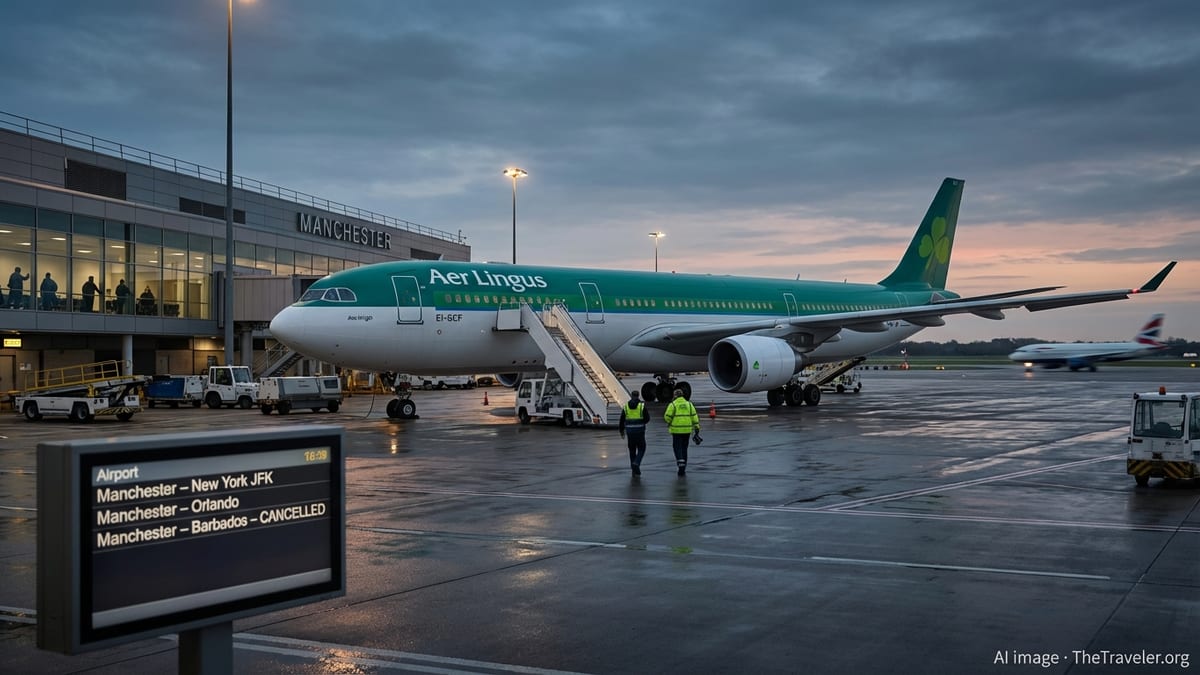
Patchy disruption across terminals and airlines
Publicly available live flight boards for Manchester Airport on 18 June 2026 show a limited number of outright cancellations alongside a broader pattern of delayed flights, rather than a full-scale shutdown of operations. The impact is uneven, with some services running close to schedule while others face hold-ups of 30 minutes or more.
Reports indicate that the majority of today’s cancellations are concentrated around a small cluster of departures and arrivals, particularly on leisure routes to Mediterranean destinations and a few European hubs. Earlier in the day, airport information screens listed several services marked as cancelled from Terminal 2, echoing recent days when a small number of flights to holiday hotspots were withdrawn at short notice.
According to published coverage of recent disruption, Manchester has experienced occasional cancellations on flights to Turkish resorts such as Bodrum and Antalya, as well as knock-on delays on other short-haul services passing through the same terminal. While today’s boards suggest that most flights remain scheduled, travellers on affected routes are facing rebooking or rerouting options and, in some cases, extended time in the terminal.
Despite these issues, flight tracking platforms still show a steady flow of departures to major European cities including Munich and Fuerteventura, as well as long-haul services, indicating that the disruption is significant for those affected but not airport-wide.
Delays driven by busy summer traffic and wider network strains
Today’s delays at Manchester Airport are unfolding against a backdrop of heavy summer travel across Europe and North America, where weather and operational problems at other hubs are adding pressure to airline schedules. Aviation news outlets report thousands of delays in the United States and congestion at several major European airports in recent days, contributing to tighter aircraft and crew rotations across the wider network.
Manchester’s role as a key northern gateway means it is closely tied into this broader system. When aircraft are held up at other airports, late inbound arrivals can cascade into delayed departures from Manchester, even when local conditions are relatively stable. Flight-status data for individual services from the airport today show some departures running behind schedule by modest margins while others still depart close to planned times.
Operational planning documents for the current summer season highlight infrastructure works and airspace constraints across parts of Europe, which can limit capacity at peak hours. While there is no indication of a major new constraint specific to Manchester today, these network-wide pressures increase the likelihood that minor delays on one leg of a journey translate into missed slots or further hold-ups later in the day.
Travel industry reports also note lingering challenges around staffing and ground handling at busy hubs, particularly at peak times. This can affect everything from check-in and baggage loading to aircraft turnaround times, further increasing the risk of rolling delays through the afternoon and evening.
Recent incidents highlight vulnerability to operational shocks
Recent days have underlined how quickly conditions at Manchester Airport can change when unexpected incidents occur. Earlier this month, published accounts described a Ryanair departure from Manchester that was diverted due to disruptive passengers, prompting a period of disruption that coincided with several cancellations and multiple delays across the same terminal.
Other coverage has referenced diversions into Manchester from elsewhere in the United Kingdom when adverse conditions or local supply issues have affected airports such as Edinburgh and Glasgow. In those situations, additional unscheduled arrivals can increase pressure on stands, ground staff and air traffic flow, which in turn can contribute to small spikes in delay statistics over the course of a single day.
Historical reports from the airport and local media also recall how infrastructure and power issues have previously led to widespread disruption, underscoring the sensitivity of airport operations to technical faults that affect runways, taxiways or terminal systems. Although there is no suggestion of a comparable incident today, such episodes provide important context for travellers seeking to understand why delays can accumulate even when weather appears benign.
Industry observers note that, as passenger numbers continue to climb back above pre-pandemic levels on certain routes, even minor operational shocks can have a more visible impact on daily cancellation and delay tallies at major regional hubs like Manchester.
Impact on passengers and key routes
For passengers at Manchester Airport today, the most immediate effect of the disruption is extended waiting times and, for those on cancelled flights, the need to seek alternative arrangements. Holidaymakers bound for sun destinations are particularly exposed, as some of the affected flights connect to high-demand resorts where spare capacity on the same day can be limited.
Travellers on city-to-city European routes appear to face more modest inconvenience, with many delayed flights still expected to depart on the same calendar day. Business travellers and those with onward connections, however, may still experience difficulties if even a short delay causes them to miss tight transfer windows at major hubs.
Long-haul passengers using Manchester as their starting point are also vulnerable to knock-on effects when feeder flights arrive late or aircraft are repositioned because of disruption elsewhere. While most long-haul services remain on the boards as operating, schedule adjustments earlier in the day can require airline operations teams to reshuffle aircraft and crews at short notice.
Travel commentators underline that today’s pattern of disruption at Manchester mirrors broader trends across Europe, where airports are balancing record passenger volumes with infrastructure and staffing that, in some cases, remain finely stretched.
Guidance for travellers flying from Manchester today
Publicly available advice from airlines, flight tracking services and travel outlets consistently stresses the importance of checking individual flight status before setting out for the airport, particularly on days like today when there is a mix of cancellations and delays. Many carriers provide near real-time updates via their own websites and mobile apps, as well as through text or email notifications for booked passengers.
Passengers are also widely encouraged to allow additional time at the airport during busy summer periods, taking into account possible queues at check-in, security and border control. Recent experiences across European airports, including those reported from Athens and other hubs, show how new border systems and heavy passenger volumes can slow processing even when flights themselves are operating.
For those already affected by cancellations at Manchester today, consumer advocates generally recommend engaging directly with the operating airline to understand rebooking options, hotel arrangements where applicable, and eligibility for refunds or compensation under relevant regulations. The specific remedies available depend on the cause of the disruption and the type of ticket purchased.
As the day progresses, the pattern of delays and any additional cancellations at Manchester Airport is likely to evolve, particularly during evening peak periods. Travellers scheduled to fly later today are advised to monitor updates closely and be prepared for possible schedule changes as airlines and the airport work to keep traffic flowing through one of the United Kingdom’s busiest aviation gateways.