


More news on this day
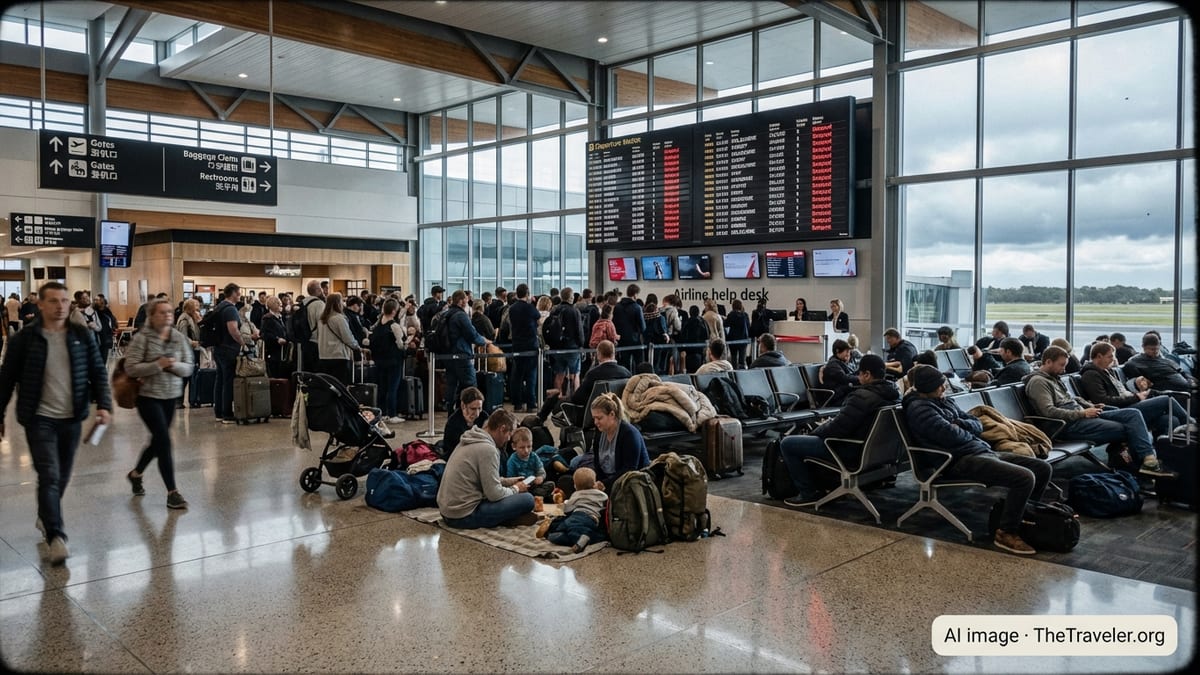
Travellers moving through Adelaide Airport on June 10 faced a fresh wave of disruption as cancellations and rolling delays involving Alliance Airlines flights triggered missed connections and schedule changes across some of the airport’s busiest domestic and international routes.
Get the latest news straight to your inbox!
Operational Issues Converge at a Growing International Hub
Adelaide Airport has been experiencing a sustained upswing in traffic through 2026, with publicly available figures showing record monthly passenger numbers and a growing portfolio of international services to destinations such as Bali, Hong Kong and soon Shanghai. That additional volume has left the terminal more exposed when even a small cluster of cancellations or delays hits the schedule.
On June 10, two Alliance Airlines services operating in and out of Adelaide were cancelled, while several others experienced extended turnaround and departure delays. Flight-tracking data and schedule information indicate that the affected movements were primarily regional and domestic services feeding into Adelaide’s broader network, including connections to Canberra, Brisbane, Melbourne, Perth and Sydney.
Although Alliance Airlines predominantly operates domestic and regional routes within Australia, many of its flights act as vital links for travellers heading to or from international services. When those regional feeders are disrupted, passengers bound for onward flights to Indonesia, Fiji and other overseas destinations often face tight connections, rebookings or overnight stays.
The latest disruption follows a pattern evident across the Australian market in recent months, where small operational shocks, staffing constraints and air traffic control restrictions have occasionally cascaded into wider schedule impacts for multiple carriers sharing the same hub airports.
Cancellations and Delays Ripple Into Domestic Trunk Routes
Alliance Airlines’ Adelaide operations are closely intertwined with major domestic corridors. Regional flights from South Australian and interstate cities arrive into Adelaide in time for departures to Canberra, Brisbane, Melbourne, Perth and Sydney, among others. When two of those Alliance-operated services were cancelled on June 10, passengers who had built itineraries around coordinated connections faced significant disruption.
Publicly available flight and schedule data show that several departures on key domestic routes were pushed back as ground operations and airline partners worked to reallocate aircraft and manage passenger rebooking. Even where flights operated by other carriers departed broadly on time, load patterns, seat availability and gate allocations were all affected by the earlier cancellations.
For travellers, the practical impact was felt in longer queues at customer service counters, reissued boarding passes and a higher risk of missed onward connections to Australia’s east coast capitals. Some itineraries involving multi-leg routings via Adelaide to cities such as Canberra or Brisbane required complete rebooking, particularly where the first sector was ticketed on an Alliance-operated service and the second on another airline.
This type of knock-on effect is increasingly common at busy mid-sized hubs. With scheduling margins tightened to maximise aircraft utilisation, the loss of even a small number of flights can force airlines to consolidate services, combine loads onto larger aircraft or cancel low-demand rotations at short notice.
International Links to Indonesia and the Pacific Under Pressure
While Alliance Airlines itself focuses on domestic and regional flying, its Adelaide services play an important supporting role for outbound and inbound international travel. Adelaide Airport currently hosts a record number of overseas carriers, with published airport statistics highlighting strong growth on routes to Southeast Asia and the Pacific, including Bali and Fiji.
Travellers headed from regional Australia into Adelaide on an Alliance-operated flight often connect the same day onto services operated by other airlines bound for Denpasar, Nadi or onward long-haul destinations. The cancellations and delays on June 10 therefore had a disproportionate effect on those with through-tickets that stitched together domestic and international sectors.
Reports from airline schedule and tracking platforms indicate that several evening and late-afternoon departures saw elevated numbers of passengers attempting to rebook after missing minimum connection times. In some cases, travellers to Indonesia and Fiji were re-accommodated on later flights or routed via other Australian gateways such as Sydney or Melbourne.
The disruption also highlights the sensitivity of international itineraries originating in secondary hubs. While Adelaide’s international offering has expanded significantly, its long-haul and leisure flights typically operate at lower frequencies than those from Sydney or Brisbane. As a result, when a feeder leg fails, the next available international departure may be a day or more away, complicating travel to holiday destinations across the region.
Passenger Experience Strained as Contingency Plans Activate
For passengers caught in the middle of cancellations or extended delays, the experience at the terminal quickly becomes the defining feature of their journey. Social media posts and informal online reports from June 10 described longer lines at check-in, busy seating areas near domestic gates and ongoing announcements of revised departure times at Adelaide Airport.
Travel forums and consumer-rights resources advise that, in Australia, rebooking options and compensation vary depending on the cause of a cancellation and the ticket type purchased. When an airline initiates a cancellation for operational reasons, passengers are typically entitled to rebooking on a later service or a refund, but accommodation and incidental expenses may not always be covered.
With Alliance’s operations closely integrated into broader domestic networks, some affected travellers were reportedly moved to flights operated by partner airlines on overlapping routes, while others were placed on later Alliance departures from Brisbane, Perth or other hubs into Adelaide. In constrained markets, however, spare seats can be limited, particularly on peak-day services and during school holiday periods.
Travel specialists frequently recommend that passengers build additional buffer time into itineraries that rely on regional feeders into international hubs, especially where connections involve separate tickets or different airlines. The events at Adelaide on June 10 demonstrate how quickly conditions can shift for those with tight turnarounds between flights.
What Travellers Should Watch in the Days Ahead
In the immediate aftermath of the June 10 disruptions, there were no indications from publicly accessible schedules that Alliance Airlines planned a prolonged reduction in Adelaide operations. However, recent industry trends in Australia and overseas suggest that carriers can adjust frequencies or consolidate lightly booked flights at relatively short notice when facing crew shortages, maintenance requirements or shifting demand.
Travel analysts point to a broader environment in which airlines across multiple regions are fine-tuning networks in response to fuel costs, aircraft availability and post-pandemic travel patterns. In this context, passengers using Adelaide as a domestic or international gateway may continue to see occasional timetable tweaks from regional operators, including Alliance, that feed larger carriers and long-haul services.
For upcoming trips that involve Alliance-operated sectors into or out of Adelaide, travellers are being advised by consumer advocates and travel agencies to monitor their bookings closely in the days before departure. Tools such as airline apps and airport departure boards can provide early notice of schedule changes, giving passengers more time to explore alternative routings if needed.
The latest disruptions reinforce Adelaide Airport’s evolving role as a high-growth hub where regional, domestic trunk and international routes intersect. As the airport adds new links to Asia and the Pacific, ensuring resilience in its network of feeder services, including those provided by Alliance Airlines, will remain critical to keeping passengers moving smoothly between South Australia, the rest of the country and destinations abroad.