


More news on this day
Travelers heading to Italy this week face significant disruption as a nationwide general strike spreads across dozens of cities on 30 October, affecting flights, rail connections and local public transport alongside schools, healthcare and other public services.
Get the latest news straight to your inbox!
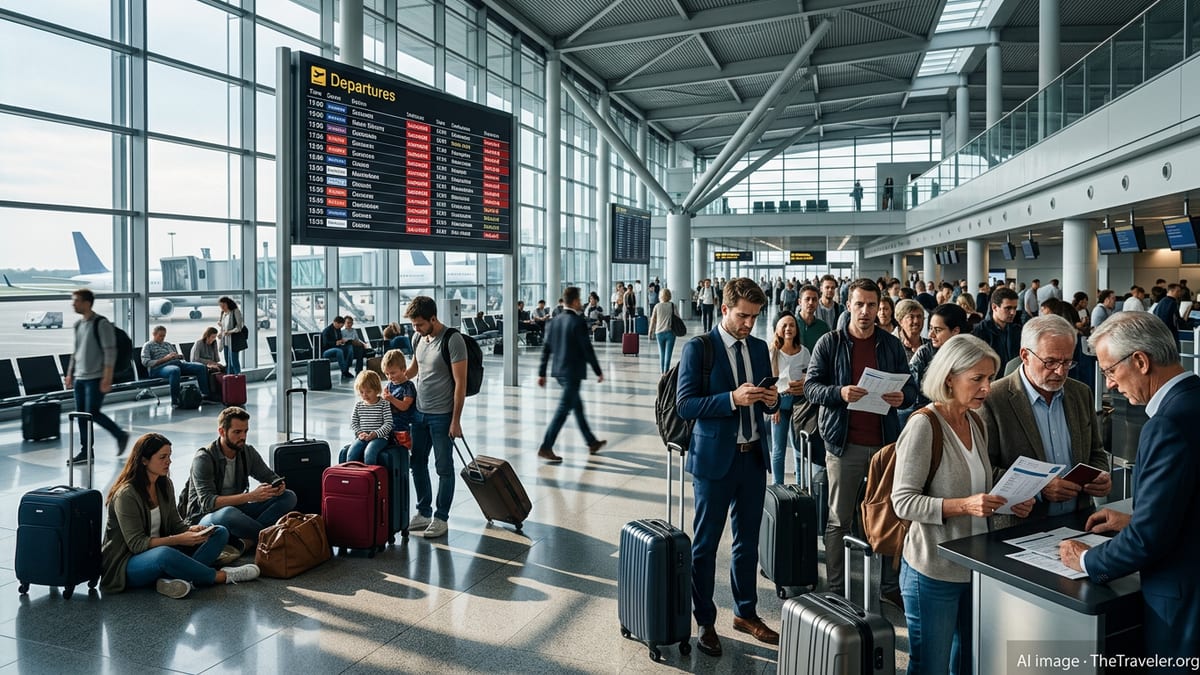
General Strike Hits on 30 October Across Italy
Publicly available strike calendars from Italy’s Ministry of Infrastructure and independent monitoring sites show a nationwide general strike under way on Friday 30 October 2026, involving public and private sectors across the country. The action is scheduled as a full 24 hour walkout, with many categories listed as participating, from public administration to retail and logistics.
Union announcements compiled by national strike portals indicate that the main call for action runs from 21:00 on Thursday 29 October to 20:59 on Friday 30 October for many transport services, creating knock-on disruption through both days for anyone arriving in or departing from Italy. Although participation levels vary by sector and region, services are being curtailed in major urban centers as well as smaller cities.
Foreign travel advisories issued in recent days highlight that this general strike caps a month of repeated industrial action across Italy, focusing on rising living costs and employment conditions. For visitors, the immediate effect is felt most sharply in transport, with rail, air travel and city transit all experiencing cancellations or reduced timetables.
Travel information channels describe the current strike as part of a broader wave of unrest and protests in Europe in 2026, with Italy seeing a particularly dense calendar of stoppages throughout October. The 30 October action is one of the few to be designated as nationwide, which explains the breadth of its impact on mobility.
Transport Disruptions: Flights, Trains and Local Transit
Strike listings published by specialized Italian websites show that rail services operated by Trenitalia, Italo and regional companies are affected between 21:00 on 29 October and 21:00 on 30 October, with a mix of cancellations and reduced frequencies. Some long distance and essential services continue to run under Italy’s minimum-service rules, but travelers are being advised in official guidance to expect substantial changes to previously booked departures.
In civil aviation, information from Italy’s National Civil Aviation Authority confirms that a strike by personnel at selected operators and airports has been notified this month, and that the usual list of “guaranteed flights” applies during walkouts. Separate strike notices detail a 24 hour stoppage on 30 October at the Tuscan airports of Florence and Pisa, covering ground handling and related services from 00:00 to 23:59, which is likely to cause delays and cancellations throughout the day.
Local public transport, including buses, trams and metro systems, is also affected in many cities. Data from national and regional strike calendars show full day actions in Tuscany and multi sector stoppages across the country, which include urban transport staff. However, Italian regulations require minimum local services during peak commuter periods, broadly set around 06:00 to 09:00 and 18:00 to 21:00 on working days, so some connections continue to operate in those time bands.
Highways and toll booths are part of the wider industrial action as well. Community impact notices circulated to international residents and travelers in Italy state that highway toll staff began strike participation at 22:00 on Thursday 29 October, potentially slowing road journeys on key routes. Ferry and port operations are also listed among the sectors with strike calls in place for 30 October, with unions representing port workers joining the nationwide protest.
Impact on Major Cities and Key Travel Hubs
Reports compiled by Italian and international media over the past week describe demonstrations and pickets planned in Rome, Milan and other large cities in connection with the general strike. In Rome, the concentration of government buildings and national rail links through Roma Termini means that both administrative services and transport flows face pressure, with travelers advised to allow extra time for transfers between rail stations, airports and accommodation.
Milan, as Italy’s primary business and transport hub in the north, is experiencing disruptions on its suburban and regional rail lines, as well as on the city’s metro, tram and bus networks where staff are adhering to the strike call. The involvement of operators such as Trenord, which manages commuter services in Lombardy, is creating additional challenges for airport access to Milan Malpensa and Linate when combined with any aviation-related walkouts.
Other regional centers, including Florence, Pisa, Turin, Bologna, Genoa, Naples and Palermo, are also listed on strike calendars as facing transport or multi sector stoppages on 30 October. In Tuscany, the combination of airport strikes and a broader regional walkout announced for the public and private sectors means that visitors attending conferences and cultural events in Florence are being urged by organizers and travel advisories to monitor local transport channels closely.
The breadth of participation across dozens of cities results in uneven but widespread disruption. Some municipalities are maintaining more normal services where participation is lower, while others are seeing concentrated protest activity in central squares and near railway stations, slowing movement even where transport remains operational.
Government Travel Advice and Safety Considerations
Updated travel advice from several foreign ministries, including the United States, United Kingdom and Australia, notes that strikes and demonstrations are a recurring feature of life in Italy and can be announced at short notice. Current advisories emphasize that work stoppages frequently affect air travel, rail, buses and local transit, and recommend that travelers reconfirm bookings directly with carriers and check the status of flights and trains before departure on days affected by industrial action.
The United States travel advisory for Italy, last revised in September 2026, highlights that transport strikes can disrupt plans and that travelers should be prepared for schedule changes, crowding and delays when stoppages occur. Recent updates by other governments in late October 2026 explicitly flag ongoing strikes, protests and demonstrations in parts of Italy as a potential source of disruption to travel and essential services, even though the overall security rating for the country remains unchanged.
Advice from foreign governments also underlines that large gatherings connected with strikes and demonstrations may occur near transport hubs, government buildings and main squares. Travelers are encouraged to stay informed through local news and official channels, avoid areas where confrontations appear likely, and follow instructions provided via public announcements at stations and airports when services are rescheduled or replaced with alternative transport.
Health, education and other public services can also be affected by general strikes. Notices about the 30 October action mention likely disruption to schools, universities and healthcare facilities, which may be relevant for visitors with scheduled appointments or those traveling for study programs. Where possible, travelers are urged to confirm opening hours and appointment status directly with institutions on strike days.
Practical Advice for Travelers Caught in the Strikes
Given the scale of the 30 October general strike, travel advisories recommend that visitors build additional flexibility into their plans. For those flying into or out of Italy, airlines typically offer rebooking options on affected days; publicly available information from previous strike events shows that carriers sometimes cancel flights in advance to reduce on-the-day disruption, rebooking passengers onto services outside the strike window where capacity allows.
Rail passengers are advised to consult official timetables on the websites and apps of operators such as Trenitalia and Italo, which publish updated strike schedules and lists of guaranteed trains under Italian law. Where key connections are essential, such as airport transfers or cross border journeys, booking departures outside the core strike hours or on alternative days may reduce the risk of cancellations or severe delays.
Within cities, walking or using taxis and licensed ride services may be necessary when buses, trams and metro lines are running at reduced frequency or not at all. However, in some locations taxi availability can be limited during strikes, and local taxi services themselves may be affected if drivers participate in industrial action, so travelers should not rely on last minute arrangements.
Travelers already in Italy are encouraged by official and independent travel guidance to monitor local news bulletins, transport authority announcements and strike calendars for updates, as some unions may adjust participation or suspend action following negotiations. Because strike notification rules require advance written notice, additional nationwide stoppages are usually visible in public calendars several days ahead, allowing visitors to plan around the most disruptive dates where itineraries are still flexible.