


More news on this day
Autumn travelers heading to Italy are facing a confusing patchwork of transport strikes, shifting strike dates and partial service guarantees, as unions, operators and the government clash over working conditions and the right to walk out during one of the country’s busiest travel periods.
Get the latest news straight to your inbox!
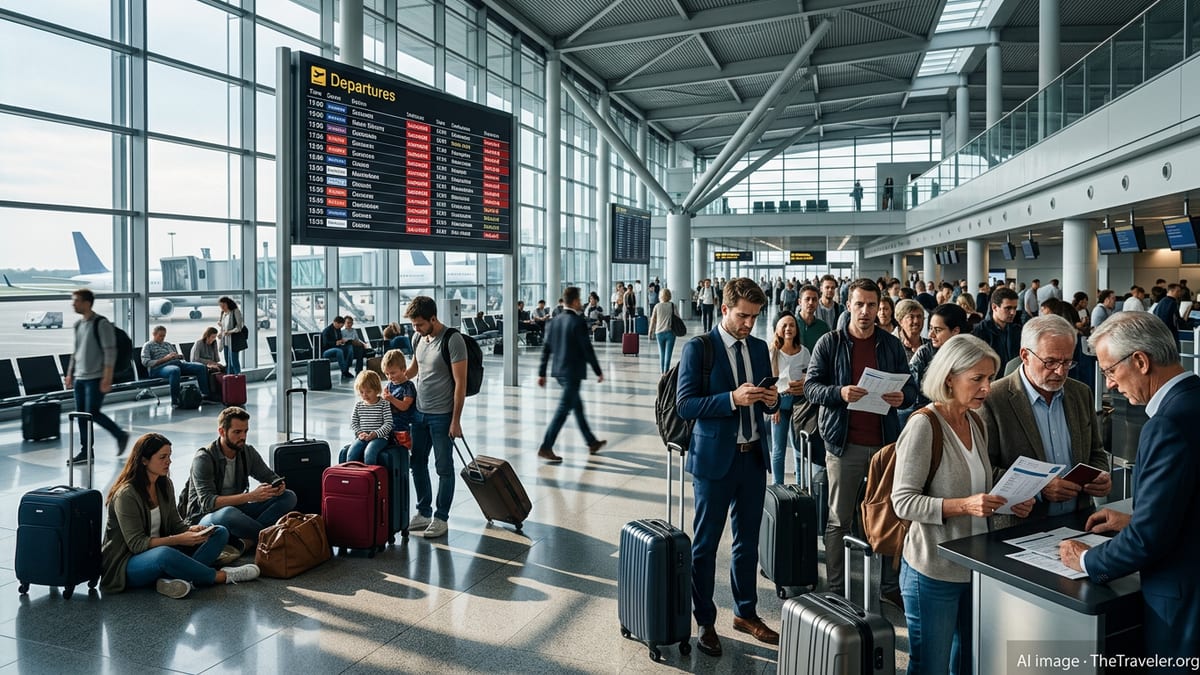
General Strike Decree Leaves Travelers Puzzled
Italy’s latest national general strike on Friday 30 October 2026 has highlighted how opaque the country’s strike rules can appear to visitors. A nationwide stoppage backed by grassroots union USB formally covered public and private sectors across the country, yet a ministerial order issued in advance deferred strikes in key transport services including rail, aviation, local public transport, taxis, maritime services and some road safety roles. Publicly available information on specialist strike-tracking sites indicates that trains and most city networks were instructed to operate normally on the day, even as other sectors observed the walkout.
The deferral was linked to a protected “no strike” window around the All Saints holiday, which runs from 30 October to 5 November and is designed to safeguard mobility when many Italians travel for family visits and religious observance. Reports note that the national strike guarantee commission warned that a full transport shutdown during this period would seriously undermine the public’s right to travel, prompting the government to restrict the impact on essential services. For foreign visitors who had seen warnings of nationwide disruption on booking sites and travel blogs in the weeks before, the late change added to the sense of uncertainty.
Advance calendars compiled from Ministry of Infrastructure and Transport filings had initially flagged 30 October as a day of heavy disruption, with rail staff scheduled to stop from the evening of 29 October through much of the following day and aviation personnel listed for a 24 hour action. When the decree scaled back transport participation, some travelers with flexible plans chose to keep existing reservations, while others had already rebooked to avoid the perceived risk. Travel industry commentary describes a wave of last minute timetable checks and customer service queries as passengers tried to understand whether their specific train or flight would actually move.
The general strike followed a series of regional actions throughout October, including walkouts at city transport companies, airport handling firms and rail infrastructure units in Tuscany, Emilia Romagna, Campania and Sicily in the weeks leading up to the national date. Strike trackers that aggregate Ministry data show that some of these earlier actions were also reduced or withdrawn at short notice, reinforcing the impression of a fluid and sometimes unpredictable landscape for anyone planning to cross the country by train or plane this fall.
Flights Hit by Cabin Crew and Airport Actions
Air travelers have faced a separate layer of disruption from targeted strikes affecting flight crews and ground handling. Notices from the Italian civil aviation authority list, among others, an easyJet cabin crew strike on 16 October 2026 and local airport handling actions at Pisa and Florence, some of which were later called off or shortened. Strike summary services based on ministerial filings record that the easyJet action was moved from an earlier date, underlining how rapidly these events can shift even after initial announcements.
To limit the impact on passengers, Italy applies a system of protected flights in the event of a strike. Public guidance issued by the civil aviation authority explains that certain services must still operate, including flights scheduled at specific peak times, connections to and from the main islands and services that would otherwise leave passengers stranded far from home. Airlines are required to publish lists of guaranteed flights on their own channels when action is confirmed, but these lists are often released only a few days ahead of time, obliging travelers to check repeatedly in the run up to departure.
Past strike logs from autumn 2026 show how uneven the effect on air traffic can be. Actions by airport security and handling staff at hubs such as Rome Fiumicino, Venice, Alghero, Cagliari and regional Tuscan airports in September and October led to delays and cancellations concentrated in particular time bands, while other parts of the day operated almost as normal. In some cases strikes went ahead for a full 24 hours; in others they were curtailed or canceled following negotiations, leaving timetables largely intact.
For visitors arriving from long haul destinations, the main practical challenge has been the lack of a single authoritative dashboard combining airline information, airport notices and strike calendars in plain language. Industry observers report that many foreign tourists first learn of Italian strike rules through fragmented references on ticketing sites and travel forums, rather than directly from carriers or authorities. This can lead to travelers overestimating the risk on fully protected flights or, conversely, underestimating the chance of delays when local airport staff are involved even if their airline’s own crew are not striking.
Rail and Local Transport Disruptions Across Regions
Italy’s dense rail and urban transport networks have also been affected by a mosaic of industrial actions this fall. Official strike registers maintained by the Ministry of Infrastructure and Transport show multiple rail-related stoppages across September and October 2026, from customer operations staff in Emilia Romagna to infrastructure employees in Palermo, along with walkouts at private freight operator SBB Cargo Italia scheduled for November. Urban transport companies in cities including Milan, Genoa, Florence, Bologna and Naples have mounted their own strikes, sometimes for a few hours in the middle of the day and sometimes for a full 24 hours.
Rail-focused information services drawing on ministry data point out that not all listed strikes translate into widespread cancellation. Several actions involving rail infrastructure units were withdrawn before they began, and others were structured to avoid the busiest commuter windows. Nonetheless, past event summaries indicate that days with overlapping city bus, tram and metro strikes can severely complicate onward travel from mainline stations, even when long distance trains are running. Visitors arriving in Florence or Naples, for example, have at times found local buses and metro services suspended for several hours around midday.
The national rail operator Trenitalia publishes details of trains that must run even during a strike, in line with rules on essential public services. Public information outlines guaranteed “fasce orarie” on regional routes, typically from 06:00 to 09:00 and from 18:00 to 21:00 on weekdays, with slightly different bands on holidays. Long distance services such as Frecciarossa high speed trains and InterCity connections are also subject to minimum service lists. Other operators, including Italo, are expected to publish similar guidance for their own networks, but coverage and clarity can vary, particularly for regional and cross-border services.
Strike registers confirm that some of the most disruptive days for rail users this season have not necessarily been the nationally advertised general strikes, but instead smaller scale walkouts at key urban operators or regional bus companies feeding major rail hubs. In the second half of October, actions at urban transport firms in Bologna, Tuscany and southern regions created bottlenecks around stations during limited time windows, complicating last mile connections for travelers who had successfully completed intercity journeys.
Legal Framework and the “Right to Travel”
Behind the scenes, Italy’s strike calendar is shaped by a detailed legal framework governing industrial action in essential public services. Law 146 of 1990 and subsequent amendments define conditions under which strikes may take place in sectors such as transport, and require that minimum levels of service be guaranteed. Legal analyses and recent opinions by European social rights bodies describe the Italian system as an attempt to balance the constitutionally protected right to strike with other fundamental rights, including freedom of movement and access to essential services.
The law requires unions and employers to notify strikes in advance, specifying duration, sectors involved and geographical scope. A national commission reviews planned actions and can recommend schedule changes or service guarantees when it judges that the combined effect of multiple strikes or their timing would inflict excessive harm on the public. This mechanism was visible in the run up to the 30 October 2026 general strike, when the commission highlighted the risk of widespread disruption during the All Saints travel window and the government subsequently ordered that many transport stoppages be deferred.
At the operational level, transport companies are obliged to work with unions to identify which routes and time bands will remain active during a strike, and to inform users through their usual communication channels. For rail operators, this has produced standardized national lists of guaranteed trains, while in aviation the civil aviation authority coordinates with airlines and airport managers to preserve a core skeleton of services. Urban and regional bus firms, which are often smaller and more fragmented, sometimes provide less uniform information, contributing to the confusion experienced by tourists who move between regions.
Academic commentary on the Italian model notes that, while it has reduced the risk of total shutdowns, it can give rise to complex and frequently changing strike calendars that are difficult for occasional users to interpret. Visitors planning multicity itineraries over several weeks in autumn 2026 have had to navigate a succession of localized actions, national protests and partial suspensions, with only some of the information available in widely spoken foreign languages. This structural complexity amplifies the impact of even short strikes on international tourism and business travel.
How Fall Visitors Can Navigate Ongoing Strike Risks
For travelers currently in Italy or preparing trips later in the season, publicly available strike calendars and official operator updates are the main tools for reducing uncertainty. Several independent platforms collate data from the Ministry of Infrastructure and Transport and display upcoming actions by date, sector and region, while rail and aviation regulators publish lists of guaranteed services once strikes are confirmed. Although these resources are not a substitute for direct communication from carriers, they help visitors understand whether disruption is likely to be localized to a single city, focused on airport handling, or spread across multiple national operators.
Travel industry advisories for autumn 2026 generally recommend that visitors pay close attention to whether a strike covers an entire 24 hour period or only specific time slots during the day. Many recent city transport walkouts, from Genoa to Naples, have been limited to four hour windows, allowing commuters and tourists to adjust sightseeing or transfer plans around the stoppage. By contrast, some airport and tramway strikes have lasted all day, requiring more substantive changes to itineraries and, in a few cases, overnight stays near major hubs when connections were missed.
Another recurring theme in public guidance is the distinction between fully canceled services and delays caused by staff shortages or work-to-rule actions. Past strike reports from September and October show days where official cancellations remained limited, but knock on effects, including slower security checks at airports or reduced staffing at ticket offices, led to long queues and missed connections. Travelers who left additional time for transfers between train and metro, or between long haul flights and domestic connections, were better able to absorb such delays.
As the autumn season progresses, strike notices published by the transport ministry already list additional actions scheduled in November and December, including freight rail walkouts and a nationwide general strike covering public and private categories in early December. While further ministerial intervention could yet reshape the impact on passenger services, the pattern seen in October suggests that international visitors will need to keep monitoring developments even after arrival. For now, Italy remains fully open to tourism, but journeys across the country require more advance checking than usual as unions and authorities continue to test the limits of the strike rules.