

More news on this day
Hartsfield-Jackson Atlanta International Airport has begun rolling out a modernized Plane Train system with new Alstom-built vehicles and technology upgrades intended to ease crowding and speed terminal transfers for millions of passengers each year.
Get the latest news straight to your inbox!
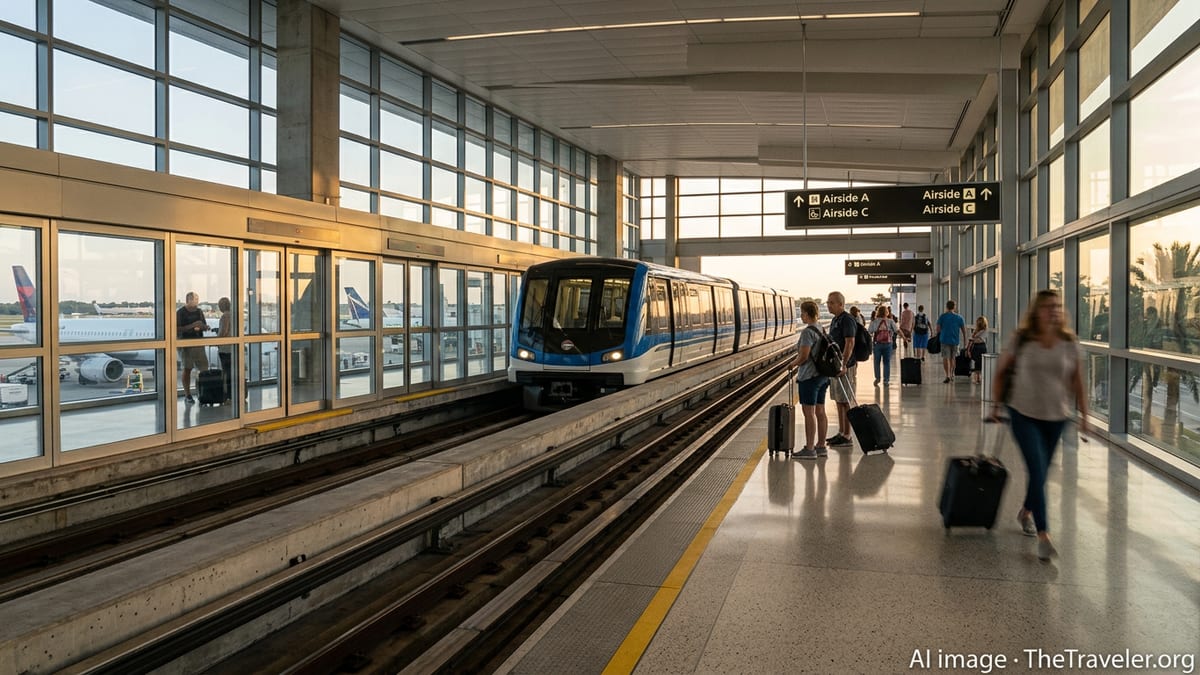
New Innovia fleet enters service on the Plane Train
Recent coverage indicates that the airport’s underground Plane Train has started operating the first of Alstom’s Innovia APM R automated people mover cars in passenger service, marking a visible step in a broader fleet renewal program. Reports describe the project as a 63-vehicle replacement and expansion of the existing train fleet that circulates between the Domestic and International terminals and all concourses.
According to published information from Alstom and the airport, the new cars are designed to replace aging vehicles that have been in service for decades while providing additional capacity during peak periods. The vehicles are part of the Innovia APM 300R platform, adapted for the specific underground loop that forms the backbone of internal circulation at Hartsfield-Jackson.
The Plane Train currently runs on a roughly three mile loop beneath the terminal complex, connecting passengers between concourses that collectively handle some of the highest annual traffic volumes of any airport in the world. The modernized cars are expected to support more frequent departures, with observers noting goals of significantly shorter headways to keep up with future passenger growth.
Alstom materials on the project indicate that the order was recorded in the company’s 2025 to 2026 fiscal year and builds on its earlier role as operator and maintainer of the Plane Train system, a responsibility it assumed when it acquired Bombardier Transportation.
Modernization targets crowding, reliability and accessibility
Publicly available project descriptions emphasize that the Plane Train upgrade is focused on both capacity and reliability, reflecting the system’s role in enabling tight flight connections. The airport’s fact sheet shows that multiple four car trains circulate simultaneously, and the new fleet is expected to make it easier to keep trains frequent even during maintenance or service disruptions.
Reports indicate that the new Innovia cars feature updated propulsion and braking systems, modern passenger information displays and interiors designed for rapid boarding, including wide doors and open standing areas for travelers with baggage. These design elements aim to reduce dwell times at each station and limit bottlenecks during busy banked departure and arrival waves.
In addition to rolling stock, project summaries suggest that associated signaling, control and maintenance systems are being refreshed to improve overall uptime. The airport has also highlighted wider digital upgrades, such as improved cellular coverage through a new distributed antenna system, that should complement the Plane Train modernization by keeping passengers connected while they move underground between concourses.
Accessibility is another part of the modernization narrative. While the Plane Train has long been an important link for travelers with reduced mobility, the new vehicles and station area improvements are expected to further align with current accessibility standards, helping maintain reliable step free access between all concourses.
Part of a wider transformation ahead of global events
The Plane Train project is unfolding alongside a series of broader upgrades at Hartsfield-Jackson, including terminal technology enhancements and airfield works supported in part by federal infrastructure funding. Airport documents and regional coverage point to these efforts as preparation for rising passenger volumes and major events such as the 2026 FIFA World Cup, when Atlanta is expected to see surges of international visitors.
Reports on recent capital planning show that the Plane Train modernization sits within a multi year investment program being advanced by the City of Atlanta’s Department of Aviation. These plans cover airside safety projects, terminal refurbishments and passenger processing improvements, positioning the airport to maintain its competitive standing among global hubs.
The combination of new automated people mover trains, upgraded cellular connectivity and other digital systems is being presented as a way to support both operational resilience and a smoother passenger journey. For connecting travelers in particular, a more frequent and reliable Plane Train can reduce transfer times and pressure on gate areas.
Industry observers note that Alstom has been expanding its footprint in North American airport and regional rail projects, and the Atlanta contract adds to a portfolio that includes high speed, commuter and metro systems across several major U.S. cities. The company’s work on the Plane Train reinforces the trend of airports turning to established rail suppliers for critical internal transit links.
From deliveries to full fleet deployment
The current service launch follows earlier milestones in the modernization timeline. Airport communications in 2025 highlighted the arrival of the first Innovia APM 300R cars from Alstom, with the vehicles undergoing extensive testing before being cleared to carry passengers. At that time, officials outlined plans for the new cars to enter service in phases through 2026 as additional units were delivered.
Recent coverage of the first cars entering passenger operation suggests that the project has moved from the delivery and testing phase into an incremental roll out. As new trains come online, older vehicles are expected to be progressively retired, reducing maintenance burdens associated with older technology and limited spare parts availability.
Project documents indicate that Alstom’s scope includes long term operation and maintenance services for the automated people mover system, intended to sustain reliability gains over the life of the new fleet. This approach aligns with a broader industry shift toward life cycle service contracts, in which the supplier remains closely involved in performance monitoring and upkeep.
While specific timelines for full fleet deployment have not been detailed in public reports, the introduction of the first cars into regular service is seen as a key marker for travelers. As more Innovia trains join the rotation, passengers are likely to experience shorter waits on platforms and less crowding in cars, particularly during peak travel seasons.
What travelers can expect on the modernized Plane Train
For passengers passing through Atlanta, the most visible change will be newer train interiors and potentially more frequent arrivals at Plane Train stations beneath each concourse. Travel guides already describe the system as the primary way to move quickly across the airport, and the modernized fleet is expected to reinforce that role.
Informational materials emphasize that the Plane Train will continue to run continuously between all stations, with wayfinding signage in the terminals unchanged. Travelers are being encouraged by guide publishers to pay attention to onboard announcements and platform displays, as upgraded systems provide clearer information about direction of travel and upcoming stops.
Given the scale of the fleet renewal, some intermittent service adjustments may occur as older trains are retired and new ones integrated, but publicly available information suggests that the airport and Alstom are sequencing work to keep the system operating for passengers throughout the transition. The goal is to deliver a modernized Plane Train without major interruptions to daily operations.
As the roll out continues through 2026, Atlanta’s Plane Train is set to emerge as one of the more up to date airport people mover systems in the United States, pairing a refreshed fleet with technology and infrastructure upgrades that support the airport’s role as a leading global hub.