

More news on this day
Alstom is accelerating the expansion of its rail services network in Kazakhstan, rolling out new maintenance depots, signalling facilities and digital capabilities that are set to reinforce the Central Asian nation’s role as a key freight and passenger hub between Europe and Asia.
Get the latest news straight to your inbox!
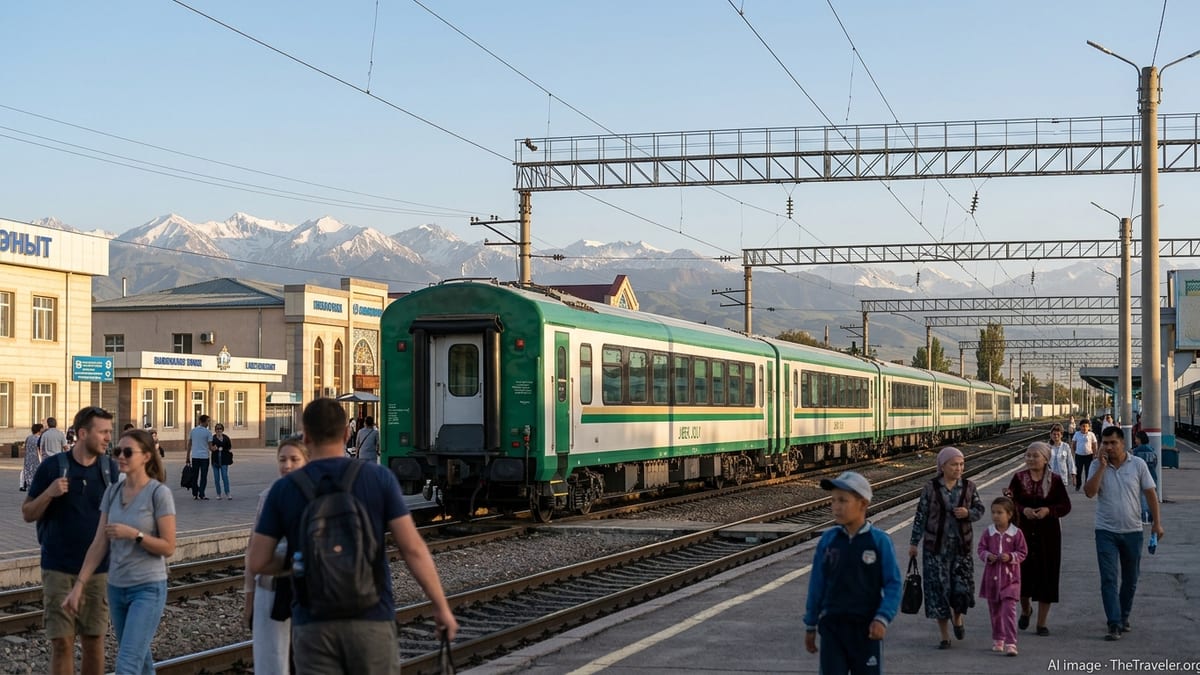
New depots support growing locomotive fleet
Publicly available company information shows that Alstom is moving ahead with a multiyear plan to expand its maintenance footprint in partnership with Kazakhstan Temir Zholy, the national railway operator. A core element of that strategy is a network of service depots designed to support the country’s growing fleet of electric freight and passenger locomotives.
Recent updates indicate that Alstom has already opened a service depot in Shu, an important junction in southern Kazakhstan that connects major east west and north south routes. The facility is focused on KZ4 and KZ8 electric locomotives, providing corrective and preventive maintenance close to high traffic corridors rather than relying solely on centralised workshops.
Further south, construction is under way on an electric locomotive depot in Arys, a strategic rail hub on the Middle Corridor that links China with the Caspian Sea and onward to European markets. Reports describe the project as a joint effort between Alstom and Kazakh partners, with the depot expected to handle both routine servicing and heavier overhauls for locomotives operating on long distance freight routes.
These depots build on earlier service activity associated with Alstom’s joint venture manufacturing plant in Astana, which produces and maintains locomotives for Kazakhstan and the wider region. Together, the facilities are intended to reduce downtime, extend asset life and keep more rolling stock in active operation on Kazakhstan’s extensive rail network.
Signalling and digital capabilities strengthened in Astana
Alongside physical depots, Alstom is expanding its services offering through new signalling and software capabilities in the capital Astana. In 2025 the company announced the opening of a signalling competence centre, its first of this kind in the country, to support the deployment and maintenance of modern train control systems on Kazakhstan’s mainlines.
The centre is focused on the development, adaptation and integration of Alstom signalling platforms for local conditions, including interlocking technology already in use at dozens of national railway stations. Available documentation indicates that the hub will also manage system maintenance, upgrades of legacy equipment and technical documentation for ongoing infrastructure projects.
In addition to hardware and engineering support, the Astana centre is expected to train local specialists in signalling software, diagnostics and lifecycle management. Company reports highlight that these skills are intended to feed into a broader digital ecosystem that includes remote monitoring, predictive maintenance tools and data driven performance optimisation for the national rail network.
This move positions Kazakhstan not only as a customer for imported technology, but as a regional node for developing and sustaining rail control systems that are adapted to the demanding climatic and operational environment of Central Asia.
Strategic partnership with Kazakhstan Temir Zholy
The latest expansion of Alstom’s services network is framed by a series of strategic agreements with Kazakhstan Temir Zholy that aim to upgrade core corridors and improve reliability for both freight and passenger traffic. Previous cooperation concentrated on supplying locomotives and spare parts, whereas newer arrangements place greater emphasis on long term maintenance and local industrial capacity.
Information released by Alstom describes a common vision to develop a network of service depots in several key regions, including Astana, Almaty, Shu and Arys. Each site is intended to serve a defined operational area, so that locomotives and equipment can be maintained closer to the routes they operate, cutting transfer times and easing pressure on central workshops.
These plans sit alongside earlier maintenance contracts linked to the Astana manufacturing joint venture, which already carries out full service for parts of the national locomotive fleet. By integrating new depots, signalling centres and digital tools under a single framework with Kazakhstan Temir Zholy, the two partners aim to create a more coherent services ecosystem than existed under project by project arrangements.
The reinforcement of cooperation is also seen as a signal to international investors and logistics operators that Kazakhstan intends to maintain high operational standards on the rail corridors that form part of wider Eurasian freight routes.
Local jobs, skills and industrial capacity
Alstom’s services expansion in Kazakhstan is not limited to physical infrastructure, but also involves a significant emphasis on local employment and skills development. The company’s public profiles for the country indicate that it already employs more than a thousand people across several industrial sites, including assembly plants, component factories and repair centres.
New depots in Shu and Arys, the signalling competence centre in Astana and existing repair facilities are expected to create additional technical and engineering roles. Training programmes linked to these sites are intended to develop local expertise in areas such as traction systems, bogie overhauls, signalling software and digital diagnostics, reducing reliance on imported skills over time.
Industrial capacity is also being broadened through facilities dedicated to bogie manufacturing and servicing, as well as point machine production and component repair. Together, these assets form a domestic supply and maintenance chain that can support Kazakhstan’s own fleet and potentially serve neighbouring markets in Central Asia and the Caucasus.
Economic impact assessments previously released by the company suggest that such activities generate knock on benefits for local suppliers, logistics firms and technical education institutions, strengthening Kazakhstan’s broader transport engineering base.
Boosting reliability along the Middle Corridor
The timing of Alstom’s services expansion in Kazakhstan coincides with growing international interest in the Trans Caspian International Transport Route, often referred to as the Middle Corridor. This route provides an alternative land bridge between China and Europe that passes through Kazakhstan, the Caspian Sea and the South Caucasus.
Rail analysts note that reliability, journey times and predictable capacity are critical for attracting long term freight flows to this corridor. By investing in local maintenance depots, signalling support and digital asset management, Alstom and its Kazakh partners are targeting the operational foundations that underpin those objectives.
Enhanced servicing capabilities at hubs such as Shu and Arys are expected to reduce unexpected locomotive failures and speed up turnaround times, while modern signalling and control systems should increase network capacity and improve safety margins. Digital monitoring tools, developed in part from Astana based software and signalling teams, may also allow for more precise planning of freight movements across the network.
Taken together, these developments indicate that Kazakhstan is positioning its rail system for a more intensive role in Eurasian trade, with Alstom’s expanded services network emerging as one of the key building blocks in that transformation.