


More news on this day
Hong Kong’s government has issued an amber outbound travel alert for France following weeks of student-led and cost-of-living protests that have escalated into violent clashes, vandalism and transport disruption in several major cities.
Get the latest news straight to your inbox!
Alert raises France’s risk profile for outbound travellers
The amber alert, announced on October 20, advises Hong Kong residents to monitor the situation closely and exercise caution if travelling to France, particularly in urban centres where demonstrations have been concentrated. Under Hong Kong’s outbound travel system, an amber alert signals heightened risk tied to public order or security conditions, and encourages travellers to review the necessity of non-essential trips.
According to public information released in Hong Kong and summarised by regional media coverage, the alert was prompted by an accumulation of incidents rather than a single event. Over recent weekends, protests linked to education funding, fuel prices and broader cost-of-living concerns have coincided, drawing large crowds and, in some locations, degenerating into rioting and looting.
The alert applies to all of metropolitan France and does not differentiate between regions. However, reports indicate that the most intense unrest has occurred in and around Paris, as well as in other major centres such as Lyon, Marseille and Toulouse, where commercial districts and public buildings have been affected by fires and property damage.
Travel risk analysts note that Hong Kong’s decision adds formal weight to a trend already visible in the advisory systems of several countries, which have adjusted their guidance for France to reflect the combination of civil unrest, transport disruption and an elevated national security posture.
Protests intersect student unrest and cost-of-living anger
The current wave of demonstrations has its roots in high school and student mobilisations that began in September over school funding, staffing shortages and deteriorating facilities. Publicly available timelines compiled by European media and reference sources show that these protests expanded rapidly in early October, with blockades and walkouts at dozens of schools across the country.
At the same time, separate rallies over rising fuel prices and household costs gathered momentum, spurred by European-wide anxiety over energy and inflation. By mid-October, labour unions, Yellow Vest activists and student organisations were appearing side by side at nationwide marches calling for higher wages, better public services and relief from transport and housing costs.
Coverage by international news agencies describes scenes of burned vehicles, smashed shopfronts and clashes between demonstrators and riot police in parts of Paris and other cities on October 17, when a major day of action saw hundreds of thousands of people march. Subsequent nights have alternated between relative calm and renewed confrontations, with authorities banning or rerouting some planned protests on public safety grounds.
Although the unrest has been most visible in dense urban areas, mapping by European broadcasters indicates that demonstrations have taken place across much of the country, including mid-sized regional centres and suburbs far from traditional tourist itineraries.
How travel advisories now characterise the risk in France
Government advisory systems use different terminology, but recent updates show a broadly aligned picture of conditions in France. Ireland’s Department of Foreign Affairs, Australia’s Smartraveller, Canada’s official travel advice and New Zealand’s SafeTravel all describe an environment of frequent protests and strikes, with the potential for sudden escalation and localised violence.
These advisories underline that demonstrations can be announced at short notice and may disrupt public transport, including metro and tram networks in Paris, as well as intercity rail links. Temporary closures of metro stations, tram stops and key thoroughfares along march routes are now common on major protest days, exacerbating congestion and extending journey times within affected cities.
Separately, France’s national security alert level has been maintained at a relatively high tier since previous attacks, with several foreign ministries drawing attention to the combination of terrorism risk and civil unrest in their assessments. While not directly connected, the overlapping concerns have led some countries to advise travellers to remain particularly vigilant around government buildings, crowded public squares, major transport hubs and shopping districts.
For now, only a limited number of governments have issued formal colour-coded alerts specifically highlighting the protest situation, as Hong Kong has done. However, reports indicate that consular services in Europe, North America and Asia are closely monitoring developments and may adjust their messaging if unrest persists or intensifies.
Impact on tourists, transport and key attractions
Travel industry reports and local media suggest that most trips to France are continuing to go ahead, with flights operating normally and major tourist attractions, including museums and theme parks, largely unaffected by direct violence. However, short-notice transport disruption remains a recurring issue, particularly on days of coordinated national action.
In Paris, demonstrations have frequently passed through or near central neighbourhoods around République, Bastille, Nation and parts of the Left Bank. On such days, metro lines serving these hubs can experience rolling closures, and surface traffic may be diverted away from main boulevards, adding time and complexity to normal sightseeing routes.
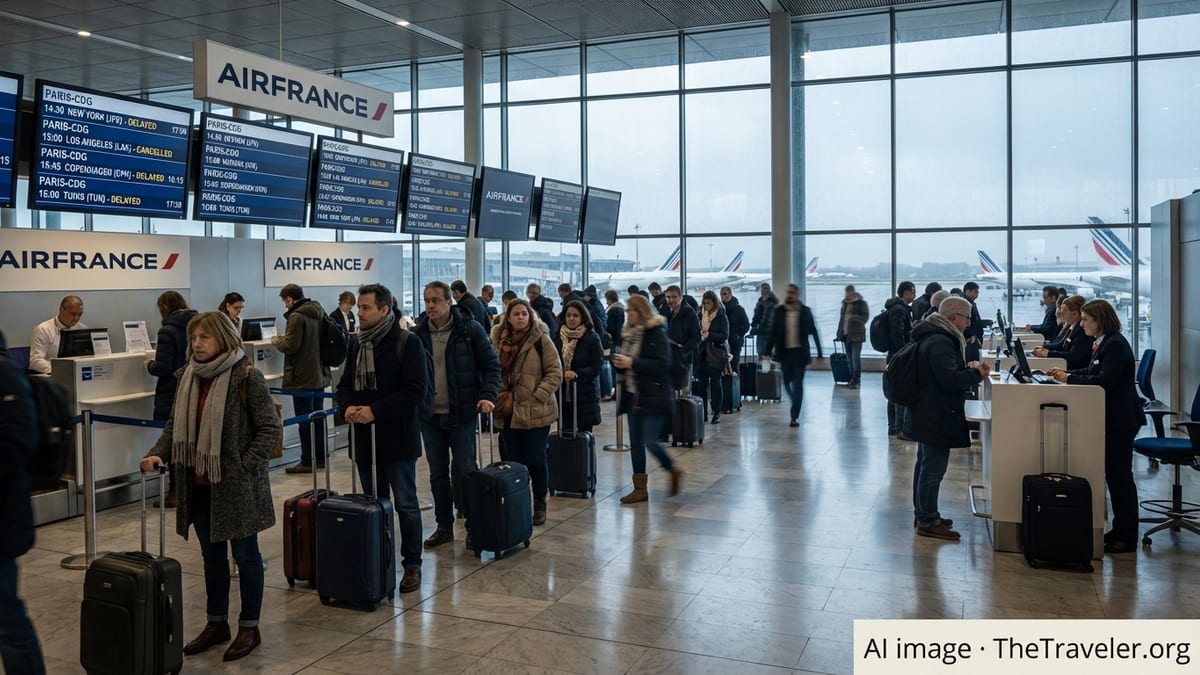
Outside the capital, marches and roadblocks have occasionally affected access to airports and railway stations in cities such as Marseille, Lyon and Bordeaux. Travellers arriving or departing on weekends associated with major protests are being advised by airlines, rail operators and embassies to allow extra time for journeys, verify schedules on the day of travel and keep contingency plans in mind in case of cancellations or diversions.
Accommodation providers contacted indirectly through published travel forums report an uptick in booking amendments rather than outright cancellations, with many visitors opting to adjust daily itineraries away from known protest hotspots while keeping their overall trips intact.
Practical guidance for travellers assessing current plans
Current official advice across multiple countries generally stops short of recommending that tourists avoid France entirely. Instead, guidance stresses preparation and situational awareness, especially for those planning to spend time in large cities where demonstrations are most likely.
Common recommendations include checking national and local travel advisories regularly in the days leading up to departure, tracking local news for announcements of marches or strikes, and avoiding areas where large crowds are gathering. Travellers are also encouraged to keep copies of identification, register contact details with their embassy where such services exist, and ensure that travel insurance policies cover delays linked to civil unrest.
Visitors already in France are being urged, through public statements and consular messaging, to follow instructions broadcast via public-address systems and transport operators, to respect cordons and diversions, and to move away from any gathering where tensions appear to be rising. Photography of confrontations between protesters and security forces has also been highlighted as a potential trigger for hostility in certain situations.
With further large-scale protests already announced for the coming weeks, the amber alert from Hong Kong underscores that France’s domestic tensions are now an international travel-planning factor. Prospective visitors are being advised to weigh the latest information from multiple official sources, balance their tolerance for disruption, and be ready to adapt itineraries if conditions on the ground change quickly.