


More news on this day
Shifting United States travel advisories and tightening asylum standards are painting sharply different pictures of risk in parts of Latin America, with countries flagged as dangerous for US tourists still failing to produce high protection rates for many asylum seekers who flee them.
Get the latest news straight to your inbox!
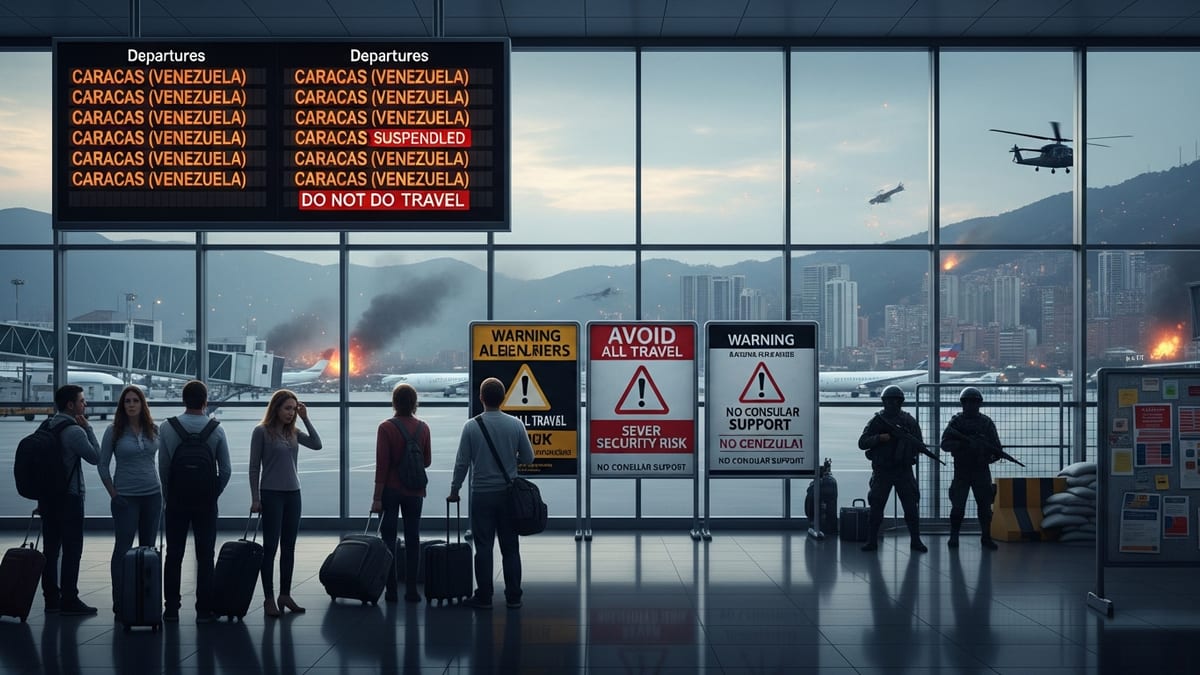
Travel advisories highlight rising regional security risks
The US State Department’s four-tier travel advisory system continues to flag several Latin American and Caribbean states for serious security threats, underscoring how volatile conditions have become for residents and visitors alike. Level 3 advisories urge travelers to reconsider travel due to significant safety concerns, while Level 4 advisories recommend that US citizens avoid all travel because of life threatening risks and the government’s limited ability to help in a crisis.
According to the Department’s advisory list updated in 2026, Colombia is rated Level 3, with guidance to reconsider travel because of crime, terrorism and civil unrest. The advisory, which was updated in March 2026, warns that violent crime, including homicide and kidnapping, remains widespread in some regions and that armed groups are active in rural areas.
Ecuador, traditionally viewed as one of the safer destinations in the Andean region, now faces a patchwork of stricter warnings. An updated advisory in February 2026 designates certain parts of the country, including some urban districts, at Level 4 due to crime and security operations, while keeping the national rating lower overall. Publicly available information highlights restrictions on US government personnel in specific neighborhoods because of heightened risks.
Elsewhere, Venezuela continues to be listed at the highest advisory level for US travelers. The State Department notes that the United States has extremely limited ability to provide emergency services there, citing risks linked to crime, infrastructure collapse and political tensions. For tourists, the message is clear: many parts of Latin America are considered risky enough that discretionary travel is discouraged or strongly warned against.
Asylum standards narrow even as danger is recognized
While travel advisories highlight serious danger for US citizens, US asylum rules set a much higher bar for people from the same countries seeking refuge. Official guidance explains that asylum is reserved for individuals who fear persecution on account of race, religion, nationality, political opinion or membership in a particular social group, and most applicants must demonstrate they meet that test after arriving at or inside the United States.
Legal analyses of recent Board of Immigration Appeals decisions indicate that claims based solely on generalized criminal violence often fall short. In a 2025 decision involving a Central American applicant who feared gang violence, the Board emphasized that opposition to gangs or fear of crime did not automatically establish a protected political opinion absent clear evidence of political motives behind the threats. That logic has been applied across numerous Latin American cases where applicants flee the same gangs and cartels identified in US security warnings.
At the same time, regulatory changes introduced from 2023 onward have raised the evidentiary threshold at the border. Public summaries of federal rules describe a shift from traditional “credible fear” screenings toward a “reasonable fear” standard for many people who traveled through third countries without seeking protection there, making it harder to pass the initial interview stage. Advocacy briefs argue that this move has effectively narrowed access to the full asylum process for a large share of Latin American migrants transiting Mexico and Central America.
Data compiled by nonprofit policy organizations and published in late 2024 point to stark disparities in outcomes. Analysts reported that asylum approval rates for applicants from Latin America fell sharply compared with claimants from parts of Eastern Europe and Asia, despite similar or higher levels of documented violence and political instability at home. The result is that people from countries flagged as dangerous for US travelers often face low odds of securing protection in US immigration courts.
Transit bans and regional processing reshape the route north
Policy changes have not only altered what happens once migrants reach the US border but also how and where they are expected to seek protection. A sweeping rule finalized in May 2023, often described by legal advocates as a transit ban, generally presumes many non-Mexican migrants ineligible for asylum if they crossed through another country that is party to international refugee treaties and did not apply for protection there. Exceptions exist for those who can show they were unable to access asylum systems en route, but public legal guidance notes that rebutting the presumption can be difficult.
In parallel, the Biden administration launched regional processing initiatives and expanded use of the CBP One mobile application as formal channels for people to request appointments before approaching ports of entry. Official summaries indicate that more than 800,000 migrants obtained entry to the United States between early 2023 and mid 2024 by scheduling appointments in Mexico through the app or by using new parole and refugee pathways from countries such as Venezuela, Cuba, Haiti and Nicaragua.
Despite these channels, human rights groups report that many asylum seekers from Latin America still attempt irregular crossings after struggling to obtain CBP One appointments or fearing prolonged waits in dangerous border regions. Research by international and regional organizations describes areas of northern Mexico where cartel control, kidnappings and extortion are common, conditions that mirror the threats cited in US travel advisories for some Mexican states.
Regional partners have also felt the impact. Reports from Costa Rica and Panama describe rapidly growing backlogs of asylum applications by people who had initially intended to reach the United States but now confront tougher US rules and expanded returns to third countries. Analysts warn that this shift may effectively outsource protection responsibilities to smaller states with far fewer resources, even as Washington signals that those same transit corridors are unsafe for its own citizens.
Third-country deportations deepen the contradiction
Emerging practices involving deportations to third countries highlight another layer of divergence between travel warnings and asylum outcomes. Investigations by human rights organizations and international media indicate that people from Latin American nations who were unable to pursue or complete asylum claims in the United States have been transferred to countries far from their homes, sometimes under bilateral security or migration cooperation agreements.
One 2025 report by a global rights group documented cases of asylum seekers and other migrants expelled from the United States to Costa Rica, where they were held in closed facilities while local authorities determined their status. Individuals interviewed for the study described long periods in limbo and uncertainty about whether they would receive meaningful protection or be pushed onward yet again.
Separate coverage in 2025 detailed how some Latin American nationals were deported to the Democratic Republic of Congo following US decisions, despite having no prior ties to the country. Congolese civil society organizations criticized the arrangement as inconsistent with international refugee protections, while local officials acknowledged that the arrivals faced disorientation and a lack of support networks in an unfamiliar environment.
Policy reporting in 2026 has also focused on the growing use of removals to countries such as Panama, Honduras and Guatemala for people intercepted near the US-Mexico border. Analysts note that these “lateral” transfers are sometimes justified as deterrence measures to disrupt established migration routes, yet they raise questions about how risk is assessed when people are sent to regions that themselves feature in high level travel advisories because of crime, instability or weak institutions.
Travel alerts, legal thresholds and the perception gap
The gap between travel advisories and asylum outcomes is reshaping how risk in Latin America is perceived by different audiences. For US citizens, consular alerts function as precautionary guidance, recommending that Americans avoid certain areas or countries while emphasizing that local conditions can change quickly. These notices are not legal findings about persecution but practical assessments of danger for short term visitors.
For asylum seekers and their advocates, however, those same advisories can appear to reinforce claims that returning home would be unsafe. When a country is categorized at Level 3 or 4 for US travelers, applicants may see it as evidence that their fears are well founded, even if immigration law requires a more targeted showing that they are singled out for persecution based on protected grounds.
Legal scholars and rights organizations argue that this disconnect has real consequences for Latin American migrants who face overlapping threats from gangs, political actors and economic collapse, yet struggle to fit their experiences into the narrow categories recognized by asylum statutes and case law. Published analyses emphasize that generalized violence, poverty or state weakness rarely suffice, even when official US guidance simultaneously warns its own citizens away from the same environments.
As governments across the region test new enforcement partnerships and protection schemes, the divergence between travel alerts and asylum guidance appears set to remain a central tension in US policy toward Latin America. For travelers, the message is caution. For many of the region’s displaced people, available information suggests that the path to protection in the United States is narrowing, even as official advisories acknowledge that the places they left behind are becoming more dangerous.