


More news on this day
The United Kingdom has updated its travel advice for France after nationwide cost of living protests escalated into some of the worst riots in years, triggering night-time curfews in parts of Paris and several other cities and raising fresh concerns for autumn and winter travellers.
Get the latest news straight to your inbox!
Foreign Office highlights risk of sudden curfews
Updated guidance from the UK government’s France travel advice page on 21 October 2026 draws attention to the possibility of curfews being introduced at short notice in response to unrest. The notice follows violent scenes across France on 17 October, when largely peaceful demonstrations over rising living costs were followed by looting, arson and clashes with police in multiple cities.
Publicly available information on the advisory states that local authorities in France may introduce public order measures, including partial and localised curfews, where there is a risk of further violence. Travellers are being urged to monitor local announcements and to follow any instructions issued by town halls and prefectures regarding restricted hours in specific districts.
The updated UK wording aligns with alerts issued by several other foreign ministries, which now warn that demonstrations linked to economic grievances and student protests could continue over the coming weeks. These advisories do not currently advise against travel to France as a whole, but they signal a heightened need for flexibility in itineraries and accommodation arrangements.
Irish, Canadian and Australian travel advisories issued over the past few days underline similar concerns, noting that local curfews are already in force in some municipalities and that further measures are possible in larger cities. These notices collectively point to a fluid security situation where conditions may vary significantly from one neighbourhood to another.
Riots erupt after nationwide protests over living costs
The latest UK advisory comes in the wake of a major day of mobilisation on Saturday 17 October, when hundreds of thousands of people joined marches across France to protest rising prices and pressure on public services. Published coverage indicates that while most gatherings were peaceful, fringe groups used the demonstrations as a cover for looting, property damage and confrontations with police.
Reports from French and international media describe fires set at public buildings and businesses in cities including Paris, Rennes, Toulouse, Montpellier, Grenoble and Limoges, where the town hall was badly damaged. Police deployed large numbers of officers, water cannon and tear gas in a bid to clear some city-centre areas after nightfall.
In Paris, violence was concentrated around central squares and shopping districts that are also major landmarks for visitors, such as Place de la République and the Les Halles area. Images shared by news outlets show burned vehicles, smashed shopfronts and heavily guarded metro entrances, although many residential districts and tourist neighbourhoods away from the protest routes reportedly remained calm.
The unrest capped several weeks of growing tension linked to student protests over education funding and broader concerns about inflation and public spending. Background analysis from European media and policy institutes notes that high school and university students have staged walkouts and rallies since September, with unions later joining in to call for higher wages and pensions and protection of public services.
Where curfews and restrictions are currently in place
Local officials in multiple cities have introduced targeted curfews in an effort to prevent further nighttime violence. Paris police announced overnight restrictions this week in two central zones, including areas around Place de la République and the city’s main central shopping district, with prohibitions on public gatherings and movement during late evening and early morning hours.
In northern France, curfews between roughly 8 p.m. and 6 a.m. have been applied for children and teenagers in several towns around Lille, according to regional announcements cited in international coverage. Municipalities retain discretion over how long such rules remain in place, and some are currently limited to a few days while others may be extended if conditions deteriorate again.
Elsewhere, measures range from full night-time curfews to bans on gatherings in sensitive zones. In Nice, for example, recent statements by local leaders referenced curfews from 9 p.m. to 6 a.m. in designated areas following damage to city-centre streets. Lyon and several mid-sized towns have also reported restrictions after rioting and fires near civic buildings and commercial streets.
Tourism bodies in Paris stress that major museums and attractions remain open but acknowledge that individual metro or RER stations, bridges and avenues may close temporarily when demonstrations pass nearby. Travellers are being encouraged to check real-time transport updates on local transport apps and to pay particular attention to any evening limitations on moving in or out of central protest zones.
Impact on flights, trains and city transport
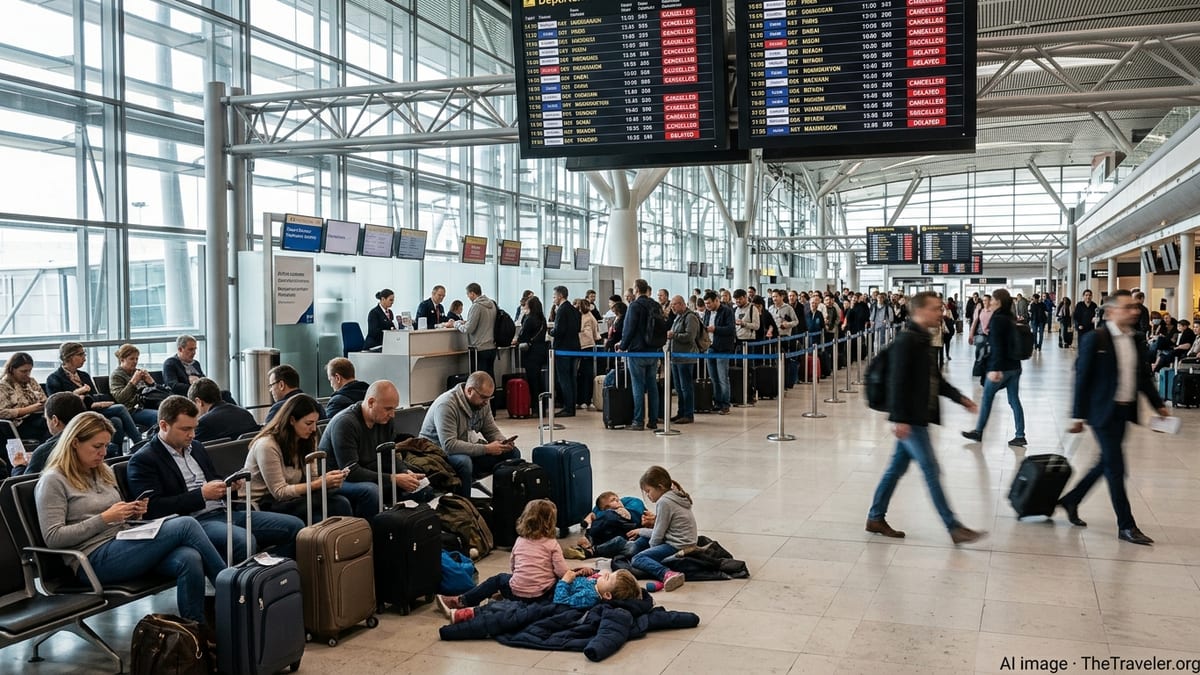
So far, there is no broad shutdown of international travel links, and airports including Paris Charles de Gaulle and Orly are operating. However, published travel-industry reports note short-term disruption to some domestic rail and regional services when protests or police operations affect key hubs.
Within Paris and other major cities, transport operators have temporarily closed individual metro and tram stops along demonstration routes or in areas where clashes have taken place. In practice, this often means that trains continue to run but may pass through certain stations without stopping, leading to longer journey times and the need for passengers to walk further or change lines.
Travel advisories from several governments recommend building additional time into journeys, especially in the late afternoon and evening when protests are more likely. Visitors arriving on evening flights or trains are advised to confirm in advance how they will travel to their accommodation if sections of the metro, tram network or bus routes are affected by curfew-related closures.
Industry analysis also points to the risk of additional strike action in the coming weeks, which could further complicate travel plans. Union statements have indicated possible nationwide strike days in early November, with potential consequences for public transport, schools and some public services, even if these actions remain separate from the recent riots.
Advice for UK travellers planning trips to France
For UK travellers with imminent departures to France, the latest Foreign Office wording does not prohibit travel, but it does highlight the need for careful planning. Guidance across several countries emphasises checking local news and official municipal channels on the day of travel to confirm whether curfews have been announced in the destination city or neighbourhood.
Travel insurers generally expect policyholders to follow official government advice. Industry commentary suggests that as long as the UK is not advising against all but essential travel to France, most standard policies will continue to operate normally, although specific cover for riot-related disruption varies. Travellers are being encouraged to review policy terms, particularly regarding missed departures, curfew-related restrictions and any exclusions connected to civil unrest.
For those already in France, consular and tourist information sources advise avoiding demonstration areas, not attempting to cross police cordons and leaving a district early if large crowds or a heavy police presence begin to build. Visitors are also being reminded to carry identification, allow extra time for security checks around railway stations and major attractions, and to be prepared for sudden changes to evening plans if curfews are extended.
With the situation evolving from day to day, the most practical step for travellers remains to monitor the UK France travel advice page and trusted local media before and during a trip. While many popular tourist districts are functioning close to normal, the combination of protests, targeted curfews and sporadic transport disruption means that flexibility and up-to-date information are now essential parts of any journey to France.