


More news on this day
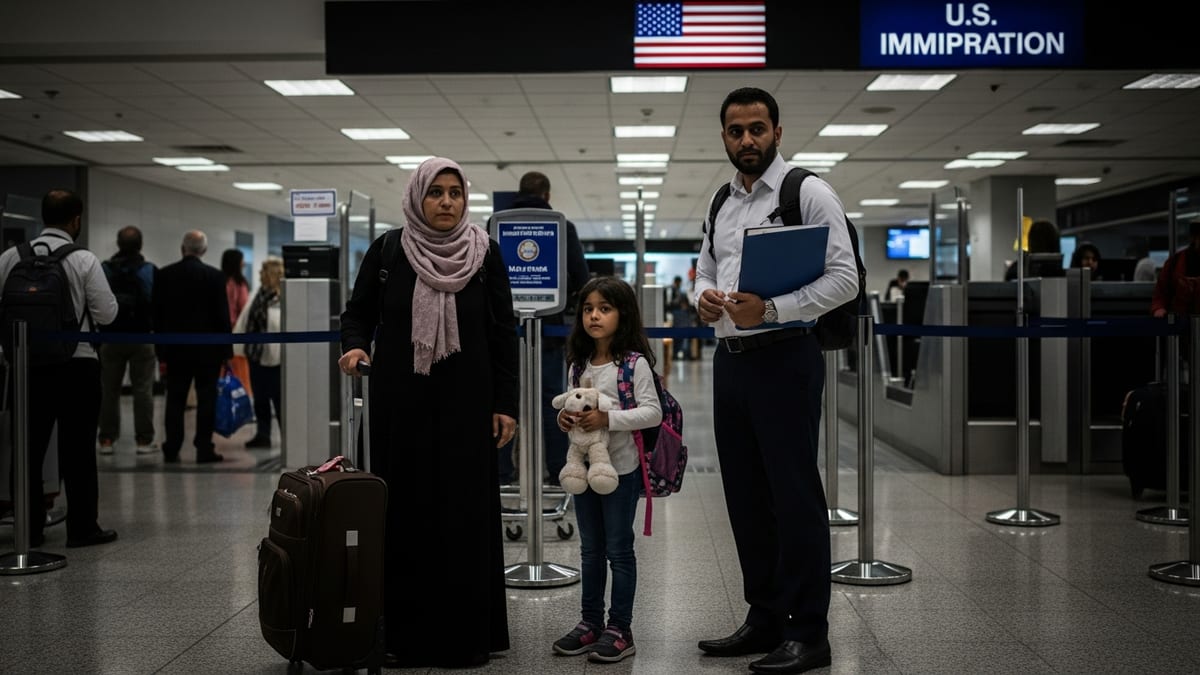
Heightened US travel warnings for parts of Latin America are underscoring a stark contradiction: Washington urges its own citizens to avoid regions it simultaneously deems unsafe for many migrants seeking asylum in the United States.
Get the latest news straight to your inbox!
Heightened Warnings for Popular Latin American Destinations
Recent updates to US travel advisories for Latin America highlight a widening patchwork of risk assessments that directly affect American tourists. On February 18, 2026, the State Department revised its advisory for Ecuador, keeping the overall rating at Level 3, or “Reconsider Travel,” and assigning Level 4, “Do Not Travel,” warnings to several coastal and border provinces due to violent crime, kidnapping and narcotrafficking-related violence. Publicly available information notes that US citizens have been victims of kidnapping, extortion and murder, particularly in coastal areas.
Mexico, one of the most visited destinations for US travelers, presents a similar mosaic. The overall advisory urges increased caution, while state-by-state guidance ranges from Level 2 to Level 4. Border states such as parts of Sonora and Tamaulipas are listed as Level 3 or Level 4 because of high levels of cartel violence and kidnapping risk, even as major resort hubs remain under lower levels of concern.
Other countries in the region have seen comparable shifts. Venezuela’s rating was adjusted in early 2026 from Level 4 to Level 3 overall, but US government material still highlights severe security concerns near the Colombian border. A broader list of global advisories published in August 2026 shows that more than twenty countries worldwide currently carry Level 4 warnings, several of them in Latin America, indicating that US authorities view parts of the region as among the most dangerous destinations for American travelers.
These layered alerts are designed for tourists and short-term visitors, but they also reinforce a public narrative of widespread instability in several Latin American states, especially in areas where armed groups and organized crime have gained control.
Low Asylum Success Rates for Nationals of High-Risk Countries
While travel advisories depict serious threats for US citizens in parts of Latin America, asylum outcome data show comparatively low protection rates for many people fleeing those same countries. A compilation of Executive Office for Immigration Review statistics through August 2026 indicates that overall asylum approval rates in US immigration courts remain in the single digits for several major Latin American nationalities.
Data collated by independent trackers using official court figures show, for example, that Mexican nationals have an asylum grant rate of around 9 percent based on nearly 100,000 cases decided between 2020 and mid-2026. Colombians record grant rates in the low to mid-teens depending on the methodology and time frame examined, while Ecuadorians fall into a similar band, often below 15 percent. These numbers contrast with significantly higher approval rates for applicants from some other regions, including parts of Africa and the Middle East.
Publicly available court-level statistics further underline the pattern. In several large immigration courts, including Denver, Orlando, San Diego and Seattle, approval rates for Colombian and Ecuadorian applicants over recent years have generally been in the single digits, with some locations reporting low single-digit percentages. Observers note that outcomes vary widely by court and judge, but the aggregate picture shows that most Latin American applicants are denied asylum, even as their countries continue to feature regularly in travel warnings and humanitarian reports.
These trends sit against the backdrop of a still-substantial asylum backlog. Analytical platforms drawing on EOIR data report more than 3 million pending cases as of August 2026, with a median wait time approaching three years. Advocates argue that the combination of low grant rates and lengthy delays contributes to a sense of uncertainty for people who say they are fleeing the very conditions highlighted in US advisories.
Regional Violence and Alternative Protection in Latin America
The apparent disconnect is further complicated by developments within Latin America itself, where several states have simultaneously become transit routes, destinations and hosts for displaced people. UNHCR’s regional updates describe a sharp deterioration in Ecuador’s security situation, noting that 2025 was the country’s most violent year on record, with a homicide rate estimated at more than 50 per 100,000 inhabitants. The same reports highlight a surge in gang-related killings and extortion that has affected coastal cities and strategic ports.
Mexico, Colombia and Ecuador are also functioning as asylum and protection hubs for people on the move. According to UNHCR and national data, Mexico recorded more than 40,000 asylum applications in just the first half of 2025, driven by Cubans, Venezuelans, Haitians and Central Americans. Colombia hosts millions of Venezuelans under temporary protection schemes, while Ecuador has expanded its use of humanitarian visas and other documentation for refugees and migrants, issuing tens of thousands of regularization documents and visas in 2025 alone.
At the same time, European and international assessments indicate that Latin American nationals are turning increasingly to alternative destinations such as Spain and other EU countries. A 2026 analysis by the European Union Agency for Asylum identified Venezuelans as one of the largest applicant groups in Europe, with record-high filings in 2025. Many of these applicants report previous stays in or journeys through countries the United States currently rates as high risk for travel.
International organizations describe this mix of rising violence, shifting visa policies and evolving protection schemes as a dynamic, sometimes contradictory landscape in which Latin American states are both sources of displacement and providers of asylum, even as their own security situations prompt foreign travel warnings.
Court Backlogs, Procedural Obstacles and “Abandoned” Claims
Within the United States, procedural dynamics in immigration courts further complicate how risk is recognized in practice. Recent reporting on court operations in cities such as Chicago and New York describes a rapid pace of hearings that has contributed to a spike in cases labeled as “abandoned.” In these situations, migrants who miss hearings, often because of address changes, confusion about dates or logistical barriers, are ordered removed without their asylum claims being fully heard.
Nonprofit analyses based on EOIR data suggest that the share of cases categorized as abandoned has risen to nearly five times the historical average nationwide, and roughly six times higher in some major metropolitan courts. Individuals from Mexico, Colombia, Peru and Venezuela are frequently among those affected. Once a case is closed in this way, it becomes far more difficult for an applicant to secure protection, regardless of conditions in the home country.
Additional complexity comes from the use of “third-country” removal orders, under which people can be ordered deported not to their country of origin but to another state. Coverage in early 2026 highlighted examples of Latin American and African asylum seekers being assigned for removal to countries where they had never lived. Internal government correspondence reported by US media in March 2026 indicated that federal agencies had paused new efforts to expand these third-country deportations, reflecting legal and practical concerns.
The combined effect of fast-paced dockets, high abandonment rates and complex removal rules means that many migrants from countries flagged as dangerous in US travel advisories may never receive an individualized assessment of their risk in court, deepening questions about how consistently those advisories translate into protection decisions.
Growing Policy Debate Over Consistency and Credibility
The tension between travel warnings and asylum outcomes has increasingly drawn the attention of researchers, legal advocates and policy analysts. Public commentary points out that when Washington cautions US citizens against entering certain regions because of the threat of kidnapping, murder or state weakness, it implicitly acknowledges serious danger for anyone present, including local residents who later seek refuge at the US border.
Yet, according to compiled court statistics, nationals of those same countries face steep hurdles in convincing US adjudicators that they meet the legal definition of a refugee. Specialists in protection policy note that the standard for refugee status centers on targeted persecution for specific reasons, not on generalized violence alone, which helps explain why high crime or conflict levels do not automatically result in higher asylum approval rates.
International agencies, including UNHCR, have urged states in the Americas to better align their asylum systems with the realities of displacement from organized crime, gender-based violence and territorial control by non-state armed groups. Regional strategies for 2026 to 2029 emphasize expanding complementary pathways such as humanitarian visas, regularization programs and resettlement from transit countries for those at greatest risk.
As travel advisories continue to evolve in response to shifting security conditions, the gap between what US authorities tell their own citizens about dangers abroad and the outcomes experienced by those fleeing those same dangers is likely to remain a central point of debate in migration policy across the hemisphere.