


More news on this day
As the United States prepares for its 250th birthday in 2026, the story of the first transcontinental railroad is reemerging as a powerful symbol of national unity, with new initiatives tying historic rail lines and heritage equipment to a broader celebration of American travel, innovation and expansion.
Get the latest news straight to your inbox!
Rail Heritage Moves to the Center of America 250
Publicly available information on the federal Freedom 250 campaign and the work of the United States Semiquincentennial Commission indicates that transportation is a central theme of the 250th anniversary, with railroads highlighted alongside highways, ports and aviation as engines of national growth. Planning documents and fact sheets describe rail as a mode that helped knit together a vast republic in the 19th century and continues to support the movement of people and goods today.
In that context, the first transcontinental railroad is being framed as a foundational chapter in a larger story about how Americans have crossed distance and difference. The line that linked the Union Pacific and Central Pacific railroads in 1869 reduced coast to coast travel from months to days and helped integrate the western territories into the national economy. Current America 250 materials point to that achievement as an early example of how transportation projects can reshape geography, commerce and culture.
The emphasis on rail fits within a broader push by national institutions to make the Semiquincentennial a time to reflect on infrastructure, mobility and shared public spaces. Museums, transportation agencies and rail industry groups are using the anniversary to connect historic achievements such as the Golden Spike to present day debates about connectivity, resilience and investment in long distance travel corridors.
Reports from advocacy organizations and trade associations suggest that passenger rail, commuter systems and freight carriers all see the anniversary as an opportunity to showcase their role in the national story. This has led to a wave of special paint schemes, commemorative equipment and programming that explicitly reference 1776 and 2026, echoing the cross country spectacle that accompanied the original transcontinental line.
Golden Spike National Historical Park Takes on New Symbolism
Golden Spike National Historical Park in Utah, which preserves the site where the final spike of the first transcontinental railroad was driven in 1869, is emerging as a focal point for rail related Semiquincentennial activity. The National Park Service promotes the site as a place where visitors can stand on the original railroad grade, see replica Victorian era locomotives and learn how the line changed the United States.
Park materials updated in early 2026 encourage visitors to connect the Golden Spike with the larger America 250 themes of unity and expansion. Interpretive content highlights the way the project brought together eastern capital, western ambitions and the labor of immigrant and Indigenous communities, while also pointing to the environmental and social costs that accompanied rapid development of the West. This nuanced approach reflects a broader trend in anniversary programming that seeks to balance celebration with critical reflection.
Free entrance days and special events scheduled across the national park system in 2026 are expected to draw additional attention to Golden Spike and other transportation related sites. Travel coverage and tourism guides recommend that visitors interested in the Semiquincentennial include the Utah park on itineraries that also feature Philadelphia, Boston and Washington, noting that rail history offers a different perspective on the growth of the nation.
Regional tourism campaigns are reinforcing this message by packaging Golden Spike with nearby scenic rail excursions and historic depots. These efforts position the transcontinental railroad not only as a 19th century engineering feat but also as a 21st century travel experience in which visitors can trace the routes and stories that once transformed the map of the United States.
Heritage Locomotives and Rolling Museums Carry the Story
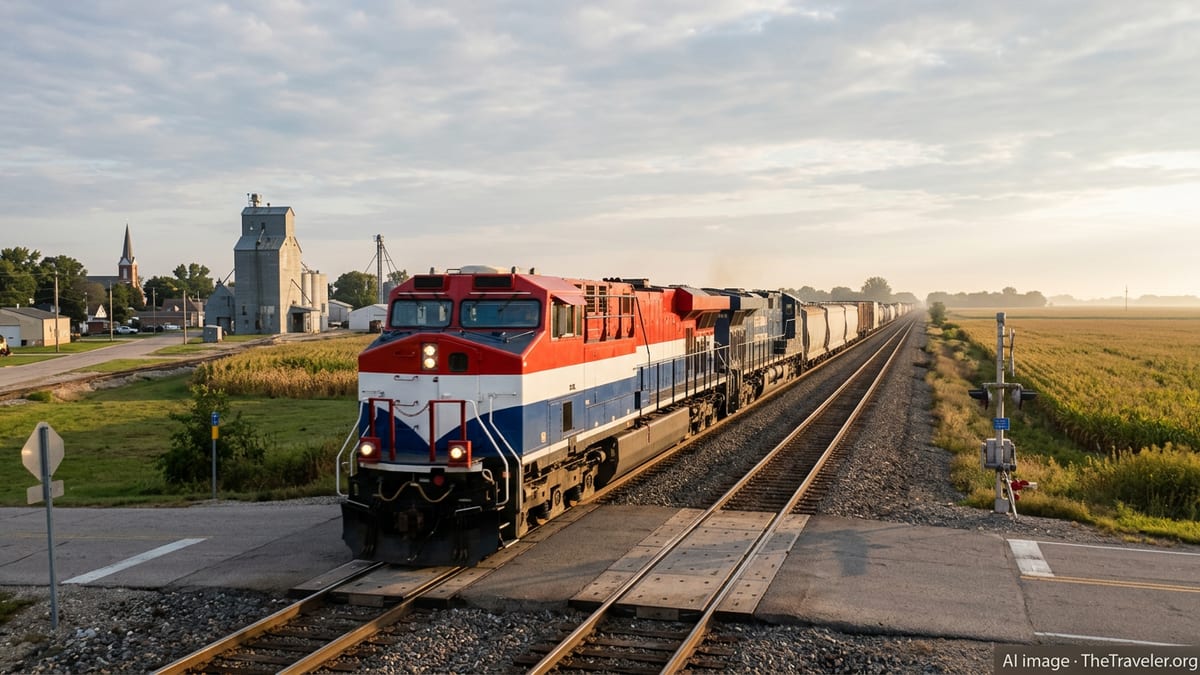
According to recent announcements from major railroads, heritage locomotives are becoming rolling ambassadors for America 250. BNSF Railway has unveiled a trio of commemorative units bearing patriotic liveries and the numbers 250, 1776 and 2026, which will tour its network for public events while remaining in regular freight service. These locomotives, along with similar units introduced by other carriers, are intended to draw attention to the historic and contemporary role of rail.
Rail heritage institutions are also tying restoration projects to the anniversary. Publicly available information from the B&O Railroad Museum notes that one of the locomotives associated with the mid 20th century Freedom Train has been cosmetically restored and renumbered to 250 for exhibitions tied to the Semiquincentennial. The project aims to connect the patriotic rail tours of the past to current efforts to bring history directly to communities along active rail lines.
Union Pacific has added to the momentum by scheduling a multistate tour of its restored Big Boy locomotive in collaboration with other freight carriers for 2026. Rail enthusiast coverage indicates that the tour is being framed as a moving celebration of American engineering and as a tribute to the original transcontinental route that Union Pacific helped build. Planned stops along former transcontinental corridors are expected to draw significant crowds.
These rolling exhibits echo the original impact of the first transcontinental railroad, when the arrival of a train symbolized connection to a wider nation. By pairing modern motive power and preserved steam locomotives with historical interpretation and public outreach, railroads and museums are helping to anchor abstract anniversary themes in tangible, trackside experiences.
States Turn to Rail to Tell Regional Stories of Unity
Several states are incorporating rail travel into their official America 250 programs, using trains to connect regional histories with the national narrative. In Ohio, planning documents from the state semiquincentennial commission describe a two day Buckeye Train and Transportation Celebration scheduled for April 2026, with a special train operating between Columbus and Dennison. The event is designed to highlight the state’s role in both freight and passenger rail development.
Other state and regional commissions are exploring similar concepts, including themed excursions that follow historic rights of way, pop up exhibits at restored depots and collaborations with short line and commuter carriers. Public outreach materials suggest that these events will emphasize how local rail projects contributed to industrialization, migration and the spread of ideas across the country.
Industry groups such as the Association of American Railroads are publishing educational materials that link state level rail stories to the broader Semiquincentennial framework. Fact sheets on freight corridors, intermodal hubs and environmental performance position modern rail as a continuation of the transformative impact first seen with the transcontinental line, while also addressing topics such as job creation and sustainability.
By spotlighting regional rail milestones, states are able to personalize the story of the first transcontinental railroad, showing how a national project rippled outward into local economies and communities. This approach reinforces the idea that the Semiquincentennial is not only a federal commemoration but also a mosaic of place based experiences connected by steel rails.
Rail Themed Travel Experiences Target 2026 Visitors
The growing emphasis on rail within America 250 planning is already influencing travel recommendations and itineraries for 2026. Travel publications have begun highlighting rail corridors, historic stations and museum routes as key components of Semiquincentennial themed trips, often pairing them with traditional independence sites such as Independence Hall and the National Mall.
National Geographic and other outlets advise travelers to consider rail centric routes that might include Golden Spike National Historical Park, heritage railways in the Rockies and Appalachians, and major urban terminals that tell the story of migration and urbanization. These guides present rail journeys as a way to experience the physical scale of the country in a manner similar to 19th century travelers, while benefiting from contemporary comforts.
Tour operators and rail excursion companies are responding by designing America 250 branded itineraries that trace sections of the original transcontinental route or connect multiple heritage rail attractions. Promotional materials emphasize scenic landscapes, storytelling on board and opportunities to visit interpretive centers that explore both the triumphs and tensions associated with building the cross country line.
Taken together, these developments suggest that as the United States approaches its quarter millennium, the first transcontinental railroad is set to play a prominent role in how Americans and international visitors alike reflect on national unity, movement and change. The iron road that once bound a young nation from coast to coast is again becoming a stage on which the American story is told.