


More news on this day
As America prepares to mark the 250th anniversary of its independence in 2026, a wave of national programs is drawing fresh attention to the first transcontinental railroad, celebrating its role in shaping cross-country travel, regional tourism and a sense of national unity.
Get the latest news straight to your inbox!
Railroads Move to the Front of America 250 Celebrations
Publicly available information shows that rail is emerging as one of the most visible themes in the buildup to the United States Semiquincentennial, commonly branded as America 250. National planning documents describe transportation, and rail in particular, as a tangible way for travelers to experience the country’s history while physically crossing the landscape that early railroads helped knit together.
Rail industry announcements indicate that both passenger and freight operators are aligning commemorative projects with the 2026 milestone. From special paint schemes to heritage tours, many of these initiatives reference the 19th century breakthrough that first allowed Americans to travel from coast to coast entirely by rail.
The first transcontinental railroad, completed in 1869, linked the existing eastern network to the Pacific coast and transformed long distance travel. Contemporary coverage frequently notes that the line shortened cross country journeys from months to days and helped accelerate settlement, commerce and communication across the American West.
In the context of America 250, rail advocates and tourism boards are reframing that achievement as part of a broader story about national connection. The original coast to coast line is being highlighted as a precursor to today’s passenger routes and as an early example of infrastructure that bound distant regions into a single national market and political community.
Golden Spike Site and Western Landscapes Draw Heritage Travelers
National Park Service materials describe Golden Spike National Historical Park in northern Utah, where the Central Pacific and Union Pacific Railroads met, as a focal point for upcoming Semiquincentennial programming. The site, long associated with the ceremonial “Last Spike” of 1869, is expected to feature expanded interpretation of the railroad’s role in unifying the nation after the Civil War.
Planning updates from state America 250 commissions indicate that Utah and neighboring western states see rail history as a powerful hook for attracting visitors in 2026. Tourism campaigns are expected to spotlight journeys that mirror historic routes across the Sierra Nevada, the Great Basin and the Rockies, often encouraging travelers to combine national park visits with rail themed stops at depots, museums and historic rights of way.
Local initiatives are also emphasizing stories that were often marginalized in earlier commemorations. Recent interpretive efforts at Golden Spike and other sites highlight the contributions of Chinese and other immigrant laborers, Indigenous communities affected by railroad expansion and the environmental changes triggered by intensive rail development across the West.
For international visitors planning Semiquincentennial trips, these western rail landscapes are being promoted as a way to connect iconic scenery with a defining chapter of American infrastructure history, blending outdoor recreation with cultural tourism.
New Trains and Heritage Locomotives Celebrate National Unity
Rail industry communications show that several high profile trains are being positioned as rolling symbols of the 250th anniversary. Amtrak has introduced special America 250 themed liveries on selected passenger services, including a Freedom250 branded train on the busy Northeast Corridor, designed to underscore the continuing role of rail in connecting major population centers.
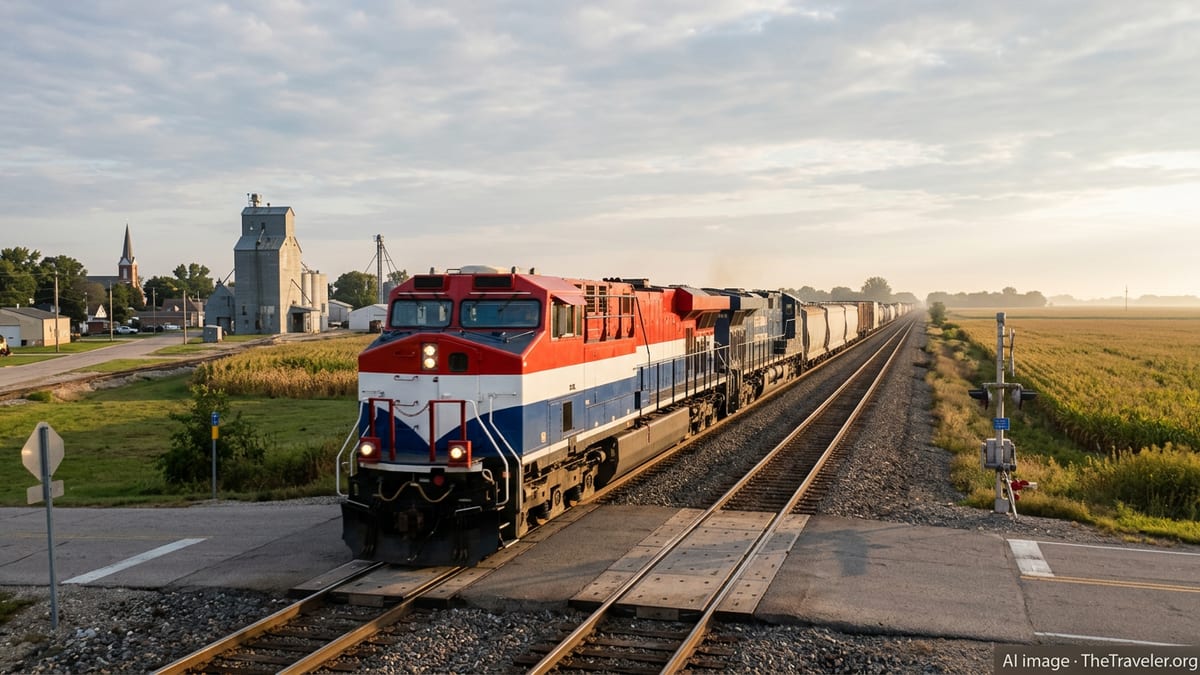
Freight carrier initiatives are echoing that message. BNSF Railway recently introduced a trio of red, white and blue commemorative locomotives bearing numbers that reference 1776, 2026 and the 250 year milestone. Company material frames the units as a tribute to both the railroad’s own heritage and the broader place of freight rail in building the national economy.
Separately, Union Pacific has announced a coast to coast tour of its restored Big Boy steam locomotive to coincide with the Semiquincentennial year. Public schedules describe the trip as a historic journey linking regions first tied together by the original transcontinental line, providing communities along the route with trackside celebrations, museum collaborations and rail fan events.
Together, these modern and heritage trains are being promoted as contemporary heirs to the first transcontinental railroad, turning the abstract idea of national unity into a visible and photogenic experience for travelers and local residents as they pass through towns and cities across the country.
Federal, State and Local Programs Tie Rail Travel to Civic Storytelling
America250, the congressionally designated organization coordinating national Semiquincentennial efforts, has released a programming playbook that encourages partners to link transportation experiences with broader civic themes. The guidance suggests that journeys by rail can serve as platforms for conversations about democracy, migration, innovation and environmental change across two and a half centuries.
According to public documents, the National Park Service plans to use the 250th anniversary to connect historic rail sites with other places central to the nation’s story, from Revolutionary War battlefields to industrial heritage districts. National Park Week 2026 promotions already highlight rail linked destinations as part of a larger narrative about how Americans have moved, traded and communicated over time.
State level Semiquincentennial commissions are developing complementary projects, such as themed excursion trains, rail museum exhibits and educational programs for students traveling by train to historic sites. In Ohio, Pennsylvania and other rail rich states, meeting minutes and planning reports show particular interest in using rail corridors to connect smaller communities to marquee national events.
These initiatives collectively position the first transcontinental railroad as a reference point for 21st century debates about infrastructure investment and connectivity, framing the story of 1869 as an early chapter in a continuing effort to bridge regional divides.
Tourism Industry Sees Opportunity in Cross Country Rail Narratives
Travel industry observers note that the renewed focus on rail for America 250 coincides with growing interest in slower, experiential journeys. Rail routes that trace portions of the historic transcontinental alignment, such as those crossing the Rockies or following high desert basins, are being marketed as alternatives or complements to road trips and domestic flights.
Destination marketing organizations in western and midwestern states are packaging rail history with food, culture and outdoor activities. Sample itineraries invite visitors to combine segments on intercity passenger trains with heritage railways, overnight stays in rail themed lodgings and visits to depots converted into cultural centers.
Analysts point out that this strategy allows communities far from the East Coast’s Revolutionary era landmarks to anchor their own Semiquincentennial stories. By foregrounding how the first transcontinental railroad reshaped migration, commerce and identity in their regions, these destinations position themselves as essential stops for travelers seeking a fuller understanding of the nation’s 250 year journey.
As planning accelerates toward 2026, the convergence of public commemorations, rail industry initiatives and tourism campaigns suggests that the first transcontinental railroad will occupy a prominent place in how Americans choose to travel, remember and imagine the country’s future during the Semiquincentennial period.