


More news on this day
American Airlines flight AA1009, scheduled to operate from Los Angeles to Chicago, made an emergency return to Los Angeles International Airport shortly after take off, according to early operational reports and publicly available flight tracking data.
Get the latest news straight to your inbox!
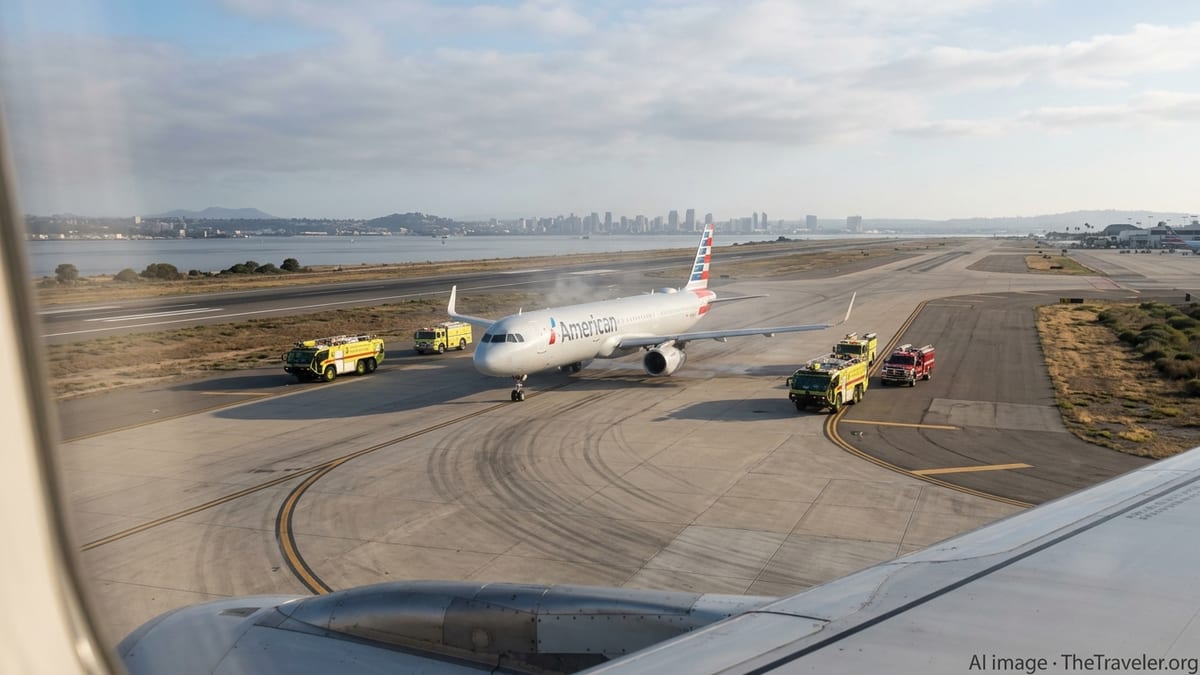
Flight AA1009 Turns Back to Los Angeles Shortly After Departure
Initial reports indicate that American Airlines AA1009 departed Los Angeles International Airport bound for Chicago before entering a holding pattern and ultimately returning to LAX. Publicly visible flight tracking information suggests the aircraft leveled off at a relatively low cruising altitude for the route before reversing course toward Los Angeles.
Available data shows the aircraft remained in the air long enough to complete standard checklists and positioning for landing, rather than conducting an immediate, high priority return. This pattern is typically consistent with a precautionary diversion rather than an acute, time critical emergency, although specific classifications are determined internally by the airline and aviation regulators.
The flight landed back at LAX without publicly reported injuries among passengers or crew as of the latest information reviewed. No irregular ground activity or extended runway closures were immediately evident from open airport status feeds, which often reflect the impact of more severe incidents.
Preliminary Indications of a Technical or Mechanical Concern
While the exact cause of the return has not been formally detailed in publicly accessible statements at the time of writing, the flight profile and timing point toward a possible technical or mechanical issue identified after departure. In similar recent events involving major United States carriers, aircraft have returned to their departure airport following cockpit alerts, engine performance concerns, pressurization warnings or indications related to onboard systems.
In modern commercial aviation, flight crews are trained to treat many system alerts conservatively and to prioritize a return to a major hub like Los Angeles when there is any uncertainty about an aircraft’s status. Aviation safety protocols generally favor precaution, particularly in the first phase of flight when the departure airport, maintenance facilities and standby aircraft are still close at hand.
American Airlines, like other large network carriers, typically conducts an engineering inspection after such returns, removing the aircraft from service until technicians can complete diagnostics and any needed repairs. Operational records in similar cases show that aircraft often remain on the ground for several hours or more when unscheduled maintenance is required.
Impact on Passengers and Downline Operations
For travelers on AA1009, the unexpected return likely led to missed connections and disrupted itineraries, especially for those planning onward travel from Chicago. In comparable cases documented in recent months, passengers have been reaccommodated on later departures from the origin city or rerouted through alternative hubs such as Dallas Fort Worth or Phoenix when space permits.
Publicly available information on other American Airlines irregular operations highlights a common pattern following precautionary returns: rebooking on same day flights where possible, overnight arrangements when schedules and crew duty limits prevent same day travel, and case by case consideration of vouchers or travel credits. The specific handling of AA1009 travelers has not yet been fully detailed in open reports.
Downline operations can also feel the ripple effects of a single unscheduled return. If AA1009’s aircraft had additional flights planned later in the day, those services may face delays or substitutions as the airline reallocates aircraft and crews. Large hub carriers typically lean on spare aircraft and schedule swaps to limit network wide disruption, but knock on effects are common on busy travel days.
Standard Safety Protocols in Emergency Returns
Emergency or precautionary returns to the departure airport are a well established element of commercial aviation safety, and they occur periodically across all major airlines. Flight crews follow checklists developed by manufacturers and operators that are designed to identify whether a situation can be managed en route or whether it is advisable to land as soon as practical.
In many cases similar to the reported behavior of AA1009, crews may hold at a safe altitude near the airport to run through diagnostic procedures, burn or redistribute fuel to reach a preferred landing weight, and coordinate with air traffic controllers for priority handling. This is consistent with the looping track often visible on consumer flight tracking platforms when a flight reverses course after departure.
Industry data over the past decade indicates that the vast majority of such returns end uneventfully, with the aircraft landing safely and passengers later continuing their journey on the same or a replacement aircraft. Modern commercial jets are built with multiple redundant systems, and a single indication in one system is often enough to trigger a conservative decision to land, even when the aircraft remains fully controllable.
What Travelers Should Know After an Inflight Diversion
Events like the emergency return of AA1009 highlight what passengers can expect when a flight is forced to divert or return shortly after take off. Airlines typically prioritize getting the aircraft safely on the ground before addressing customer service logistics, which means information at the gate can be limited in the first hour after landing while crews complete mandatory reports and maintenance teams assess the aircraft.
Recent coverage of diversions involving American Airlines and other carriers shows that travelers often receive rebooking options first, followed by details about hotel or meal support when overnight stays become necessary. Passengers are usually encouraged to monitor airline apps for new boarding passes and seat assignments, as rebooking is increasingly handled digitally rather than entirely at airport counters.
For those on AA1009, the return to LAX, while disruptive, reflects an aviation environment in which erring on the side of caution is standard practice. As more information becomes available through formal updates and operational records, additional clarity is expected on the exact sequence of events that led to the decision to bring the aircraft back to Los Angeles rather than continue on to Chicago.