


More news on this day
Passengers on American Airlines flight AA1889 from Philadelphia to Portland, Maine, faced an unexpected return to Philadelphia International Airport after the Airbus A319 diverted back toward its origin shortly after departure, according to publicly available flight-tracking data and social media posts.
Get the latest news straight to your inbox!
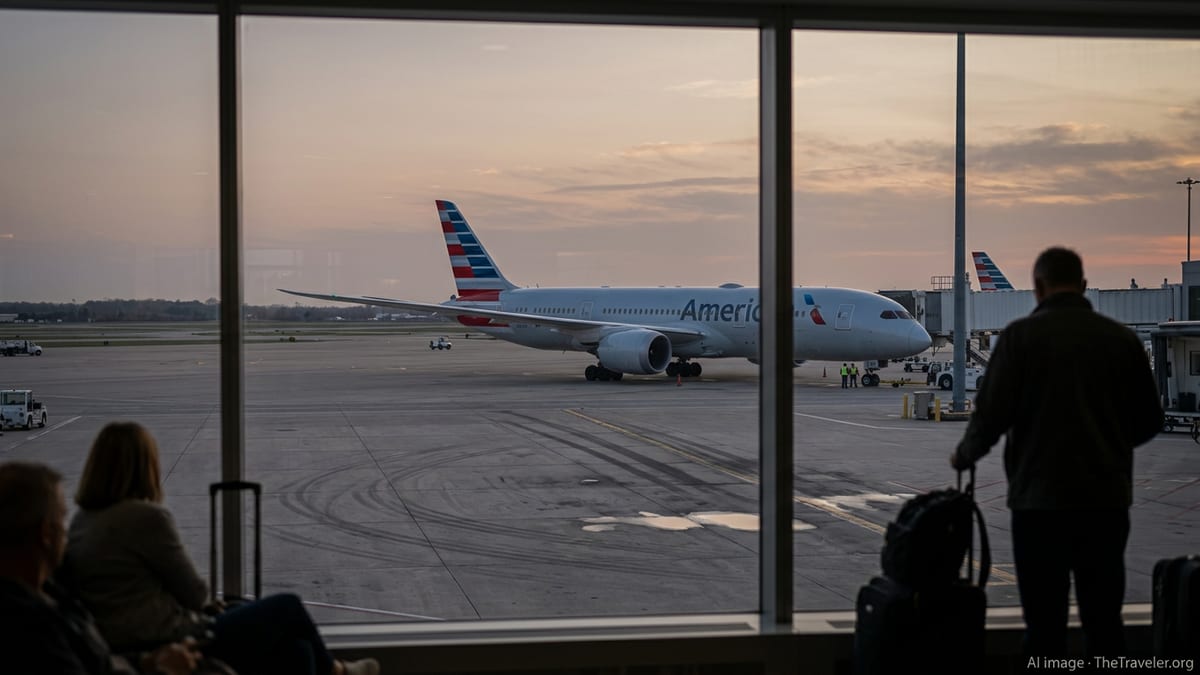
What Happened On Flight AA1889
American Airlines flight AA1889 is a regularly scheduled service from Philadelphia International Airport to Portland International Jetport in Maine, typically operated by an Airbus A319. Flight-tracking services list the service as an evening departure of around one and a half hours, connecting one of the carrier’s major East Coast hubs with coastal New England.
On the most recent rotation that drew attention from travelers, data from public flight-tracking platforms show the aircraft departing Philadelphia, climbing away as normal, and then turning back toward the city instead of continuing north to Portland. The track indicates that the aircraft did not proceed far into the planned route before reversing course and heading back toward its origin.
Discussion threads on aviation forums and passenger-focused communities reference AA1889’s diversion, with travelers asking why the flight abandoned its route and ultimately returned to Philadelphia rather than continuing to Maine or diverting to an alternate regional airport. As of the latest information available, those posts do not identify a definitive cause, highlighting the limited detail typically shared publicly in real time about in-flight disruptions.
American Airlines had not published a detailed explanation in publicly accessible channels at the time of writing, and flight-tracking pages for AA1889 mainly reflect schedule details, aircraft type, and timing. In the absence of official statements, the available picture of events relies on this data and passenger accounts rather than a formal incident summary.
Possible Reasons Flights Return To Origin
While no confirmed reason has been attributed publicly to the diversion of AA1889, there are several common scenarios in which a crew may elect to return to the departure airport. Airlines and aviation analysts frequently cite technical issues with aircraft systems, medical situations involving passengers or crew, and operational constraints such as crew duty limits as among the most typical causes.
Weather is another major factor in diversions and turnbacks. If conditions deteriorate at the destination or along the route, dispatchers and flight crews may decide that continuing is inadvisable. Routes in the northeastern United States can be affected by thunderstorms, low visibility, or strong coastal weather systems, any of which can quickly alter the operational picture between takeoff and arrival.
Security or behavioral concerns can also prompt a decision to discontinue a flight. In past cases involving U.S. carriers, aircraft have diverted or returned after reports of disruptive passengers, items of concern in the cabin, or other onboard disturbances. Publicly available accounts of those events show that airlines typically prioritize getting the aircraft on the ground at an airport with appropriate law enforcement and support infrastructure.
Industry guidance and airline documentation stress that turnbacks and diversions are primarily safety decisions, even when they create major inconvenience. From a procedural standpoint, crews follow checklists, liaise with airline operations centers, and coordinate with air traffic control to determine whether returning to origin or diverting to an alternate offers the safest and most practical solution.
Impact On Passengers Traveling Between Philadelphia And Portland
For passengers on AA1889, a mid-flight return to Philadelphia can significantly disrupt travel plans. A relatively short evening flight from Philadelphia to Portland is often part of longer itineraries that include connections from Europe, the Midwest, or the South. A sudden diversion can cause missed onward flights, lost hotel nights, and rearranged ground transportation.
Recent discussions on traveler forums involving other American Airlines services describe passengers stranded overnight or rebooked through alternate hubs after diversions and cancellations, illustrating the broader ripple effects of operational disruptions. In some cases, travelers report being shifted to later flights, rerouted through different cities, or offered the option to abandon their trip in exchange for a refund.
For Portland-bound travelers specifically, options can be limited if an evening flight fails to reach Maine, because late-night service from hubs into smaller airports is often sparse. Passengers may face choices such as overnighting in Philadelphia, rebooking via other Northeast airports, or arranging ground transportation the following day to complete relatively short regional segments.
In situations like the AA1889 return, publicly available information from consumer advocates and airline policies indicates that the level of compensation or support can depend on the cause. Weather and air traffic control restrictions are commonly treated as outside the airline’s control, while some mechanical or staffing problems may be considered within its responsibility. However, detailed, case-specific determinations are rarely reflected in public tracking data.
The Airbus A319 And American’s Short-Haul Network
The Airbus A319 is one of the smaller mainline aircraft in American Airlines’ fleet, typically seating around 120 to 130 passengers in a two-class configuration. Industry reports note that American has been updating the interiors of its A319s, including changes to first class seating and cabin layout, as the airline continues to deploy the type on dense domestic and shorter transborder routes.
On routes such as Philadelphia to Portland, the A319’s size and range make it suitable for balancing capacity with demand. The aircraft is capable of operating into regional airports with shorter runways while still offering mainline comfort and onboard amenities aligned with American’s broader narrowbody fleet.
From an operational perspective, using a common narrowbody family helps simplify training and maintenance, which can support reliability. However, like all aircraft, A319s are subject to routine technical checks, weather impacts, and air traffic constraints that occasionally result in delays or diversions. Recent coverage of separate A319 incidents across multiple airlines underscores that precautionary returns and diversions are not unique to any one carrier.
For travelers, the aircraft type typically matters less than how disruptions are handled. Passengers on AA1889 experiencing a diversion will often focus on rebooking speed, communication at the gate and onboard, and clarity about baggage handling and overnight arrangements rather than on the specific technical reasons behind the aircraft’s return.
What Travelers Can Do When A Flight Diverts
When a flight such as AA1889 diverts or returns to its origin, travel experts and consumer advocates often recommend a proactive approach from passengers. As soon as it becomes clear that the aircraft will not reach the intended destination on schedule, travelers can use airline apps, websites, or customer service phone lines to search for alternative routings.
Publicly available guidance from frequent travelers highlights that rebooking options may appear in digital channels before detailed announcements are made at the gate. Some passengers choose to accept automatic rebookings, while others search for earlier or more convenient connections and then request those options from airline representatives once on the ground.
It is also advisable for passengers to document receipts for meals, hotels, and alternative transport arranged due to the disruption. Consumer organizations note that such records can support later reimbursement requests or travel insurance claims, depending on policy terms and airline rules.
Although diversions and turnbacks like the recent AA1889 event are relatively rare compared with the overall number of daily flights, they serve as a reminder that even short domestic trips can be affected by fast-changing conditions. For travelers moving through busy hubs such as Philadelphia, building extra time into connections and monitoring flight status closely can help reduce the impact when plans suddenly change.