


More news on this day
An American Airlines regional flight operating between Charlotte Douglas International Airport and Huntington Tri-State Airport diverted from its intended route following a reported technical issue, according to flight-tracking data and local media summaries of the incident.
Get the latest news straight to your inbox!
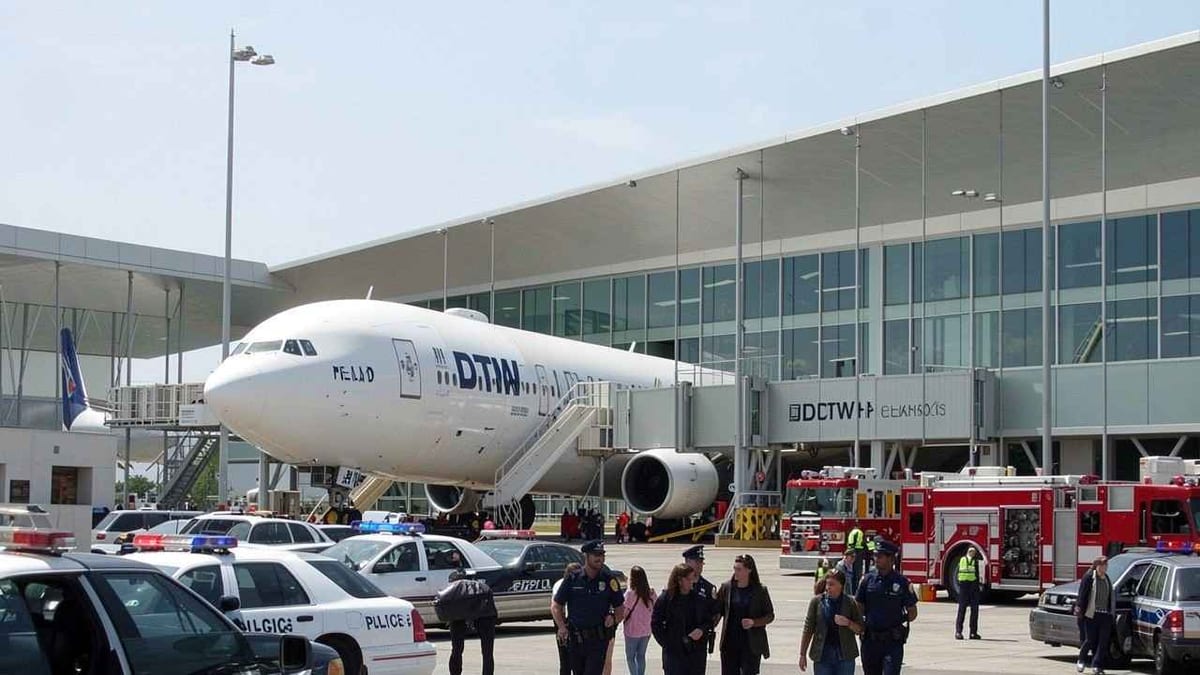
Technical Issue Forces Midroute Diversion
Initial reports indicate that the American Airlines service from Charlotte to Huntington encountered a technical irregularity en route, prompting the crew to discontinue the short hop across the Appalachians and divert the aircraft as a precaution. Publicly available tracking data shows the aircraft leaving Charlotte Douglas International Airport on schedule before veering toward an alternate airport instead of continuing to Huntington Tri-State.
Information compiled from flight-status platforms suggests the diversion occurred relatively early in the flight profile, consistent with standard airline practices that prioritize landing promptly when a potential mechanical or systems-related concern is detected. Although precise details of the technical issue have not been publicly disclosed, references in operational logs and third-party coverage commonly point to possibilities such as instrumentation alerts, minor mechanical anomalies, or systems warnings that require ground evaluation.
There have been no publicly documented reports of injuries associated with the incident, and available data suggests the diversion was carried out in a controlled manner. After landing at the alternate airport, the aircraft remained on the ground while maintenance inspections were initiated and passengers awaited guidance on continuing their journeys.
Charlotte–Huntington: A Short but Strategically Important Route
The Charlotte to Huntington connection is a relatively short regional route that serves as an essential link between the Appalachian Tri-State area and the broader national and international network centered at Charlotte Douglas International Airport. American Airlines and its regional partners operate this corridor as part of a hub-and-spoke system that channels passengers from smaller communities into a major hub where they can connect to destinations across the United States and beyond.
For travelers from West Virginia, Kentucky, and Ohio who rely on Huntington Tri-State Airport, disruptions on this route can quickly ripple outward. Once a flight diverts, missed onward connections, rebooking challenges, and limited same-day alternatives can significantly extend total travel time. On routes with only a handful of daily frequencies, even a single diversion can reshape the travel plans of dozens of passengers.
Charlotte Douglas itself plays an outsized role in these dynamics. As one of the nation’s busiest airports and a primary hub for American Airlines, the airport routinely absorbs waves of regional arrivals that feed into tight connection banks. A diverted aircraft on a short-haul route like Charlotte–Huntington may have knock-on effects, especially if the same plane and crew were scheduled to operate additional legs later in the day.
Safety Protocols and the Role of Technical Diversions
Technical diversions, while disruptive for passengers, are a built-in feature of modern airline safety protocols. Industry documentation and American Airlines’ own public-facing materials describe how pilots are trained to divert promptly when onboard systems suggest a potential risk, even if the issue ultimately proves to be minor. The decision to land at the nearest suitable airport is typically made out of an abundance of caution, especially on shorter flights where there is limited time to troubleshoot complex issues in the air.
Recent summaries of American Airlines operations show that potential mechanical issues are a recurring cause of diversions and delays across the network, from long-haul international services to short domestic segments similar to Charlotte–Huntington. In most of these cases, inspections on the ground either confirm that the aircraft can continue after maintenance action or that it should be substituted with another plane, while crews and schedulers work to reposition aircraft and rebook passengers.
Aviation safety data and academic analyses of delay propagation highlight how even localized technical events can reverberate through an airline’s tightly timed schedule. A single diverted regional flight may require crew duty-time adjustments, aircraft swaps, and revised departure slots, particularly when it originates from a major hub with high utilization like Charlotte.
Passenger Disruption and Rebooking Challenges
For travelers on the diverted Charlotte–Huntington flight, the most immediate impact was time. Passengers faced extended ground holds, the possibility of deplaning at an unplanned airport, and uncertainty over when they would reach Huntington or their final destinations beyond. On regional routes with limited daily service, same-day alternatives may involve multi-stop itineraries or overnight stays arranged on a case-by-case basis.
Publicly available guidance from American Airlines outlines a range of responses after a diversion related to a technical concern, including rebooking onto later flights, providing hotel accommodation when an overnight delay becomes unavoidable, and coordinating with partner carriers where feasible. However, the practical experience for customers can vary depending on the timing of the event, aircraft availability, and how quickly a replacement plane and crew can be positioned.
Travelers who were connecting onward from Huntington to smaller regional communities may have been particularly affected, as secondary connections can be more difficult to re-create once a key feeder flight is removed from the schedule. Travel industry observers note that in such cases, passengers often rely on a combination of airline call centers, airport agents, and digital tools to piece together new itineraries.
Context: A Broader Pattern of Operational Strain
The Charlotte–Huntington diversion comes against a backdrop of broader operational strain within the U.S. aviation system. Recent coverage of American Airlines’ network performance highlights a mix of factors that can compound the effect of a single technical event, including busy summer schedules, weather disruptions in hub cities, and nationwide air traffic control constraints. When such pressures coincide, regional flights to smaller markets can be among the first to experience cascading delays and equipment substitutions.
At Charlotte Douglas, recent reporting has described periods of heavy delay volume, reflecting its role as a central hub that concentrates a large share of American’s daily departures and arrivals. Under such conditions, a diverted aircraft may face competition for scarce gate space, maintenance slots, and crew resources, prolonging the time needed to restore normal operations on routes such as Charlotte–Huntington.
Aviation analysts point out that while diversions due to technical concerns remain relatively rare compared with the total number of daily flights, they are important indicators of how carriers manage the balance between schedule reliability and safety. In the case of the Charlotte to Huntington service, the decision to divert underscores how quickly a short regional leg can transition into a complex operational event, reshaping travel plans across a much wider network.