


More news on this day
Around 200 passengers on the MV Odyssey, a residential cruise ship marketed as a long-term “cruise for life,” have been left stranded in Cambodia after Florida-based operator Villa Vie Residences abruptly suspended operations, citing a sharp surge in fuel costs and mounting financial pressures.
Get the latest news straight to your inbox!
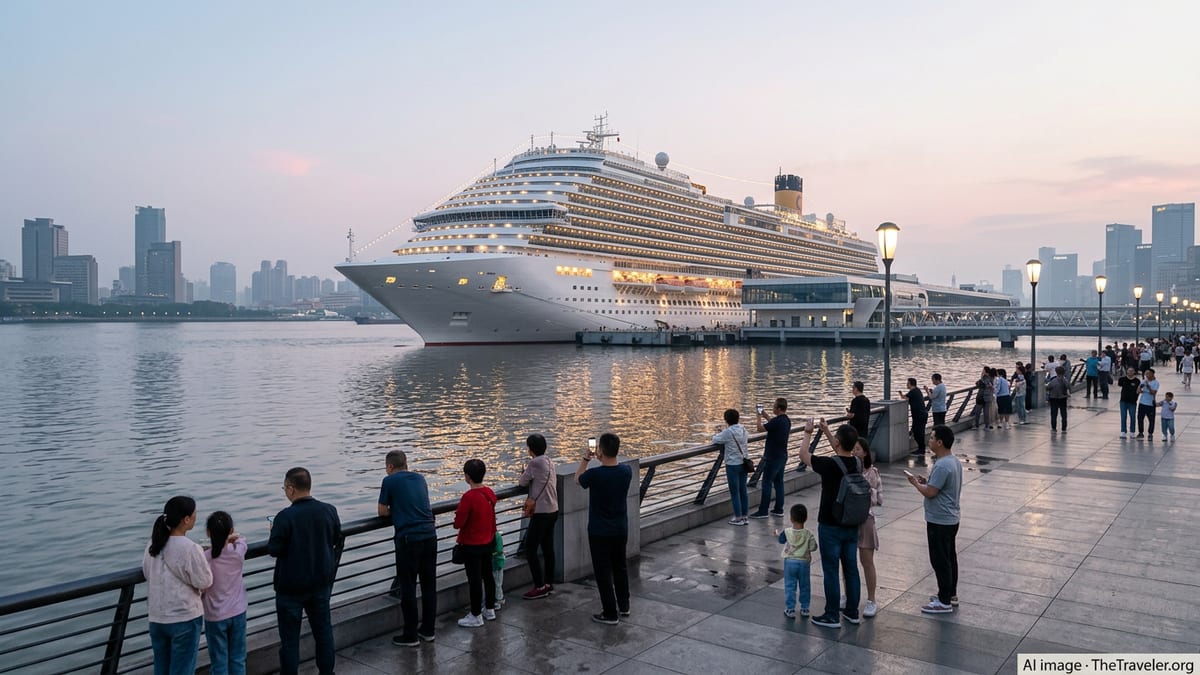
Endless Voyage Cut Short In Sihanoukville
The MV Odyssey, operated by Villa Vie Residences, had been sailing an extended world itinerary since departing Belfast, Northern Ireland, in October 2024. The ship was promoted as a 3.5-year continuous voyage touching nearly 150 countries, with passengers able to buy or rent cabins as full-time homes at sea. According to published coverage, the vessel had logged more than 750 days at sea before the suspension was announced.
Reports indicate that the decision to halt the cruise was communicated to residents while the ship was docked in Sihanoukville, on Cambodia’s southern coast. Passengers were instructed to disembark with their belongings as the vessel entered a temporary layup, with crew remaining on board to maintain essential systems.
Coverage from multiple outlets notes that the Odyssey, a roughly 200-meter ship originally built in 1993 and previously operated under several brands, had been extensively refitted for its residential role. Villa Vie marketed the experience as an alternative to traditional retirement or extended travel on land, with some residents reportedly selling homes and possessions to finance multi-year stays on board.
Instead of continuing toward Southeast Asian and Pacific ports as originally scheduled, the ship’s journey effectively ended at Sihanoukville Autonomous Port, turning what had been billed as an “endless” voyage into an abrupt relocation for those living on board.
Fuel Price Shock Undermines Residential Cruise Model
Publicly available statements and reporting suggest that soaring fuel costs in Asia were the primary trigger for the shutdown. Villa Vie Residences described what it called “extraordinary increases” in marine fuel expenses in the region, linked by several outlets to broader energy market volatility following conflict involving Iran.
Coverage summarizing the company’s financial outlook indicates that monthly fuel costs per cabin, historically around 1,800 dollars, had reportedly risen to an estimated 6,000 to 8,000 dollars in some Asian waters. That escalation appears to have rendered the existing fare and ownership structure unsustainable, particularly for a ship designed to remain almost constantly underway rather than operate in shorter seasonal cruises.
The Odyssey was one of only a small number of ships globally offering long-term or permanent residential arrangements at sea. Analysts quoted in previous coverage about the residential cruising sector had highlighted fuel volatility as a key risk for such ventures, since these ships often travel farther and more continuously than conventional cruise itineraries, with fewer opportunities to offset costs through high-volume, short-duration sailings.
The decision to enter layup in Cambodia, rather than reposition to a larger aviation hub, has drawn scrutiny from some commentators following the story. However, reports note that layup locations are often selected based on port charges, available shipyard or anchorage capacity, and regional regulatory conditions, all of which can interact with rapidly changing fuel markets.
Passengers Face Logistical And Financial Uncertainty
For the roughly 200 residents currently in Cambodia, the sudden halt has created immediate practical challenges. Published accounts from passengers and local media describe being transported from the port into Sihanoukville and left to secure their own hotels, apartments, or onward travel, with many caught off guard by the speed of the disembarkation order.
Several outlets report that Villa Vie has been arranging or assisting with short-term accommodation and local transportation within Sihanoukville. However, public reporting also indicates that the company has not committed to covering international flights or other major travel expenses, leaving many passengers to fund their own journeys home or to alternative destinations.
Travelers affected by the shutdown include retirees, remote workers, and long-term residents who had treated the ship as their primary home. Media reports highlight cases of passengers who had disposed of land-based housing, as well as at least one individual undergoing ongoing medical treatment, complicating efforts to relocate quickly from Cambodia.
Consumer advocates following the situation have pointed to the difficulties residents may face when seeking refunds or compensation for unused months or years on board. The ship’s residential model included a mix of outright cabin purchases, long leases, and “pay as you go” segments, making the financial picture more complex than a standard cruise refund scenario.
Questions Over Protections For Residential Cruise Residents
The Odyssey incident is drawing attention to regulatory gray areas around living at sea. Traditional cruise bookings are generally covered by well-established consumer protections in major markets, including rules on refunds and bonding requirements if operators fail. In contrast, residential cruise arrangements can resemble a hybrid of real estate, timeshare, and long-duration travel contracts, which may fall outside familiar frameworks.
Legal specialists interviewed in previous analyses of the sector have noted that residents on such ships may have limited recourse if an operator becomes insolvent or significantly alters an advertised itinerary. Jurisdiction can be complicated by the vessel’s flag state, corporate domicile, and the locations where contracts were signed or marketed, as well as the specific terms set out in purchase or lease agreements.
Reports on the Villa Vie situation indicate that the company is seeking to restructure and secure new financing while the Odyssey remains in layup. Whether operations can resume in some form, and what that would mean for existing owners or long-term renters, remains unclear. Public information to date has not outlined a detailed timeline for any potential restart or for the handling of customer claims.
The outcome is likely to be watched closely not only by current and prospective residents, but also by other companies exploring similar models. In recent years, several residential cruise concepts have been announced, some with multi-year world itineraries and cabin pricing pitched as an alternative to urban housing in expensive cities.
Impact On Cambodia And Future Residential Voyages
For Cambodia, the unexpected layup of a foreign residential cruise ship in Sihanoukville brings both short-term disruption and modest local economic activity. Hotels, guesthouses, and rental apartments in the coastal city have reported an influx of new guests connected to the Odyssey, even as many of those guests are seeking only temporary stays while they plan next steps.
Local reporting describes authorities coordinating port access and movements between the ship and the city but provides limited detail on any long-term arrangements for the vessel. With the Odyssey remaining moored in or near Sihanoukville, the ship itself is now a visible symbol of the risks attached to ambitious maritime lifestyle projects when global conditions shift.
Industry observers suggest that the events in Cambodia could prompt more cautious planning among developers of future residential cruises. Proposed projects may face stricter investor scrutiny of fuel hedging strategies, contingency plans for prolonged layups, and the legal status of residents if voyages are cut short.
At the same time, the strong demand that initially supported the Odyssey’s launch underscores ongoing interest in alternative travel-based lifestyles. Whether that demand can be matched with business models resilient enough to withstand energy shocks and geopolitical crises is likely to be a central question as the sector reassesses its course following the MV Odyssey’s sudden stop in Sihanoukville.