


More news on this day
A recent American Airlines incident at Dallas Fort Worth International Airport is fueling renewed public attention on aviation safety, as travelers and analysts revisit earlier runway events and near-miss data at one of the country’s busiest hubs.
Get the latest news straight to your inbox!
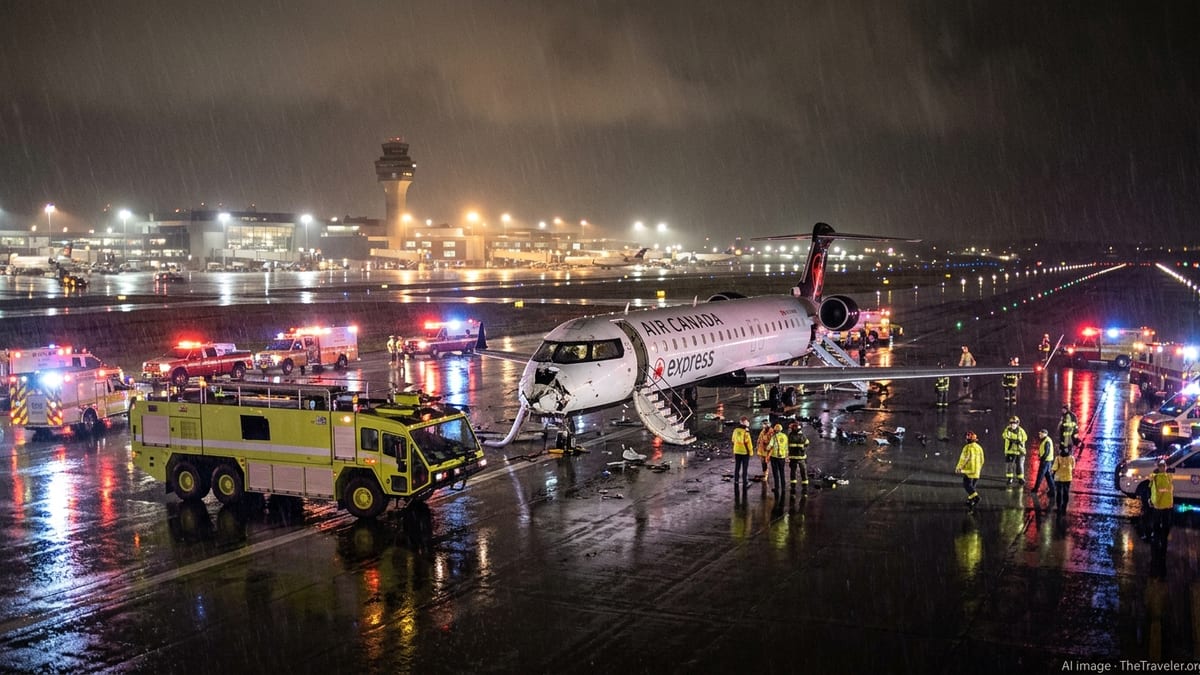
Latest American Airlines Disruption Leaves DFW Passengers Alarmed
On September 4, 2026, an American Airlines flight departing Dallas Fort Worth International Airport for Newark diverted after a disruptive passenger incident, according to regional broadcast coverage. Reports indicate a traveler became unruly in flight, with video circulating on social media appearing to show the passenger restrained with tape to a seat as the cabin crew and other passengers attempted to manage the situation. The aircraft later continued its journey on an adjusted schedule.
While the diversion itself was not attributed to a mechanical problem or air traffic control issue, the highly public nature of the disruption has added to broader concerns many travelers already express about safety, reliability, and stress in today’s air travel environment. The incident also unfolded at a time when Dallas Fort Worth, American’s largest hub, has been the subject of renewed scrutiny over runway excursions and close calls in recent years.
Publicly available information shows that such in-flight disturbances are statistically rare when measured against the volume of daily departures at Dallas Fort Worth. Even so, the diversion has become part of a larger conversation among travelers and aviation observers who increasingly link passenger behavior, operational pressures, and infrastructure constraints into a single picture of perceived risk.
Runway Overrun at DFW Put Maintenance Practices in the Spotlight
Underlying the current discussion is an earlier incident involving an American Airlines Boeing 737-800 that overran a runway at Dallas Fort Worth on February 10, 2024, after a flight from Washington Reagan National Airport. According to National Transportation Safety Board documentation and subsequent industry summaries, the aircraft came to a stop beyond the runway end after the crew reported braking problems on landing, with no injuries among passengers or crew.
NTSB investigative material indicates that incorrectly reconnected brake lines during maintenance contributed to the loss of normal braking effectiveness as the aircraft decelerated, leading to what investigators described as a runway excursion. Industry trade coverage of the final report highlights that the malfunction did not involve a high-speed collision but nevertheless represented a serious safety event, particularly at a major hub with dense traffic.
Aviation analysts note that the 2024 DFW overrun has become a reference point in debates about how airlines and maintenance providers manage complex fleets over many flight cycles. The case is frequently cited in professional forums as an example of how small procedural deviations on the ground can translate into significant operational risk at touchdown, even in good weather and under routine approach profiles.
DFW’s Record of Incursions and Excursions Raises Systemic Questions
The safety discussion extends beyond a single airline. Federal Aviation Administration statistics on runway incursions show that Dallas Fort Worth has ranked among the U.S. airports with the highest number of such events in recent fiscal years, alongside hubs such as Boston Logan and Chicago O’Hare. Runway incursions cover a broad range of situations, from minor taxiway deviations to serious close calls, and most do not result in collision or injury.
Local reporting in North Texas notes that the rate of documented runway incursions nationwide, expressed per million takeoffs and landings, has remained broadly similar over the past decade, even as overall traffic has grown. At the same time, the concentration of events at a few major airports has encouraged renewed attention to surface-movement procedures, signage, and technology aimed at giving pilots and controllers clearer real-time alerts.
Dallas Fort Worth’s role as American Airlines’ primary connecting hub means that nearly every operational disruption involving the carrier in North Texas, whether mechanical, weather-related or behavioral, is amplified by the number of passengers making onward connections. For travelers, the pattern of widely reported events can create a perception of uniquely elevated risk at the airport, even though federal data continues to show that serious accidents remain rare compared with the scale of daily operations.
Federal Investigations and Proposed Penalties Keep Safety Under Review
Publicly available regulatory actions also reflect how safety issues tied to American Airlines operations remain under federal review. In April 2026, the Federal Aviation Administration announced a proposed civil penalty of $255,000 against American for an alleged violation involving alcohol and drug testing requirements. The case centered on compliance with mandatory procedures that apply across the industry and are intended to ensure that safety-sensitive employees meet strict fitness standards.
Although the proposed fine is separate from any specific flight event at Dallas Fort Worth, its timing has reinforced the impression among some observers that regulators are closely monitoring the airline’s adherence to established safety systems. Aviation policy specialists often point out that such enforcement actions are part of a broader framework designed to identify and correct lapses before they contribute to more serious incidents.
The same framework governs investigations into runway excursions such as the 2024 DFW overrun. Technical reports on that event detail the maintenance history of the aircraft’s braking system, the sequence of cockpit indications during rollout, and the performance of the stopping systems relative to certification assumptions. Together, these documents illustrate how a single incident can lead to changes in check procedures, training materials, and internal audits at both the airline and maintenance-provider level.
Travelers Weigh Personal Risk Amid a Strong Overall Safety Record
For passengers using Dallas Fort Worth, the combination of a recent disruptive flight, a high-profile runway overrun, and ongoing federal enforcement activity shapes how safety is perceived, even in the absence of recent large-scale accidents. Posts on traveler forums and social media frequently discuss experiences of delays, diversions, and crowded connections at the airport, often citing earlier incidents as context for individual frustrations.
Industry statistics, however, continue to describe U.S. commercial aviation as one of the safest modes of transportation. Federal accounting of air traffic at major hubs indicates millions of annual takeoffs and landings with only a small fraction resulting in reportable incidents, and an even smaller number categorized as severe. Safety specialists regularly note that the very visibility of disruptions and close calls reflects a system structured to report, investigate, and learn from anomalies.
In practice, travelers passing through Dallas Fort Worth have limited ability to influence the underlying safety architecture, but they do respond in tangible ways, such as by adjusting itineraries, allowing longer connection times, or tracking aircraft and weather data on mobile apps. The latest American Airlines diversion linked to a disruptive passenger fits into this landscape as another reminder of how human behavior, operational complexity, and regulatory oversight intersect over one of the world’s largest connecting hubs.
As the investigation record for past events at Dallas Fort Worth continues to expand, the airport and its primary tenant carrier remain central to the national conversation about what constitutes acceptable risk in modern air travel, and how even non-technical incidents can trigger wider debate about aviation safety.
KERA News coverage of the September 4, 2026 American Airlines diversion from DFW
Technical summary of the NTSB report on American Airlines Flight 1632 runway overrun at DFW
FAA Air Traffic by the Numbers report with runway incursion statistics for major U.S. airports