


More news on this day
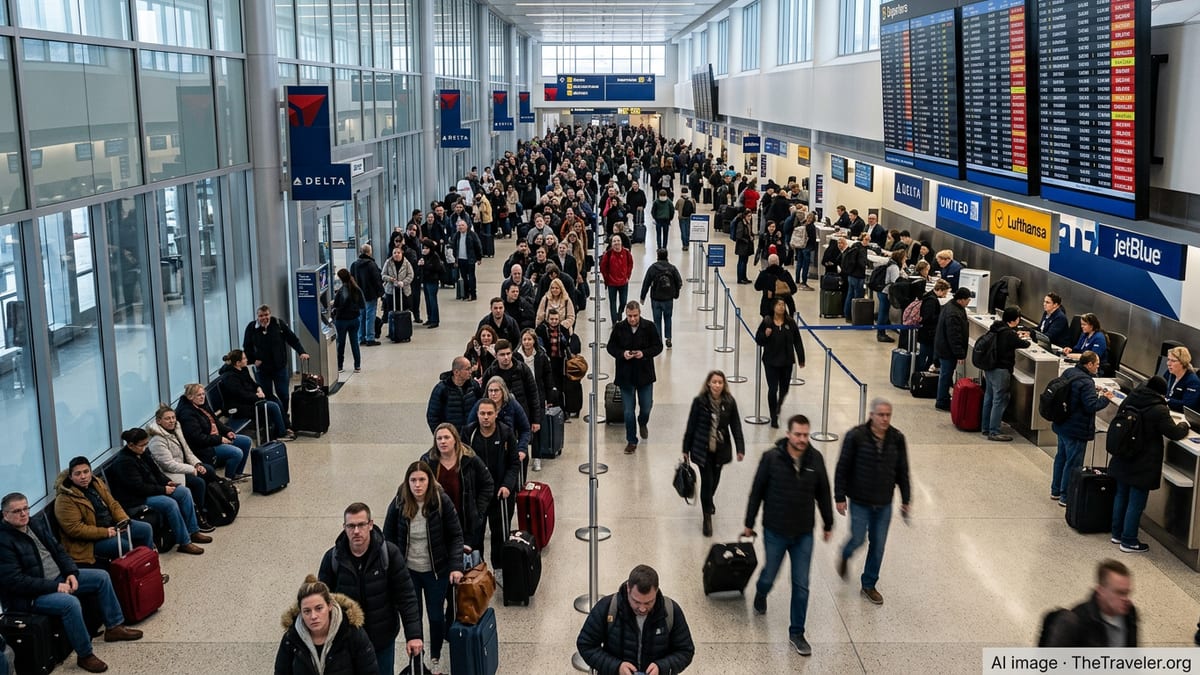
Labor Day weekend is shaping up as one of the busiest travel periods of the year, with higher gas prices, crowded airports, and forecasts of heavy afternoon traffic combining to create a perfect storm of potential delays for drivers and flyers alike.
Get the latest news straight to your inbox!
Holiday Traffic Builds on a Record-Busy Summer
Publicly available data indicates that Labor Day caps a summer of robust travel demand in the United States. Industry reports show that from Memorial Day through Labor Day 2024, the Transportation Security Administration screened nearly 279 million travelers, and by 2025 the system recorded multiple days with more than 3 million passengers in a single day. That momentum is feeding into 2026 travel patterns, with airports and highways again bracing for near-peak volumes.
Road travel is expected to be intense as drivers seek a final summer getaway despite higher costs. Analysis from market tracking firms and gas price services suggests Labor Day 2026 gasoline prices are likely to stay above 4 dollars per gallon nationally, with some forecasts pointing to the highest Labor Day pump prices on record. Even so, auto club booking data for 2026 shows continued demand for domestic trips, cruises, and national park visits over the long weekend.
Individual regions are already reporting heavy flows. Denver International Airport, for example, projects more than 368,000 passengers passing through security between Thursday, September 3 and Monday, September 7, 2026, with the busiest days expected on Friday and Monday. Similar patterns are anticipated at other major hubs, suggesting that travelers who do not plan carefully may encounter long wait times from curbside to gate.
Know the Worst Times to Hit the Road
Transportation analytics from AAA and traffic data firm INRIX point to clear patterns in when congestion is likely to spike. For Labor Day weekend, their published guidance consistently shows that Thursday afternoon and much of Friday carry the heaviest delays as regular commuter traffic merges with holiday travelers. In many metropolitan areas, vehicles heading toward beaches, lakes, and vacation homes stack up at the same time as evening rush hour, creating extended backups.
Recent Labor Day trend reports from multiple regions highlight similar conclusions. In Boston and around New England, for example, state and media traffic summaries for 2025 emphasized that the worst times to drive were generally between early afternoon and early evening on each day of the holiday period, especially Thursday and Friday. Forecasts for 2026 from Axios and local outlets in cities such as Philadelphia, Tampa Bay, and Indianapolis again warn drivers to avoid Friday afternoon starts if at all possible.
By contrast, Sunday tends to emerge as the relative “quiet” day on the roads. INRIX projections for 2026 shared through national and local coverage describe Sunday as the easiest day for highway travel, with less pronounced peaks in congestion compared with Friday and Monday. Travelers who can shift their outbound or return legs to Sunday morning stand a better chance of an uninterrupted drive.
The most effective tactic, experts repeatedly stress in public guidance, is to travel during morning hours. AAA and INRIX charts for recent Labor Day weekends advise leaving before midday on Thursday or Friday, or aiming for a Saturday departure between roughly 6 a.m. and 10 a.m. Doing so reduces exposure to the afternoon traffic surge, road construction delays, and weather-related slowdowns that often build as the day wears on.
Time Your Airport Arrival to Outrun Security Lines
Airports are entering the holiday with limited spare capacity following a summer of record passenger volumes. A 2026 fact sheet compiled by the U.S. Travel Association notes that in 2025 there were eight separate days when TSA screened more than 3 million travelers. Those levels strain security checkpoints, baggage systems, and boarding operations, and similar numbers are expected during the upcoming holiday period.
As a result, standard advice to arrive two hours before domestic flights and three hours before international departures may not be sufficient at the busiest times. Labor Day weekend flight delay and cancellation patterns from recent years show that early morning departures are less likely to be disrupted, while afternoon and evening flights can experience cascading delays as weather and congestion ripple across the national network. Booking the first flight of the day, even if it means an early wake-up, significantly improves the odds of an on-time start.
Travelers are also being urged, through airline and airport advisories, to build in extra time for parking shuttles, checked baggage queues, and security. Major hubs such as Denver have published forecasts of daily passenger loads so customers can anticipate heavier crowds. For those departing on peak days like Friday or returning on Monday evening, adding an additional 30 to 60 minutes beyond the usual recommended arrival time can provide a critical buffer.
Digitally checking in, downloading airline apps, and monitoring gate and security wait-time tools can further reduce surprises. Some airports and state agencies, for example, promote real-time traffic and camera apps that allow motorists to gauge congestion on airport access roads before they leave home.
Eight Practical Ways to Avoid the Worst Delays
First, shift departure days when possible. Instead of leaving after work on Friday, consider a pre-dawn start on Friday, a Thursday morning drive, or even a Saturday morning rollout. Published holiday traffic charts from AAA and INRIX consistently show these windows as having substantially lighter congestion than the midday and late-afternoon peaks.
Second, target Sunday for at least one leg of the trip. With multiple regional forecasts singling out Sunday as the lightest day on the roads, travelers can use it as an anchor for either departure or return, reducing the risk of being caught in bumper-to-bumper conditions on Friday or Monday.
Third, build flexibility into flight plans. Travelers who can select early-morning departures, avoid tight connections, and fly non-stop where possible are less vulnerable to system-wide delays. Using fare calendars in advance to choose flights at off-peak hours, even at a slight cost premium, can save hours of waiting later.
Fourth, prepare for high fuel and parking costs. With gas prices projected to remain above 4 dollars per gallon over the holiday, budgeting extra for fuel and considering alternatives such as carpooling, public transit to airports, or off-site parking can help control expenses and time spent circling for a spot.
Fifth, check real-time traffic data before departure. Many state transportation departments and regional agencies host sites and apps displaying congestion maps, incident reports, and estimated travel times. Using these tools to adjust routes or departure times can shave significant minutes from a trip, especially in urban corridors leading to beaches or mountain destinations.
Sixth, service vehicles and plan charging stops. AAA safety advisories ahead of recent holidays stress the importance of inspecting tires, batteries, and fluid levels before a long drive. Drivers of electric vehicles should map out charging options along their route in advance, including fast chargers, to avoid unplanned and time-consuming detours during peak hours.
Seventh, pack as if delays are inevitable. Extra water, snacks, medications, and chargers can turn a stalled highway segment or a tarmac wait into an inconvenience rather than a crisis. Families with children, in particular, may benefit from preparing entertainment for unexpected downtime in terminals or rest areas.
Eighth, monitor weather closely. Late-summer storms can quickly disrupt both road and air travel, especially along the Gulf Coast and Eastern Seaboard. Checking forecasts and adjusting departure times by even a few hours to skirt the worst conditions can prevent small delays from compounding into missed connections or overnight stops.
Regional Hot Spots and Shifting Travel Habits
Recent Labor Day travel analyses highlight a series of recurring hot spots for congestion and crowding. AAA data for 2024 and 2025 identified cities such as Orlando, Seattle, New York, Boston, Denver, Atlanta, Miami, Chicago, and Las Vegas as leading domestic destinations over the holiday, which in turn concentrates both highway and airport traffic in these regions. Travelers heading to or through these cities should give added consideration to early starts and flexible routing.
Local reporting in metropolitan areas underscores how these national trends play out on the ground. In the Philadelphia region, for example, coverage ahead of the 2026 holiday period notes that trips to the Jersey Shore are expected to surge Thursday evening and Friday, echoing national guidance to leave earlier in the day. Tampa Bay forecasts point to similar patterns for drives toward Orlando and Gulf Coast beaches, warning that a midafternoon Friday departure could nearly double typical travel times.
At the same time, travel habits are becoming more dispersed. Cruise departures, national park road trips, and “detour” destinations away from major urban centers have all grown in recent years, according to AAA’s broader seasonal travel reports. That shift can ease pressure in some traditional hot spots but may introduce heavy, localized congestion near ports, park gateways, and popular small towns, particularly on two-lane highways that lack alternate routes.
For Labor Day 2026, the overall picture suggests that delays are likely but not unavoidable. Travelers who take advantage of early-morning windows, use real-time information tools, and allow extra time for both road and air journeys stand a better chance of turning the final long weekend of summer into a smooth send-off rather than a marathon of waiting.
Sources: AAA: Labor Day Travelers Face Higher Costs and Heavier Traffic; AAA Labor Day Travel Trends 2024; AAA Last Hurrah of Summer Labor Day Travel 2025; Axios: Best and Worst Times to Drive Labor Day Weekend 2026; Denver International Airport: Busy Labor Day Weekend Forecast