


Licenciado Gustavo Díaz Ordaz International Airport in Puerto Vallarta, better known by its code PVR, is compact but can feel intense to first-time visitors. Between the tropical heat, a busy arrivals hall and a maze of transport offers, it helps to know exactly what to expect before you land. This guide walks you step by step through the airport layout, customs and immigration, and the real-world options for taxis, Uber, shuttles and rental cars in 2026, with practical tips tailored to first-time Puerto Vallarta travelers.
Get the latest updates straight to your inbox!
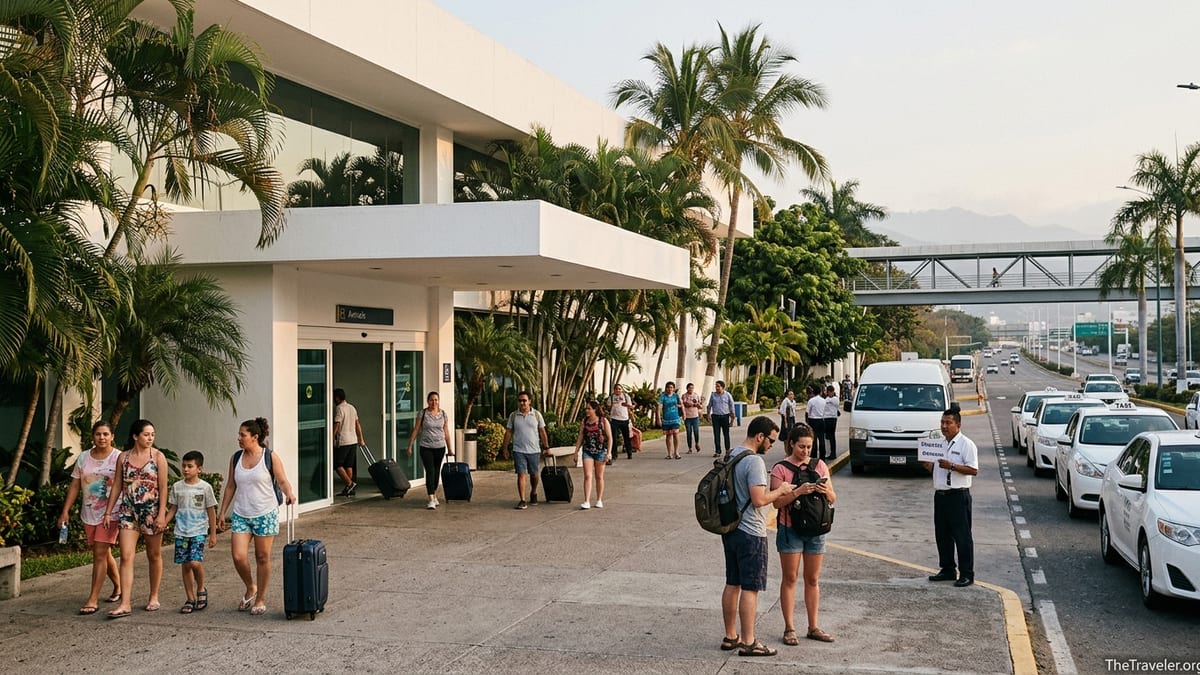
Understanding PVR’s Layout and What Happens After You Land
PVR has a single main passenger terminal that handles both domestic and international flights. Arrivals and departures share the same building, but the layout is straightforward. After your plane parks, you will walk through jet bridges or down stairs to the arrivals corridor, then follow signs for Migración (immigration) and Aduana (customs). Everything you need as a new arrival – immigration booths, baggage claim, customs, currency exchange desks, ATMs and transport counters – is located on the ground level of the terminal.
On most North American flights, you disembark directly into a hallway that feeds into the immigration hall. Here you join the line for either Mexican citizens or extranjeros (foreigners). In high season from November through March, lines can take 30 to 60 minutes when several flights land together, while in slower months they can move in 10 to 20 minutes. Keep your passport and completed arrival form ready, answer basic questions about where you are staying and for how long, and you will be stamped into Mexico.
After immigration you walk down to baggage claim, where carousels serve both domestic and international flights. Overhead screens show flight numbers; if you do not see yours immediately, wait a few minutes as carousels are reused. There are baggage trolleys, but they are limited during busy hours, so be prepared to handle your own bags. Once you collect luggage you proceed toward customs, which is the final checkpoint before you enter the public arrivals area and start navigating transport.
Customs at PVR still uses the familiar “red light / green light” system common in Mexican airports. After placing your luggage on the X-ray belt, you may be asked to push a button. A green light means you are waved through with no additional check, while a red light means a quick manual inspection of your bags. Most travelers get a green light, so the line tends to move steadily. Have any high-value electronics visible and medication in original packaging to avoid delays if you are selected for inspection.
Arrivals Hall, ATMs and Avoiding the “Shark Tank”
Once you clear customs you enter a long corridor that first passes by car rental counters and transport desks, then opens into a crowded area often called the “shark tank” by regular visitors. This is where timeshare salespeople and tour vendors try to flag down new arrivals with offers of free taxis, free activities or heavily discounted excursions. The offers can be persistent but they are not dangerous. The best strategy is to avoid eye contact, say “no gracias” firmly and keep walking until you reach the actual exit doors.
Before you leave the secure side of the terminal, you will see currency exchange booths and a few ATMs. The exchange booths usually offer weaker rates than what you would get by withdrawing pesos from an ATM linked to a major Mexican bank. Many repeat visitors recommend skipping the cambio and using an ATM from banks like BBVA, Santander or Banorte, which you can find either inside the terminal or just outside in the parking area. For example, if a booth is offering around 15 to 16 pesos per US dollar, ATMs might deliver closer to the live market rate, though fees vary by home bank.
As you continue through the arrivals corridor, you will pass a row of car rental desks from familiar brands such as Hertz, Avis, Enterprise, Alamo and local companies. These desks are primarily for paperwork; the actual vehicles are parked outside, usually a short walk or shuttle ride away. If you are not renting a car, you can move past these counters directly to the arrivals exit. You will see sliding doors that open to a covered sidewalk, with crowds of people waiting and several official taxi kiosks just beyond.
It is important to understand that anyone approaching you inside the terminal offering a “free shuttle,” “included transportation” or heavily discounted taxi in exchange for attending a timeshare presentation is selling vacation ownership, not an official airport transfer. First-time visitors often lose an hour or more of precious vacation time getting stuck in these pitches. To avoid this, decline politely and walk straight out of the terminal before making any transport decisions.
Official Airport Taxis: How They Work and What They Cost
Puerto Vallarta airport taxis operate on a federal concession and use a zone-based fixed fare system rather than meters. After you exit the terminal, you will see official taxi booths just outside the doors. You tell the clerk the name of your hotel or neighborhood, they look up the corresponding zone and sell you a pre-paid ticket. You then hand this ticket to the next available driver in the taxi line. This means fares are standardized for each zone on the day you arrive, and you know the price before you get in.
As of 2026, typical one-way prices from PVR for a standard sedan to hotels in the central Hotel Zone or Zona Romántica start in the ballpark of 350 to 500 Mexican pesos, depending on vehicle size and the latest government-approved table. A larger van suitable for a family of five with luggage might run closer to 700 to 900 pesos to the same areas. Resorts further north in Nuevo Vallarta or Punta de Mita cost more, often equivalent to around 60 to 100 US dollars for a private van, especially in peak season or late at night. Exact numbers change periodically, so think in ranges rather than fixed amounts.
The advantage of an official airport taxi is convenience and predictability. After a long flight, you can walk straight from customs to the taxi kiosk, pay by card or cash, and be on the road within minutes. Drivers are accustomed to tourists, generally know major hotels and resort complexes, and are used to handling luggage. If you are traveling with kids, several companies offer pre-booked transport with child seats, though the taxis queued at the airport rarely have them on board unless arranged in advance.
One common money-saving tip is to compare airport taxi prices with regular city taxis that operate outside the airport property. Many visitors choose to walk a short distance to reach these cheaper options, which are not covered by the federal airport concession and therefore charge lower fares. However, this requires crossing the pedestrian bridge that links the terminal side of the highway with the opposite side, and is best attempted only if you are comfortable walking with your bags in the heat.
Uber, City Taxis and the Famous Pedestrian Bridge
Uber operates legally in Puerto Vallarta and is widely used within the city, but airport pickups are a gray area due to tensions with the licensed taxi unions. In practice, getting an Uber from the terminal curb right outside arrivals is often difficult or impossible, especially during busy times. Many drivers will decline requests on airport property to avoid fines or conflict. However, once you are off airport grounds, Uber rides are usually easy to find and are typically cheaper than official airport taxis for trips into town.
To reach an area where Uber and regular city taxis can pick you up freely, most travelers walk across the pedestrian bridge that crosses the main highway in front of the airport. From the arrivals exit, you turn left, follow the sidewalk past the parking lot and small taxi holding area, and continue until you reach the foot of the bridge. After climbing the steps or ramp, you cross over the road and come down near car rental lots and local bus stops. This entire walk can take around 5 to 10 minutes depending on your pace and luggage.
On the far side of the bridge, you can request an Uber in the app or flag down a yellow city taxi on the street. Real-world experiences in 2026 suggest that Uber and yellow taxis from this area often cost roughly half of the official airport taxi price for central Puerto Vallarta destinations, although this varies by time of day and surge pricing. For example, if an official airport taxi ticket to Zona Romántica runs around 450 to 500 pesos, an Uber or city taxi from across the bridge might be closer to 220 to 300 pesos for the same route, depending on traffic and demand.
Walking across the bridge is safe and commonly done, but it is not ideal for everyone. The heat and humidity can be intense in the afternoon, the steps are awkward with very heavy suitcases, and families with small children may find it stressful. If you are arriving late at night, have mobility issues or simply prefer a smoother start to your vacation, paying extra for an official airport taxi or arranging a pre-booked shuttle can be worth the added cost.
Private Shuttles and Hotel Transfers
Private shuttles are a popular middle ground between airport taxis and rental cars, especially for groups or travelers heading to resorts along the Riviera Nayarit. Several reputable companies operate pre-booked vans and SUVs from PVR, meeting guests outside the terminal with a sign and escorting them directly to the vehicle. Prices are typically quoted per vehicle, not per person, and can be cost effective for families or groups of four or more traveling together.
For example, a pre-arranged private van from PVR to a large all-inclusive in Nuevo Vallarta might cost around 80 to 120 US dollars round trip for up to six passengers, depending on the company and whether you include extras like a grocery stop. To resorts further north such as Punta de Mita, Sayulita or San Pancho, prices climb accordingly due to longer driving distances and toll roads. Compared to paying for multiple airport taxis or dealing with Uber availability in smaller beach towns, a reserved shuttle often delivers better value and less stress.
Many upscale hotels and all-inclusive resorts also run their own transfer services, sometimes included in package bookings. For instance, several large resort brands in Nuevo Vallarta advertise complimentary or discounted shuttle service from PVR when you book directly on their sites or through partner agencies. In these cases, a representative usually meets you in the arrivals hall holding a sign with the hotel name and leads you past the timeshare area to a dedicated vehicle.
When evaluating shuttle options, focus on clarity and communication. Look for companies or hotel transfer confirmations that specify exactly where to meet your driver, how they will be identified and what to do if your flight is delayed. Screenshots of the confirmation email and the local phone number or WhatsApp contact are worth saving before you board your flight. This can make the difference between a smooth handoff and unnecessary time waiting outside in the heat after a long travel day.
Car Rental at PVR and When It Makes Sense
Car rental can be a smart choice if you plan to explore beyond Puerto Vallarta, visiting places like Sayulita, San Pancho, Bucerías or the mountain town of San Sebastián del Oeste. Major brands and local companies all have desks at PVR, and many allow you to start your booking online and complete paperwork upon arrival. After signing the contract at the terminal counter, a staff member typically escorts you to a shuttle van or walkway leading to the rental lot, which is usually only a few minutes away.
Daily base rates advertised online can look very low, but in Mexico mandatory liability insurance and additional coverage can significantly increase the total. For example, a compact car that appears for 15 to 20 US dollars per day on a booking site might end up closer to 40 to 60 dollars per day after adding required third-party liability and optional collision coverage, plus taxes and airport fees. Some credit cards offer collision damage coverage when you decline the rental company’s CDW, but this usually does not replace liability insurance, so read terms carefully before relying on it.
Driving in and around Puerto Vallarta is generally manageable for confident drivers. Roads along the hotel zone and downtown are busy but orderly, and highways north toward Bucerías and Punta de Mita are modern toll roads in many segments. Parking in the Zona Romántica can be tight during evenings and weekends, while big resorts and malls typically offer on-site parking. First-time visitors often find that they do not need a car if they are staying mainly within Puerto Vallarta itself, since taxis, Uber and buses are cheap and abundant, but rental cars shine for itineraries built around exploring multiple towns.
If you do rent a car, budget extra time at both pickup and drop-off for paperwork and vehicle inspection. Inspect the car carefully for existing scratches or dents, take time-stamped photos and confirm how to return the vehicle if your flight departs very early or late. Also ask about toll payment on the coastal highways, since some rental companies include electronic toll tags while others require cash payment at booths. Keeping a small stash of local currency in smaller bills is useful for this purpose.
Clearing Customs, Money, Safety and First-Time Puerto Vallarta Tips
The customs process itself at PVR is usually straightforward, but your overall arrival experience can vary depending on timing and preparation. Flights arriving mid-afternoon on weekends in high season often face the longest lines at immigration and baggage claim. If possible, pack a small snack and water bottle in your carry-on, use the restroom on the plane shortly before landing and be ready to move efficiently from the gate to the immigration line. Having your hotel name and address written down can help if you are asked for details by immigration or customs officers.
For money, a mix of cards and pesos works best. Many taxis, shuttles and smaller businesses prefer cash in pesos, while larger hotels and restaurants accept major credit cards. Consider withdrawing a modest amount of pesos at an airport ATM for your first day, then using bank ATMs in town for additional cash as needed. Avoid exchanging large sums at the airport currency counters where rates are less favorable, and be cautious of any unofficial money changers outside the terminal. When paying taxi drivers or small vendors, try to carry smaller denominations to avoid issues with change.
In terms of safety, the airport and the immediate arrival process are generally safe and well policed. The most common issues first-time visitors report revolve around confusion or feeling pressured by aggressive salespeople inside the terminal. Remember that you do not need to give your flight details or hotel name to anyone who approaches you, and you are under no obligation to accept “free” tours or transportation in exchange for attending a presentation. Sticking to official taxi kiosks, pre-booked shuttles or known rideshare apps minimizes the chance of misunderstandings.
Once you are past the airport, Puerto Vallarta itself is one of Mexico’s more visitor-friendly beach destinations. The city’s Malecón oceanfront promenade is pedestrian-only and lively in the evenings, buses are inexpensive and frequent, and popular neighborhoods like the Hotel Zone, Zona Romántica and Marina Vallarta are accustomed to international guests. A little Spanish, such as asking “Cuánto cuesta al centro?” for a taxi fare to downtown, goes a long way, but you will also find plenty of English spoken in tourist areas.
The Takeaway
For first-time travelers, Puerto Vallarta’s PVR airport can feel busy and chaotic at the moment you emerge from customs, but the basics are straightforward once you know the sequence. You land, clear immigration, collect your bags, press the customs button, walk straight past the timeshare gauntlet, then choose between an official airport taxi, a pre-booked shuttle, crossing the bridge for a cheaper Uber or city taxi, or picking up a rental car if you plan to explore more widely.
Official airport taxis provide the simplest, most predictable option at a premium. Crossing the pedestrian bridge opens up cheaper Ubers and local taxis if you are comfortable handling luggage in the heat. Pre-booked shuttles shine for families and groups, especially when included by resorts along the Riviera Nayarit. Rental cars are best for itineraries that include multiple towns up and down the coast, while travelers staying mostly in Puerto Vallarta often rely happily on taxis, Uber and buses.
Arriving prepared with a sense of approximate local fares, awareness of the timeshare “shark tank,” and a clear plan for how you will leave the airport transforms your first hour in Mexico from stressful to smooth. With the logistics handled, you can focus on the real reason you flew to Puerto Vallarta in the first place: warm Pacific sunsets, palm-lined beaches and the relaxed pace that has made this city a favorite for generations of travelers.
FAQ
Q1. Can I get an Uber directly outside Puerto Vallarta airport arrivals? In practice it is difficult to get an Uber pickup at the arrivals curb due to conflicts with airport taxi concessions. Most travelers who want Uber walk across the pedestrian bridge to the far side of the highway, where pickups are easier and drivers are less likely to cancel.
Q2. How much should I expect to pay for a taxi from PVR to downtown Puerto Vallarta? Fares change periodically, but as a rough guide a licensed airport taxi from PVR to the central Hotel Zone or downtown typically costs in the mid-hundreds of pesos for a sedan, often somewhere around 350 to 500 pesos. Larger vans for groups cost more, and prices are higher for resorts in Nuevo Vallarta or Punta de Mita.
Q3. Is it worth walking across the pedestrian bridge to save money on transport? Walking across the bridge can significantly reduce your fare if you are comfortable handling your bags in warm, humid weather. Ubers and yellow city taxis on the far side usually charge less than official airport taxis. For solo travelers or couples with light luggage it is often worth it, while families with small children or heavy suitcases may prefer the convenience of an airport taxi or pre-booked shuttle.
Q4. Are the timeshare offers inside the airport a scam? The people offering “free taxis,” “discounted tours” or “complimentary breakfast” inside the arrivals hall are selling timeshares or vacation clubs, not transport scams in the criminal sense. However, they can consume a lot of your time and pressure you into presentations you do not want. If your goal is simply to reach your hotel, it is best to say “no gracias” and walk directly to the official taxi kiosk or your pre-arranged shuttle meeting point.
Q5. Should I exchange money at the airport or use an ATM? Currency exchange booths inside the airport typically offer weaker rates than bank ATMs. Many travelers prefer to withdraw a modest amount of pesos from an ATM linked to a major bank, accepting a small foreign transaction fee in exchange for a better rate. If you do use an exchange counter, limit how much you convert and compare the rate they offer to the approximate market rate.
Q6. Is it safe to arrive at PVR late at night? The airport operates into the late evening and is generally considered safe at night, with security and staff on duty. Transport options thin out slightly as the hour gets later, but official airport taxis and many pre-booked shuttles still meet arriving flights. If you are landing very late, consider arranging a transfer in advance so you do not have to comparison-shop transport after midnight.
Q7. Do I need to tip taxi drivers and shuttle drivers in Puerto Vallarta? Tipping is customary but not mandatory. For airport taxis and private shuttles, many visitors round up or add around 10 percent for good service, more if the driver helps with heavy bags or makes an unscheduled stop. If a tip is already included in your pre-booked shuttle invoice, any additional amount is purely at your discretion.
Q8. Is renting a car at PVR a good idea for a first visit? Renting a car makes sense if your plans involve exploring multiple towns along the coast or in the mountains. For a first visit focused on Puerto Vallarta itself, many travelers find that taxis, Uber and buses are easier and more economical. The city is compact, parking can be tricky in busy neighborhoods, and you may not use a rental enough to justify the daily cost unless you are doing several day trips.
Q9. How long does it usually take to get from landing to my hotel? On a typical day you might spend 30 to 60 minutes from touchdown through immigration, baggage claim and customs, then another 20 to 40 minutes driving to central Puerto Vallarta hotels depending on traffic. In peak season weekends or holidays, total time from gate to hotel can stretch to 90 minutes or more. Factor this into your plans if you have dinner reservations or activities booked on arrival day.
Q10. What is the easiest option for a nervous first-time traveler? For someone who wants the most straightforward, low-stress experience, an official airport taxi or a pre-booked hotel shuttle is usually best. Both options meet you right outside the terminal and take you directly to your accommodation without any need to navigate the pedestrian bridge, negotiate fares in Spanish or worry about app-based pickups. You will pay a bit more than with Uber, but in return you get a smooth, predictable start to your trip.