


More news on this day
Hundreds of passengers faced long lines, missed connections, and last-minute itinerary changes at Charlotte Douglas International Airport after a fresh wave of American Airlines disruptions triggered dozens of cancellations and widespread delays at one of the nation’s busiest hubs.
Get the latest news straight to your inbox!
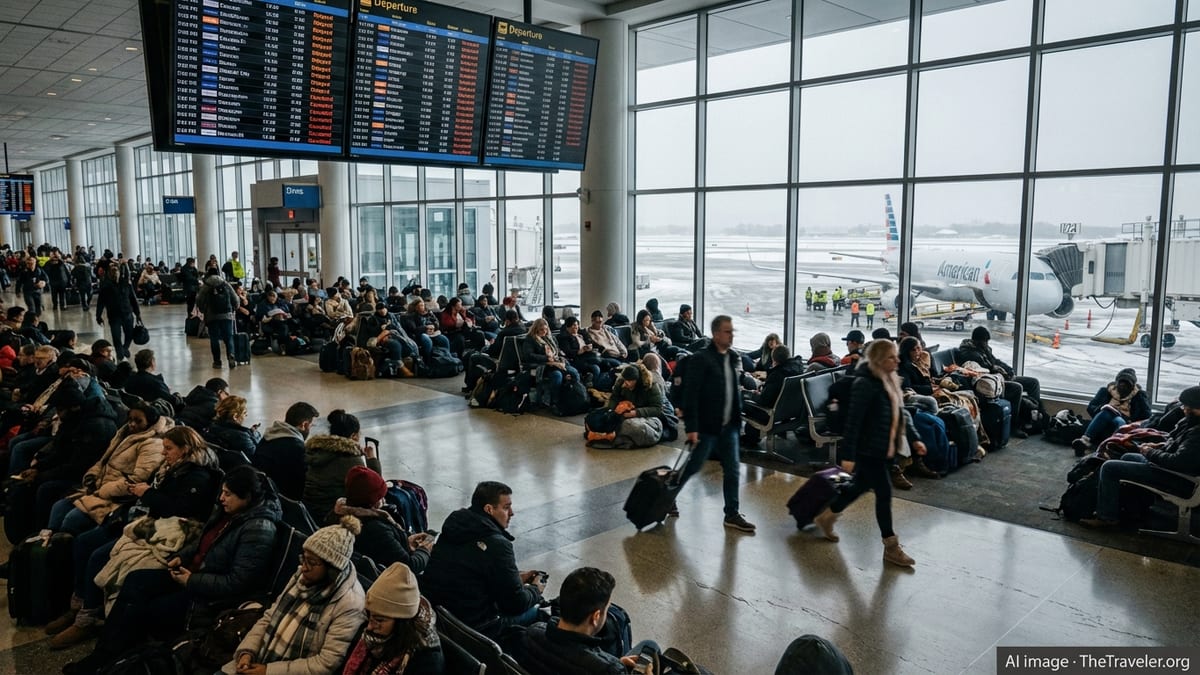
American Hub Struggles With New Wave of Disruptions
Charlotte Douglas functions as a major fortress hub for American Airlines, handling the vast majority of the airport’s daily traffic and serving as a key connecting point for domestic and transatlantic routes. When operations at the carrier falter, the effect on the airport’s schedule can be immediate and severe, with rolling delays and cancellations rippling across multiple concourses.
Recent operational data and media coverage indicate that American has again experienced a period of heightened disruption at Charlotte, including roughly three dozen cancellations concentrated within a short window. These cancellations, coupled with a significantly larger number of delayed departures, have slowed movements across the airport and left travelers struggling to rebook at an already capacity-constrained hub.
Reports from flight-tracking platforms show that American flights in and out of Charlotte have been particularly vulnerable to disruption when weather, equipment availability, and staffing challenges intersect. Because the carrier accounts for such a dominant share of takeoffs and landings at Charlotte, even a modest spike in cancellations can quickly translate into crowded gate areas, long customer-service queues, and aircraft waiting for space to taxi or park.
Travelers at the airport described scenes of congestion at check-in counters and rebooking desks as they sought alternative routings. With limited spare seats on remaining services, many passengers faced extended layovers in Charlotte or were forced to route through secondary hubs to reach their final destinations.
Weather, Lightning Incidents, and Network Knock-On Effects
Charlotte’s geographical location leaves the airport highly exposed to fast-developing thunderstorms and seasonal weather systems that can interrupt departures and arrivals with little warning. Publicly available information from recent storm events has shown that even a brief period of severe weather can trigger clusters of cancellations and lengthy arrival holds, particularly during busy morning and evening banks of flights.
The network has also been pressured by high-profile incidents away from the terminal itself. Earlier this week, a London to Charlotte American Airlines service operating as a Boeing widebody declared an emergency and returned to its origin airport following a reported lightning strike shortly after departure. The aircraft’s unscheduled return and subsequent inspections removed a key long-haul asset from service, complicating the carrier’s ability to maintain its transatlantic schedule into Charlotte and contributing to knock-on equipment shortages.
When aircraft and crews are displaced by such events, the consequences are often felt most acutely at hub airports. According to operational analyses of previous disruption periods, American’s Charlotte schedule can be particularly sensitive to gaps in aircraft rotation and crew availability, issues that may not be immediately visible to travelers but manifest as repeated rolling delays or short-notice cancellations.
In the current episode, reports indicate that more than 30 American flights linked to Charlotte were canceled within a compressed timeframe, amplifying the impact of earlier weather-related slowdowns and creating a backlog of passengers needing new itineraries.
Passengers Confront Long Lines, Missed Connections, and Limited Options
For many travelers using Charlotte primarily as a connecting point, the cancellations translated into missed onward flights and last-minute changes that upended carefully planned trips. Accounts shared on social media and travel forums describe travelers being rebooked on later flights via alternate hubs, sometimes adding many hours to journeys that had originally been planned as straightforward connections.
Reports suggest that customer-service counters and gate podiums were quickly overwhelmed, with travelers forming long lines to request hotel vouchers, meal assistance, or changes to their itineraries. Some passengers reported having to wait extended periods for updated boarding passes or for their bags to be re-routed, particularly when original connections had been missed by narrow margins.
Charlotte’s terminal layout and ongoing renovation work have also compounded the strain during major disruption events. With American’s operations concentrated in several concourses and limited space at some gate areas, surges in displaced travelers tend to produce congested walkways, full seating areas, and crowded restrooms and concessions. For travelers with tight connection windows, the added congestion can make it more difficult to move quickly between far-flung gates.
Families with young children and travelers on time-sensitive itineraries such as weddings, cruises, or international connections appear to have been among the hardest hit. Public posts from affected passengers reference missed milestone events and the difficulty of finding alternative routings when an entire bank of flights from a single carrier experiences widespread disruption.
Structural Vulnerabilities at a Fortress Hub
Industry data and traveler commentary have long underscored Charlotte’s unique vulnerabilities as a major domestic and international hub dominated by a single airline. American operates the overwhelming majority of flights at the airport, giving travelers a broad menu of destinations but also concentrating risk when the carrier encounters operational headwinds.
Aviation statistics from recent years consistently place Charlotte among the busiest airports in the United States by aircraft movements, with American’s tightly timed schedule relying on rapid turnarounds and precise coordination across crowded taxiways and gate areas. When delays accumulate, aircraft queues can form on the ground, and relatively small bottlenecks can cascade into systemwide congestion across the hub.
Travel forums frequently describe Charlotte as a challenging airport during irregular operations, highlighting congestion at passenger pickup zones, pressure on baggage systems, and the limited number of international-capable gates. These structural factors mean that, during disruption periods, there is little spare capacity to absorb surges of misconnected passengers or to add recovery flights at short notice.
Analysts note that while hub concentration allows airlines to offer more frequencies and destinations, it can also magnify the impact of operational lapses. When a dominant carrier cancels a cluster of flights, rival airlines at the same airport typically have limited spare seats to offer, leaving many affected travelers with few immediate alternatives.
What Travelers Can Do During Major Disruptions
Consumer advocates and experienced travelers recommend several steps for passengers navigating disruption at large American Airlines hubs such as Charlotte. Publicly available guidance emphasizes monitoring flight status through airline apps and independent tracking sites, rather than relying solely on airport departure boards, which may lag behind schedule changes.
When a cancellation occurs, passengers are generally advised to seek rebooking through digital channels first to avoid lengthy counter lines. Many airlines, including American, allow customers to confirm new itineraries, change routing, or request refunds within their apps or websites following a canceled or significantly delayed flight.
Travel experts also suggest considering nearby alternate airports when hub operations are heavily disrupted. For travelers in the Carolinas, this can include driving to or from regional airports served by other carriers, or routing through competing hubs if same-day options from Charlotte are scarce.
As Charlotte Douglas continues to manage high traffic volumes and American Airlines works to stabilize its schedules, passengers planning trips through the hub in the near term are being urged by public advisories and travel publications to build in longer connection times, check their flight status frequently, and prepare contingency plans should another wave of cancellations occur.