


More news on this day
Travelers passing through Amsterdam Schiphol Airport are facing another spell of disruption, with a cluster of cancellations and long delays affecting at least ten flights operated by KLM, Kenya Airways and United Airlines on major routes linking the Netherlands with Portugal, Turkey, Brazil, the United States and key Spanish hubs such as Madrid and Malaga, according to live flight boards and independent tracking services.
Get the latest news straight to your inbox!
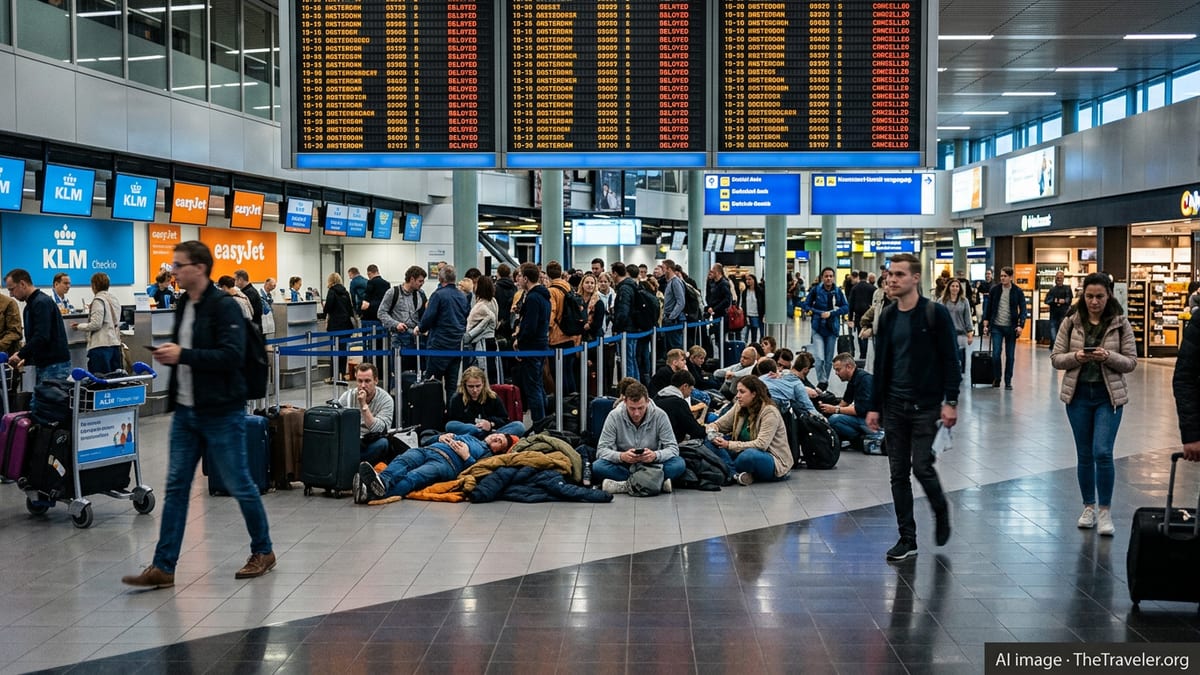
Wave of Cancellations at a Key European Hub
Publicly available departure and arrival boards for Amsterdam Schiphol on 14 June show an elevated number of disrupted services, with several KLM departures listed as cancelled or heavily delayed on medium and long haul routes. Independent flight tracking platforms mirror this pattern, indicating that at least ten services involving KLM and its partners have been withdrawn from the schedule or pushed back substantially within a short time window.
Among the affected operations are flights connecting Amsterdam with major European leisure and business destinations, including Madrid, Malaga and Athens, as well as intercontinental links toward North America and South America. Flight status tools for KLM and codeshare partners such as Kenya Airways and United Airlines show aircraft taken out of rotation and schedules reshuffled, creating bottlenecks at the Dutch hub.
The latest disruption follows a year in which Schiphol has repeatedly struggled with operational resilience, from winter weather and staff shortages to technical issues. Recent industry reports have also highlighted pressure on KLM’s long haul fleet, with earlier incidents leading to ad hoc groundings and schedule changes that left hundreds of passengers stuck in transit at the airport.
Passengers Face Long Queues, Missed Connections and Overnight Stays
Social media posts and traveller forums from the weekend describe long queues at Schiphol’s transfer desks, with stranded passengers seeking rerouting after sudden cancellations. Several travelers report missed onward connections to southern Europe and the United States when Amsterdam-bound feeder flights arrived late, only to find their onward segment already cancelled or reassigned.
Accounts from recent months illustrate how quickly disruption at Schiphol cascades across the network. Travellers recount spending multiple days at or around the airport after repeated cancellations, often being rebooked several times before finally securing a seat out of Amsterdam. Similar patterns are now emerging in Saturday’s interruption, with some passengers reporting overnight stays in hotels or airport seating areas while they await new itineraries.
Experiences shared in public forums suggest that rebooking through airline apps can be slow or unstable during peak disruption, driving many affected customers to line up at service counters or search for alternative routes themselves via partner carriers or other European hubs. For passengers bound for destinations such as Madrid, Malaga or Athens, that can mean last minute itineraries via Paris, Frankfurt or London rather than a direct or single-connection trip through the Netherlands.
Impact Spreads to Portugal, Turkey, Brazil and the US
Because Schiphol is one of Europe’s main transfer hubs, the knock-on effects of a limited number of cancellations can reach far beyond the Netherlands. Flight data on Saturday shows disrupted services touching not only Spanish destinations but also routes serving Portugal, Turkey, Brazil and multiple cities in the United States via KLM, Kenya Airways codeshares and United Airlines connections.
Passengers on itineraries from North America to southern Europe, for example, often rely on a single connection in Amsterdam. When a transatlantic leg runs late or is suspended, travelers can lose access to their onward flights to cities such as Lisbon, Istanbul or Rio de Janeiro, and may need to be rerouted via other alliance hubs. This feeds additional pressure into already busy summer schedules across the North Atlantic and intra-European markets.
Publicly available data for Kenya Airways shows its Athens to Amsterdam service feeding into the Schiphol hub, while United Airlines operates a number of daily transatlantic connections into the Netherlands. Any misalignment in these arrivals, when combined with KLM’s own schedule adjustments, can quickly increase the number of stranded transfer passengers and complicate efforts to keep luggage and crews positioned correctly.
Operational Strains and Safety Checks Add to Summer Pressures
The current issues come on top of broader operational challenges facing Amsterdam Schiphol and its primary carrier. Aviation industry coverage in recent weeks has pointed to a mix of high seasonal demand, air traffic control constraints and aircraft availability concerns. Earlier this year, safety inspections on part of KLM’s long haul fleet contributed to cancellations and delays for services to North America, prompting large numbers of passengers to be rebooked at short notice.
At airport level, Schiphol has experienced several high-profile disruption events in recent seasons, including periods of winter weather that forced mass cancellations and prolonged baggage handling failures that left thousands of bags in storage areas awaiting onward flights. These episodes have fueled criticism of the hub’s ability to cope with sudden peaks in demand or irregular operations, particularly during school holidays and summer travel periods.
Industry analysts note that while each disruption has its own trigger, the pattern at Schiphol reflects the broader fragility of tightly scheduled hub operations. A mechanical issue on a single widebody aircraft, a temporary staffing gap on the ground or a short-lived weather front can all ripple outward, affecting dozens of flights and leaving travelers across Europe, the Americas and Africa dealing with missed departures and last minute itinerary changes.
What Stranded Travelers Can Expect Under EU Rules
Passenger rights regulations in the European Union set out specific obligations for airlines when flights are cancelled or significantly delayed. Public guidance summarizing EU Regulation EC 261 indicates that travelers departing from Schiphol on KLM, Kenya Airways or United Airlines flights may be entitled to meal vouchers, hotel accommodation and, in some circumstances, financial compensation, depending on the cause and length of the disruption and the distance of the journey.
Specialist passenger rights services and consumer organizations advise travelers to keep boarding passes, booking confirmations and receipts for any food, transport or lodging purchased during an unplanned stay at or near the airport. These documents can be used later to support reimbursement or compensation claims once the immediate disruption has passed.
With Schiphol’s real time flight status tools and airline apps still showing a fluid situation around several routes on Saturday, travellers are being urged in public advisories and news coverage to check their flight status regularly before heading to the airport, allow extra connection time where possible and consider alternative routings if their journey relies on multiple transfers through Amsterdam.