


More news on this day
New airport rehearsal programs and autism-focused training efforts involving American Airlines are reshaping how children on the spectrum experience air travel in the United States, offering families a structured way to practice flying before they ever step on a commercial flight.
Get the latest news straight to your inbox!
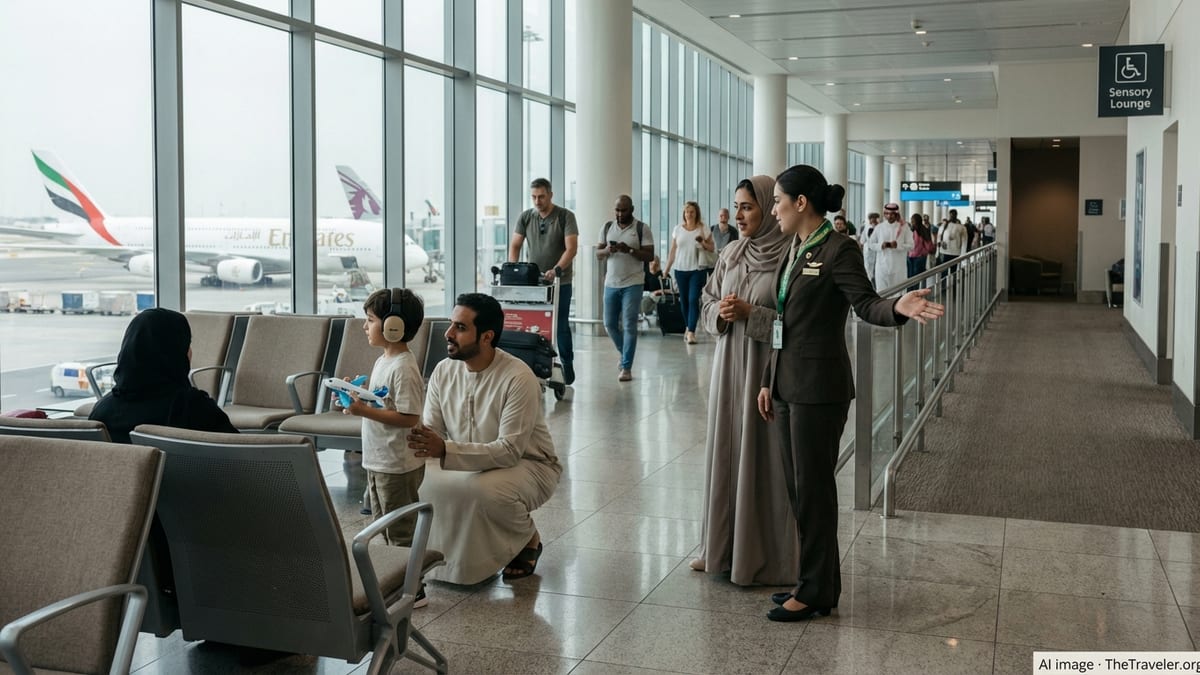
Practice Tours Turn Airports Into Learning Labs
Across the United States, airport rehearsal programs are becoming a central tool for helping autistic children build confidence with air travel. These initiatives invite families to walk through each step of a typical trip, from check-in to boarding, in a low-stress environment where the plane rarely leaves the gate.
At Miami International Airport, publicly available information shows that American Airlines recently supported an MIA Airport Instruction and Readiness tour for more than 50 students with special needs and their caregivers on World Autism Awareness Day. Participants practiced entering the terminal, collecting boarding passes, moving through security checkpoints and boarding an American Airlines aircraft with support from airport staff and crew members. Reports indicate that simulations of this type help families identify which parts of the journey may be most challenging and allow children to experience these steps without the added pressure of a real departure time.
Similar rehearsal-style events are taking place at regional and mid-sized airports through national programs such as Wings for Autism and Wings for All, which partner with carriers and local organizations to stage mock flights. These events typically include time at the gate, announcements over the public-address system, a structured boarding process and a period of sitting inside an aircraft. Organizers describe them as a way to transform the unknowns of flying into familiar routines.
Advocates note that rehearsal tours can benefit airport and airline employees as much as families. By interacting directly with autistic travelers in a practice setting, frontline teams can better understand sensory triggers, communication preferences and the pacing that may make the process more comfortable.
American Airlines Aligns With Wider U.S. Disability Initiatives
American Airlines’ support for airport tours and practice flights comes at a moment when accessibility in U.S. aviation is under sharper national scrutiny. Federal rules under the Air Carrier Access Act set expectations for how airlines accommodate passengers with disabilities, and recent enforcement actions have increased pressure on carriers to improve the travel experience for a broad range of needs.
According to American’s publicly available accessibility reporting, the airline has been investing in training, technology and customer-experience improvements aimed at travelers with disabilities, including those with sensory and cognitive differences. Company updates highlight internal forums where leaders meet with disability advocates to review barriers in booking, boarding and in-flight service, and to adjust procedures, digital tools and staff training.
Industry analyses show that accessibility has become a key factor in airline reputation, with travelers and advocacy groups closely tracking how carriers translate policies into day-to-day practice. While much of the public discussion has focused on mobility devices such as wheelchairs, the same regulatory and reputational pressures are pushing airlines to consider hidden disabilities, including autism and related sensory conditions, in their broader inclusion strategies.
Within this context, American Airlines’ participation in autism-focused tours and training sessions is being viewed by disability advocates as one component of a larger U.S. travel initiative to make commercial flying more predictable and less stressful for neurodivergent passengers.
Partnership Programs Help Families “Test-Drive” Flying
Nationally, the Wings for Autism and Wings for All programs, led by The Arc of the United States and its partners, remain among the most visible efforts to help children with autism and other developmental disabilities practice flying. Public program descriptions explain that these events simulate the entire airport experience, including check-in, Transportation Security Administration screening, waiting at the gate, boarding and a seated period on the aircraft, often accompanied by safety briefings and cabin announcements.
Events scheduled for 2025 and beyond at airports such as Norfolk International and others illustrate how these programs are spreading into more communities. Participating airlines, which have included American, typically provide aircraft access and staff volunteers for the day. For many families, this is the first opportunity to see how their child responds to an airport environment without the added stakes of a vacation or family emergency.
Reports from organizers indicate that the programs are designed not only as a service for families, but also as practical training for airline, airport and security personnel. Staff members gain exposure to a wide spectrum of communication styles and sensory needs, helping them adapt their approach during regular operations. For autistic travelers and their caregivers, the rehearsal often becomes a decision-making tool, clarifying whether they feel ready for a future trip and what accommodations might be helpful.
Other airports and carriers are experimenting with similar practice-flight concepts and sensory-friendly initiatives, from specialized tours branded as Autism Flies at certain hubs to dedicated sensory rooms where travelers can decompress before boarding. Together, these efforts point to a broader travel landscape in which rehearsal, predictability and visual supports are prioritized for neurodivergent passengers.
Training, Sensory Supports and the Push for Consistency
Beyond single-day events, U.S. travel industry groups are working to embed autism awareness into ongoing staff development. Certification initiatives such as the Autism Certified Airline program, led by specialist training organizations, provide frameworks for carriers to train employees in recognizing sensory overload, offering clear communication and adjusting standard procedures when needed.
Program materials describe on-the-ground standards that include preparing staff to assist passengers at check-in, security, boarding and deplaning, with specific attention to sensory triggers like loud announcements, flashing lights and crowded queues. The goal is to equip team members to respond calmly and consistently, whether they are interacting with families during a scheduled rehearsal tour or on a peak travel day.
Airports are also adding physical supports that can benefit autistic travelers flying with American or other carriers. Case studies from major hubs highlight sensory rooms designed as quiet, low-stimulation spaces where children can regulate before boarding. Some terminals distribute discreet symbols, such as sunflower lanyards, to signal hidden disabilities to staff who have been trained to recognize them.
Travelers and advocates note that experiences still vary widely from airport to airport, and even between flights on the same airline. While structured programs and training frameworks are expanding, many families continue to rely on advance communication with carriers, written documentation of needs and personal strategies like social stories to fill remaining gaps in consistency.
Families Weigh New Opportunities Against Ongoing Challenges
Public discussions among autistic adults and parents suggest that the growing number of autism-friendly travel initiatives is being welcomed, but also scrutinized. Many families describe practice tours, Wings events and sensory rooms as meaningful first steps that help children see flying as possible rather than overwhelming.
At the same time, personal accounts shared in online forums and advocacy channels point to continuing challenges in U.S. air travel, from inconsistent recognition of hidden disabilities at boarding gates to confusion about pre-boarding options for those who need extra time to settle into their seats. Some travelers report positive experiences with airline staff who proactively offer quiet seating advice or flexible boarding, while others encounter skepticism or misunderstanding when requesting similar support.
For American Airlines and its peers, the task ahead appears to be turning high-profile events and training initiatives into everyday reliability. Industry observers note that families of autistic children are quick to share both successful and difficult journeys, shaping how other travelers plan their routes and choose carriers.
As more airports and airlines commit to rehearsal programs, autism certifications and sensory accommodations, the U.S. travel landscape is moving toward a more inclusive model. For children on the spectrum and their caregivers, the hope is that the confidence built during a mock flight or airport tour will increasingly match the reality they encounter when it is time to board a real trip.