


More news on this day
American Airlines Flight 2069, operating between Orlando and New York, diverted to Jacksonville during a recent rotation, briefly interrupting the aircraft’s schedule but resulting in no reported injuries.
Get the latest news straight to your inbox!
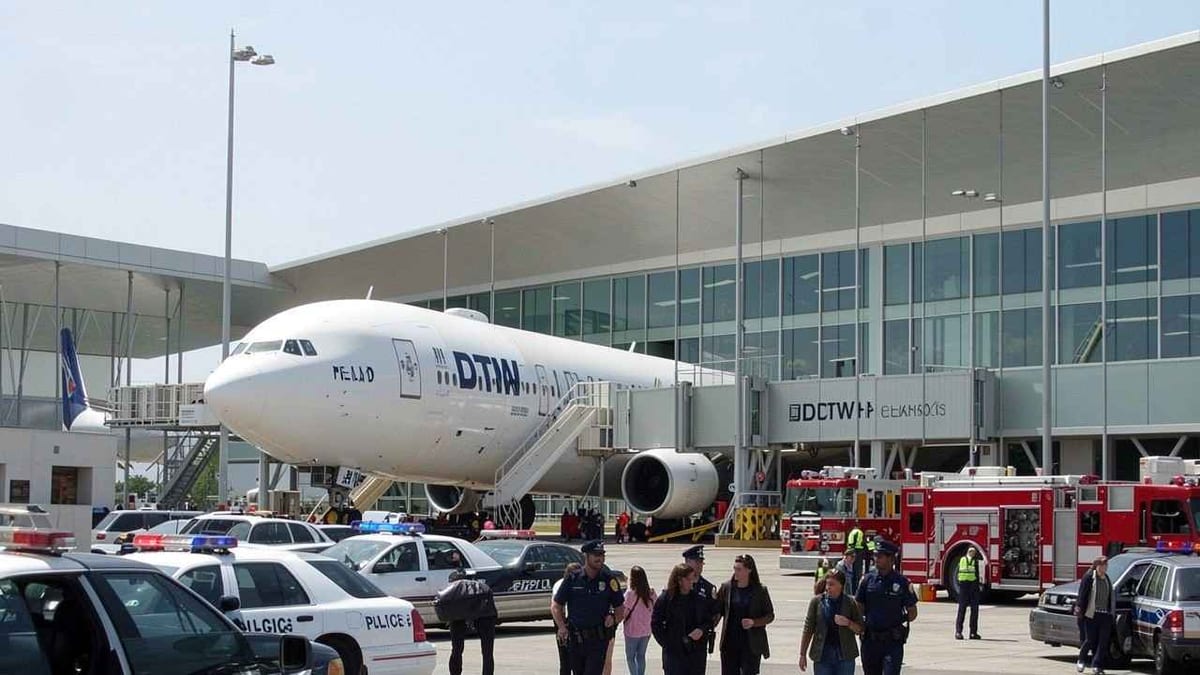
Unscheduled Stop Interrupts Orlando to New York Service
Publicly available flight-tracking data shows that American Airlines Flight 2069 is normally scheduled to operate between Orlando International Airport and New York’s LaGuardia Airport. On a recent rotation, the aircraft operating this service diverted from its intended routing and made an unscheduled stop at Jacksonville International Airport in north Florida.
The diversion placed Jacksonville, a regional hub with a growing passenger footprint, temporarily into the path of a route that typically runs nonstop along the busy East Coast corridor. Aviation schedule data indicates that the flight is part of American’s regular daily pattern linking central Florida with New York, a market that sees consistent demand from business and leisure travelers.
Tracking information indicates that the aircraft spent a relatively short period on the ground in Jacksonville before continuing within American’s system. The event did not alter the carrier’s broader schedule structure, and subsequent instances of Flight 2069 returned to the standard Orlando to LaGuardia routing.
Reports from flight-tracking services suggest that the diversion did not involve any extended ground delay in Jacksonville, implying that the stop was intended to resolve a specific operational need rather than to accommodate a prolonged disruption.
What Flight Data Reveals About the Diversion
Historical activity logs for Flight 2069 show a pattern of service between Orlando and LaGuardia over recent weeks. Within that history, one segment stands out: the aircraft appears as operating a short Jacksonville to Orlando leg within the same operating day, a strong indication that the Orlando to New York service diverted and then repositioned.
In this sequence, a LaGuardia to Orlando flight associated with the same flight number is listed as diverted, followed by a Jacksonville to Orlando flight using the same aircraft type. This pattern is consistent with an in-flight rerouting to Jacksonville, followed by onward movement to Orlando to reset the schedule.
Available flight information lists the aircraft as an Airbus A321, a narrowbody workhorse widely used on high-density domestic routes. The relatively short Jacksonville to Orlando segment recorded in the data is not part of American’s typical published network, reinforcing that this leg arose from an irregular operation rather than a planned route.
While the data does not assign a specific cause, such irregular routings are most often associated with weather-related constraints, air traffic control flow programs, or time limitations for flight crews. Each of these factors can require operators to divert to alternative airports that can accept the aircraft and passengers safely while preserving options to return the jet to its normal schedule.
Passenger Impact and Airline Response Framework
Public information about the diversion does not detail the precise onboard experience, but events of this type generally involve additional time on the ground as the airline coordinates with airport staff and its operations center. In many cases, passengers remain on the aircraft while the situation is assessed, though local regulations, crew duty limits, and aircraft servicing needs can lead to deplaning.
American Airlines publishes broad guidance for handling irregular operations, outlining how customers are rebooked or accommodated when flights are delayed, diverted, or canceled. While individual cases vary, this framework often includes reassigning passengers to later flights, arranging hotel stays in more severe disruptions, and adjusting onward connections to align with the revised arrival time.
When a diversion leads to an intermediate stop such as Jacksonville, the airline’s first priority is typically to ensure that the aircraft and its occupants can continue safely, either to the original destination or to a suitable alternative. Once the aircraft is on the ground, the carrier can evaluate crew duty time, maintenance considerations, and airport constraints before determining whether to continue the flight or reposition the jet instead.
For passengers, diversions can mean missed connections and last-minute changes to travel plans. However, in this instance, the data suggests that the aircraft quickly reintegrated into its Orlando to New York rotation, indicating that any ripple effects were time-limited within American’s broader network.
Jacksonville’s Role in Regional Air Traffic Patterns
Jacksonville International Airport serves as a key gateway for northeast Florida and has recorded record passenger volumes in recent years. The facility regularly handles traffic from major U.S. carriers, including American, making it a logical diversion point for flights transiting the southeastern United States.
The airport’s infrastructure and operational experience with a mix of domestic routes position it to accommodate unscheduled arrivals when weather, congestion, or other constraints affect nearby hubs such as Orlando, Miami, or Atlanta. Diversions like that of Flight 2069 demonstrate how mid-size airports can function as safety valves in a tightly scheduled air traffic system.
In addition to its role in routine operations, Jacksonville periodically appears in aviation records as a diversion airport for flights that need an alternate landing site along the Florida coast. Its location, runway length, and available services make it suitable for a broad range of narrowbody and some widebody aircraft types, supporting both planned routes and contingency operations.
For local travelers, seeing an unscheduled arrival on airport boards is a reminder of the complex choreography that underpins modern air travel. A single diverted flight can involve coordination among airline dispatchers, air traffic controllers, airport operations teams, and ground handlers to ensure that an unexpected stop is managed safely and efficiently.
Irregular Operations Highlight Complexity of Airline Networks
The diversion of American Airlines Flight 2069 to Jacksonville underscores how quickly airline networks must adapt when a single flight encounters operational constraints. Even a short unscheduled segment, recorded as a brief Jacksonville to Orlando hop, reflects multiple layers of decision-making designed to balance passenger needs, aircraft availability, and regulatory requirements.
U.S. carriers operate within strict safety and crew duty frameworks, which can make diversions preferable to attempting to complete a flight under marginal conditions or with crews approaching their maximum working hours. From a scheduling perspective, routing an aircraft through a nearby airport can allow it to rejoin its planned pattern more easily than if it were held at its origin or forced to operate a significantly delayed arrival.
For travelers, diversions can be disruptive and confusing, particularly when information is limited in real time. However, flight histories and public operational data provide a clearer picture after the fact, showing how flights like American 2069 temporarily deviate from their routes before reentering the network. In this case, the records indicate that the incident concluded without reported injuries and with the aircraft returning to regular service soon afterward.
As air traffic across the United States continues to grow, episodes like the Jacksonville diversion illustrate the importance of flexible routing options, well-equipped regional airports, and robust contingency planning within major airline networks.