


More news on this day
United Airlines flight UAL1941 diverted to Washington Dulles International Airport on Saturday, disrupting travel plans for passengers and drawing renewed attention to how diversions are handled across the busy U.S. air network.
Get the latest news straight to your inbox!
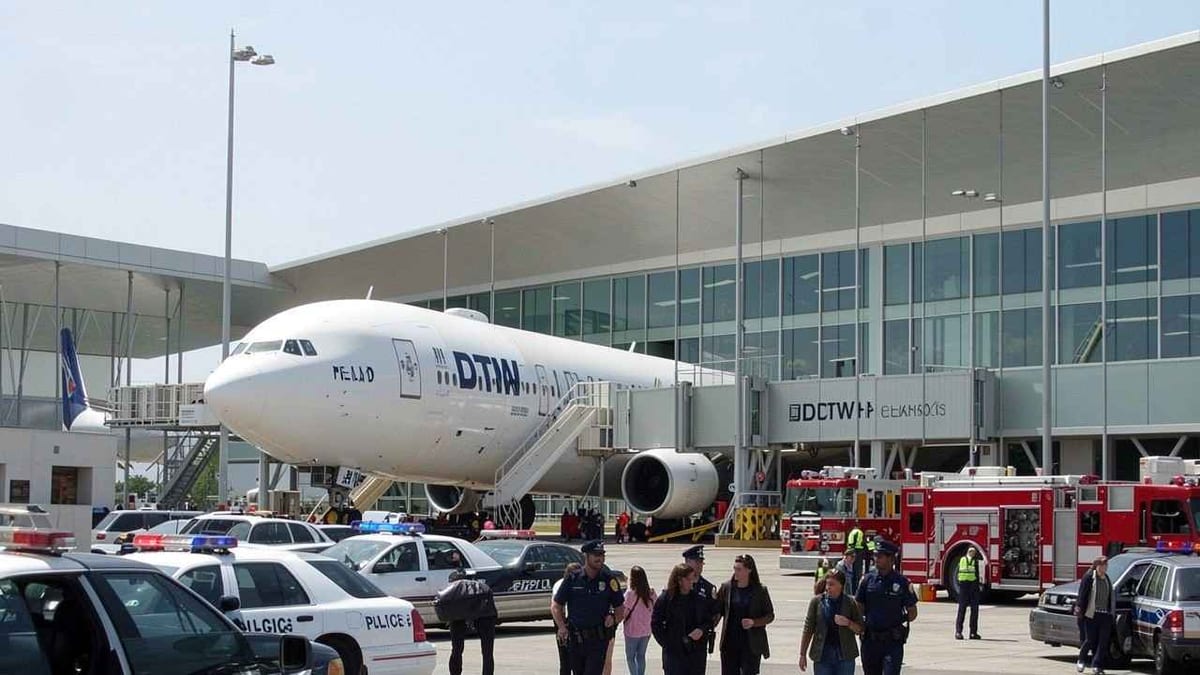
Midjourney Flight From Los Angeles to Chicago Interrupted
Publicly available flight-tracking information indicates that UAL1941 was operating as a domestic United Airlines service between Los Angeles and Chicago when the crew diverted to Washington Dulles rather than continuing to the scheduled destination. The aircraft had already covered a significant portion of its route when the decision was made to alter course.
Initial data show that the diversion occurred while the flight was cruising at altitude, suggesting that the crew elected to reroute based on in-flight conditions rather than issues detected on the ground. While specific details about the triggering event have not been formally detailed, diversions on this corridor are often associated with convective weather over the Midwest or congestion around Chicago.
Flight-tracking records typically log a diversion when an aircraft lands at an airport other than the one listed on the original flight plan. In this case, UAL1941 appears to have terminated its scheduled sector at Dulles, which then became the arrival airport of record.
Dulles Serves as a Strategic Diversion Hub
Washington Dulles International Airport functions as a major hub for United Airlines and a regular diversion point for traffic affected by storms and operational constraints on the U.S. East Coast. The airport’s infrastructure and United’s existing presence generally allow incoming aircraft to secure gates, refueling, and basic servicing more efficiently than at non-hub diversion fields.
Airport planning documents highlight that Dulles maintains procedures to support airlines during irregular operations, including deplaning passengers from aircraft that remain on the tarmac longer than anticipated in line with carrier tarmac-delay plans. These frameworks are intended to help airlines manage spikes in unscheduled arrivals when multiple flights divert in quick succession.
In recent years, severe weather systems and air traffic control initiatives along the Eastern Seaboard have generated clusters of diversions into Dulles. Aviation discussion forums and passenger reports frequently reference United flights from the Midwest and West Coast being routed into the Virginia hub when conditions deteriorate around New York and Chicago, underscoring Dulles’s role as a regional safety valve.
Passenger Disruption and Rebooking Challenges
For travelers on UAL1941, the diversion meant an unplanned arrival hundreds of miles from their intended destination and the possibility of missed connections, overnight stays, or extended ground travel to reach Chicago. Passengers on similar recent diversions involving United have described long waits on the tarmac, difficulty securing updated itineraries, and uncertainty about when they would be able to continue their journeys.
Published accounts from previous United diversions show that the carrier’s response can vary depending on aircraft routing, crew duty-time limits, and the availability of seats on later flights. In some cases, travelers have reported being automatically rebooked and receiving mileage credits or reimbursement for surface transport. In other situations, customers have described challenges obtaining refunds or alternative arrangements when flights terminated at diversion airports.
Under U.S. regulations, refund eligibility typically hinges on whether a flight is ultimately canceled or significantly changed relative to its original itinerary. When a flight like UAL1941 diverts, airlines may opt to treat the service as having been completed to a different airport, leaving passengers reliant on carrier goodwill policies or travel insurance to recoup extra costs.
Weather, Congestion and Operational Considerations
Aviation safety analyses and academic studies on disruption management emphasize that diversions are rarely the result of a single factor. Crews and dispatchers weigh weather along the route, holding patterns near destination airports, fuel levels, and the relative capabilities of potential alternates before deciding where to send an aircraft.
In congested airspace around major hubs such as Chicago and New York, storms and air traffic control flow programs can reduce arrival capacity to a fraction of normal, prompting airlines to move airborne traffic to less constrained fields. Commentaries from pilots and dispatch professionals suggest that Dulles is frequently favored in such scenarios because it has available runway capacity, United ground support, and the ability to accommodate widebody and narrowbody aircraft simultaneously.
Academic work on U.S. airline operations also notes that diversion decisions can ripple across network schedules, affecting aircraft rotations and downstream flights throughout the day. A diverted aircraft may miss its next scheduled departure, forcing airlines to shuffle equipment and crews to keep later flights operating, sometimes leading to cancellations elsewhere in the system.
Spotlight on Communication and Passenger Expectations
Events like the UAL1941 diversion continue to fuel debate about how clearly and consistently airlines communicate with customers during irregular operations. Passenger narratives across multiple recent diversions have pointed to gaps between automated app updates, gate information, and in-cabin announcements, particularly when crews themselves are awaiting guidance from operations centers and air traffic control.
Consumer advocates often recommend that travelers monitor both airline apps and independent flight-tracking tools during major disruptions to gain a fuller picture of what is happening with their flights. They also advise keeping documentation of additional expenses, such as hotels or ground transport, for potential reimbursement requests after irregular operations.
For United, the diversion of UAL1941 to Dulles adds to a series of recent high-profile disruptions that have put operational resilience and customer care policies under renewed scrutiny. As the summer travel season continues, analysts note that a combination of heavy demand, convective weather, and staffing constraints means diversions are likely to remain a recurring feature of the U.S. air travel landscape.