


More news on this day
Air passengers across Asia are facing a new wave of delays and cancellations as powerful summer weather systems, fragile demand on key routes and tight airline schedules combine to disrupt travel from China and Japan to Southeast Asia.
Get the latest news straight to your inbox!
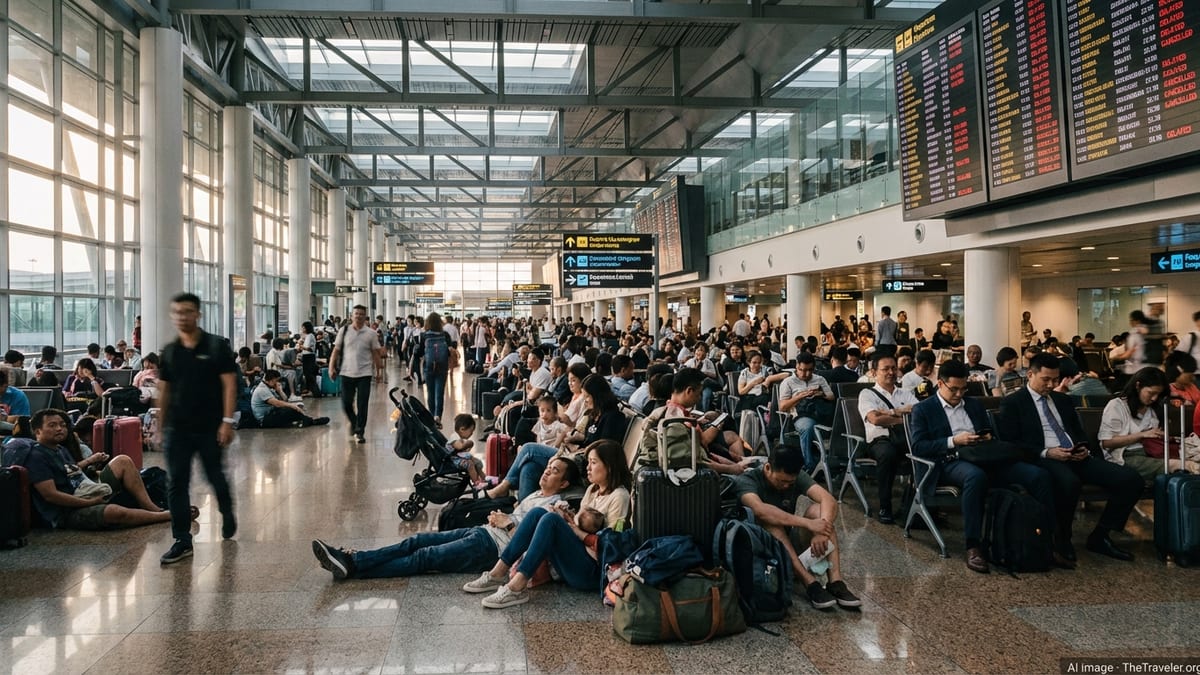
Typhoon Bavi Triggers Widespread Cancellations in East Asia
In early July, Super Typhoon Bavi has become the dominant driver of aviation disruption across parts of East Asia, forcing airlines to cancel or reschedule services as the system tracks near Taiwan and the eastern coast of China. Publicly available information shows that carriers serving Shanghai, Taiwan and surrounding hubs have preemptively cut flights or tightened schedules to avoid the strongest winds and heavy rain.
Coverage from regional outlets indicates that airports along China’s eastern seaboard have seen clusters of cancellations as Bavi approaches landfall and then weakens inland, but continues to generate hazardous conditions. Zhoushan in Zhejiang province, for example, reported more than a dozen flights canceled in a single day as the storm’s outer bands passed nearby, illustrating how even smaller coastal airports can see operations sharply curtailed during such events.
Major international airlines with networks across Greater China have also activated disruption plans, including rolling rebooking options and flexible ticket policies for departures on 11 and 12 July 2026. Flight-status pages across multiple carriers show a pattern of cancellations and significant delays on routes into Shanghai and other affected cities, signaling that the ripple effects are being felt throughout regional and long haul networks.
Travelers transiting East Asian hubs are experiencing longer connection times and, in some cases, unscheduled overnight stays as aircraft and crews are repositioned around the storm. Aviation observers note that, while advance planning and modern forecasting have reduced the risk of aircraft being caught directly in severe conditions, the operational cost is now more often borne by passengers in the form of extended disruption.
Singapore and Regional Hubs Strain Under Weather and Network Shocks
Singapore’s Changi Airport, one of Asia’s key transit hubs, has again emerged as a focal point during this latest bout of weather-driven disruption. According to published coverage, several flights between Singapore and North Asia have been canceled or delayed as Bavi disrupts operations in Taiwan and China, prompting airlines in Singapore to trim schedules on vulnerable routes.
Budget and full service carriers that connect Southeast Asia with Japan, Korea and mainland China have issued public advisories warning of last minute changes. A recent travel notice from a major low cost airline highlighted a list of flights to North Asia scheduled for 10 July that were either canceled or placed under close review, reinforcing the message that passengers need to monitor their bookings up to the time of departure.
This weather event comes on top of ongoing structural challenges for some intra Asian routes. Industry route filings show that certain carriers have scaled back or temporarily suspended services to markets such as India during July 2026, reflecting a mix of demand uncertainty, cost pressures and regulatory complexity. The combination of reduced frequencies and sudden weather related cancellations is narrowing options for travelers who need to reroute at short notice.
Observers also point to the lingering impact of previous non weather incidents, such as major global IT outages in 2024 that temporarily crippled check in systems across multiple Asian airports. While those issues have largely been resolved, airlines and airports remain cautious, and any new operational stress from severe weather or traffic surges tends to prompt a conservative approach that can quickly translate into delays on the ground.
Monsoon Season Keeps South and Southeast Asia on Alert
Beyond typhoon Bavi, the broader southwest monsoon pattern is shaping flight reliability across South and Southeast Asia during the June to September peak. Regional climate outlooks for 2026 point to near or stronger than average southwest monsoon conditions over much of the ASEAN region, with localized heavy rainfall and thunderstorms expected around key airport cities.
In practice, this has already translated into periods of low visibility, waterlogged apron areas and thunderstorms that force temporary ground stops in cities stretching from Bangkok and Ho Chi Minh City to Manila and Hanoi. Earlier in the season, strong winds and heavy rain in parts of South Korea led to hundreds of cancellations at Jeju International Airport, stranding thousands of passengers and illustrating how quickly local weather can upend tightly packed schedules.
Monsoon related disruption is not new to the region, but the increasing density of flight schedules and reliance on short turnaround times mean that individual storms now have a greater capacity to trigger knock on delays. When aircraft are held on the ground due to lightning or crosswinds, airlines can quickly lose their buffers, creating rolling delays that extend well into subsequent days, particularly on short haul leisure and domestic routes.
For tourism reliant destinations, the timing is especially sensitive. Many coastal resorts in Thailand, Vietnam and Indonesia rely on predictable air links during the northern hemisphere summer holiday period. Even when monsoon systems bring only brief daily storms, the precautionary cancellation of specific rotations can leave travelers with unexpected extra nights at their origin or limited options for island connections.
China Japan Routes Face Capacity Cuts and Weather Risks
Separately from typhoon activity, the China Japan market has been experiencing its own wave of cancellations as airlines reassess capacity on routes between the two countries. Recent reporting from regional news networks describes a sharp contraction in scheduled flights, with thousands of services reportedly canceled over the past month as carriers respond to policy, demand and operational factors.
These commercial adjustments are now intersecting with the mid year weather disruptions affecting East Asia. Routes linking coastal Chinese cities with major Japanese gateways, including Tokyo and Osaka, are particularly sensitive to both typhoons in the East China Sea and heavy summer thunderstorms over the Japanese archipelago. With fewer daily frequencies than in previous years, a single cancellation can have an outsized effect on passenger itineraries, limiting opportunities to rebook on the same day.
Japanese airports, which are operating with expanded summer schedules following years of recovery, are also managing a complex mix of domestic holiday traffic and inbound tourism. Operational data from major regional airports show increased weekly international flights across Northeast and Southeast Asia compared with the previous year, reflecting renewed demand. In such conditions, any unplanned reduction in capacity on China Japan routes places further strain on airport resources and air traffic control sectors that are already close to peak load.
For travelers, the result is a less predictable environment in which both policy driven schedule changes and short notice weather events can disrupt plans. Travel agents and online booking platforms have observed a growing emphasis on flexible tickets and multi carrier itineraries that allow rerouting via alternative hubs such as Seoul, Taipei or Singapore when direct links between China and Japan are unavailable.
What Travelers Can Expect in the Coming Weeks
Looking ahead through July and August, aviation analysts expect Asia’s disruption pattern to remain highly dependent on the interaction between tropical systems in the western Pacific and the evolution of the southwest monsoon. Seasonal climate guidance for 2026 suggests that monsoon strength will stay near or above average over large parts of Southeast Asia, while forecasters continue to monitor the western Pacific for additional typhoon development during the peak period.
Against this backdrop, airlines appear to be leaning toward precautionary schedule management, canceling or consolidating flights when significant weather systems are identified several days in advance. Public advisories issued this week by carriers affected by typhoon Bavi emphasize options such as free date changes, refunds and self service rebooking tools, indicating that flexible disruption handling is becoming a standard part of the summer operating playbook.
Travel infrastructure in Asia is more resilient than in previous decades, but the combination of very busy hubs, tight aircraft utilization and a more volatile climate environment means that delays and cancellations are likely to remain a recurring feature of peak seasons. Aviation organizations in the region continue to explore upgraded air traffic management procedures and weather avoidance tools intended to improve predictability, yet these measures will take time to show consistent results at the passenger level.
For leisure and business travelers planning itineraries in the coming weeks, the latest pattern of disruptions offers a clear signal that additional time between connections, careful monitoring of flight status and awareness of seasonal weather risks are essential parts of flying across Asia during this stage of the summer.