


More news on this day
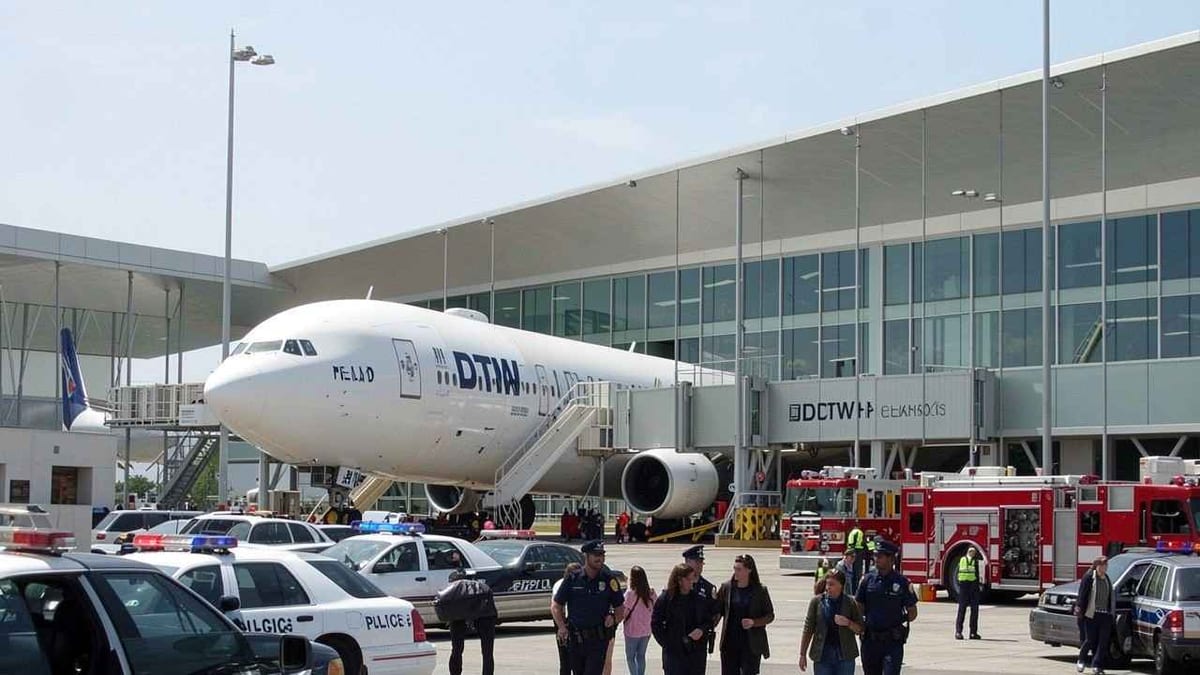
Summer travel disruption flared again for American Airlines passengers after Flight AAL1033 executed an abrupt mid-route U-turn back toward Charlotte Douglas International Airport, stranding connecting travelers and adding fresh strain to one of the carrier’s busiest hubs.
Get the latest news straight to your inbox!
Sudden Course Reversal Adds To A Difficult Summer Start
Publicly available flight-tracking data and same-day passenger accounts indicate that American Airlines Flight AAL1033 departed Charlotte Douglas International Airport on what was scheduled to be a routine domestic leg before reversing course partway through the journey. The aircraft turned back toward Charlotte instead of continuing on its planned routing, transforming an ordinary midweek departure into the latest flashpoint in a summer already marked by weather issues, delayed crews, and rolling operational headaches across major hubs.
The precise trigger for the diversion had not been formally detailed at the time of publication, but the profile of the flight closely resembles other recent disruptions in the airline’s network. In those cases, a combination of maintenance concerns, weather along the route, and crew availability have led to last-minute diversions or returns to departure airports after takeoff, often catching passengers off guard and complicating onward connections.
The decision to return an aircraft to its origin is generally framed in the aviation industry as a precaution intended to keep risks within conservative safety margins. However, for travelers on AAL1033, the abrupt turn translated into hours of uncertainty, missed onward flights, and, for many, the prospect of an unplanned overnight stay.
Charlotte Hub Gridlock As Missed Connections Cascade
Charlotte Douglas International Airport is among American Airlines’ most important connecting hubs, with tightly timed banked departures that funnel domestic and international itineraries through a compressed window. When a single inbound flight unexpectedly doubles back, the effects are magnified across dozens of potential connections, especially during peak summer travel.
Reports from passengers transiting through Charlotte on the day of the AAL1033 incident describe crowded gate areas, repeated gate changes, and long rebooking lines as travelers attempted to salvage complex itineraries. Online discussion boards and social media posts from the broader week’s operations show travelers describing missed vacations, disrupted business trips, and overnight delays at multiple American hubs, underscoring how fragile tight connections can become when one leg fails to arrive on schedule.
In Charlotte specifically, the return of AAL1033 added another full load of travelers to an already stretched terminal environment. With limited spare seating and ongoing renovation work at the airport, any sizable disruption quickly translates into congested concourses, longer waits for customer service, and intensified pressure on remaining open seats on later departures.
Technical And Weather Factors Under Scrutiny
While the immediate cause for AAL1033’s U-turn had not been formally broken out, the episode occurs against a backdrop of other high-profile operational incidents for the airline. Earlier in the same week, an American Airlines Boeing 777 operating between London Heathrow and Charlotte declared a general emergency and returned to Heathrow after a reported lightning strike shortly after departure. That long-haul diversion drew attention to the variety of external and technical factors that can force an aircraft to return shortly after takeoff.
Industry practice places absolute priority on caution when any anomaly is detected, whether it is a cockpit indication, an unusual vibration, or significant weather along the route. Returning to a familiar maintenance base, particularly a major hub like Charlotte, allows crews to have the aircraft inspected by on-site technicians, rather than continuing to an outstation where specialized support might be more limited.
At the same time, travelers often struggle to reconcile the safety rationale with the disruption it creates. Publicly available consumer guidance and regulatory frameworks emphasize that airlines retain broad discretion to classify a disruption as weather-related or operational, and that distinction can influence eligibility for hotel vouchers, meal assistance, or rebooking on competing carriers. For passengers on a flight like AAL1033, how the incident is categorized may prove as consequential as the U-turn itself.
Passengers Confront Rebooking Battles And Limited Options
The return of a full mainline aircraft to a hub like Charlotte translates into hundreds of passengers who must be re-accommodated, often during already busy departure banks. Travelers describing their recent experiences with American’s operation have frequently pointed to long hold times, limited staffing at customer service counters, and delays in automatic rebooking, all of which can turn a single irregular operation into a multi-day ordeal.
For those on AAL1033 holding tight onward connections, even a modest delay effectively erased their original itineraries. Many likely found themselves competing for scarce seats on the next available departures, particularly on popular summer routes where flights already depart nearly full. In some recent cases elsewhere in the network, passengers facing missed connections have reported being offered rebooking options more than 24 hours later, leaving them searching independently for hotel rooms and alternative routings.
Travel advocates generally encourage passengers caught in such situations to document the sequence of events, retain boarding passes, and keep receipts for any out-of-pocket expenses, which can assist in seeking compensation or reimbursement afterward depending on airline policies and local regulations. However, the level of support provided in practice varies significantly by cause of disruption and by the exact circumstances of the flight.
Broader Questions About Reliability As Peak Season Builds
The AAL1033 incident adds to a growing list of disruptions confronting American Airlines customers as the 2026 peak summer season accelerates. The carrier has publicly highlighted infrastructure investments at key hubs, additional gates, and schedule refinements intended to improve resilience, but passenger-facing experiences in recent weeks suggest that the system remains vulnerable when several elements go wrong at once.
Complex hub-and-spoke operations depend on finely tuned schedules, adequate staffing reserves, and aircraft positioned precisely where they are needed. When a single flight diverts or returns to its origin, it can pull aircraft and crews out of place for subsequent rotations, creating a ripple effect that manifests as delays and cancellations hours or even days later. For Charlotte, which already handles dense waves of departures, even short-lived disruptions can snowball into broader gridlock.
As airlines press into the heart of the busy travel period, the incident involving AAL1033 is likely to deepen traveler scrutiny of on-time performance statistics, rebooking practices, and the transparency of communication during irregular operations. For now, passengers booked through Charlotte are left to weigh the convenience of a major connecting hub against the rising perception that even a routine flight can, without warning, pivot into a prolonged test of patience.