

More news on this day
As another packed summer travel season ramps up, aviation data from the past year is pointing to a familiar strategy for travelers who cannot afford to be late: book the first flight of the day.
Get the latest news straight to your inbox!
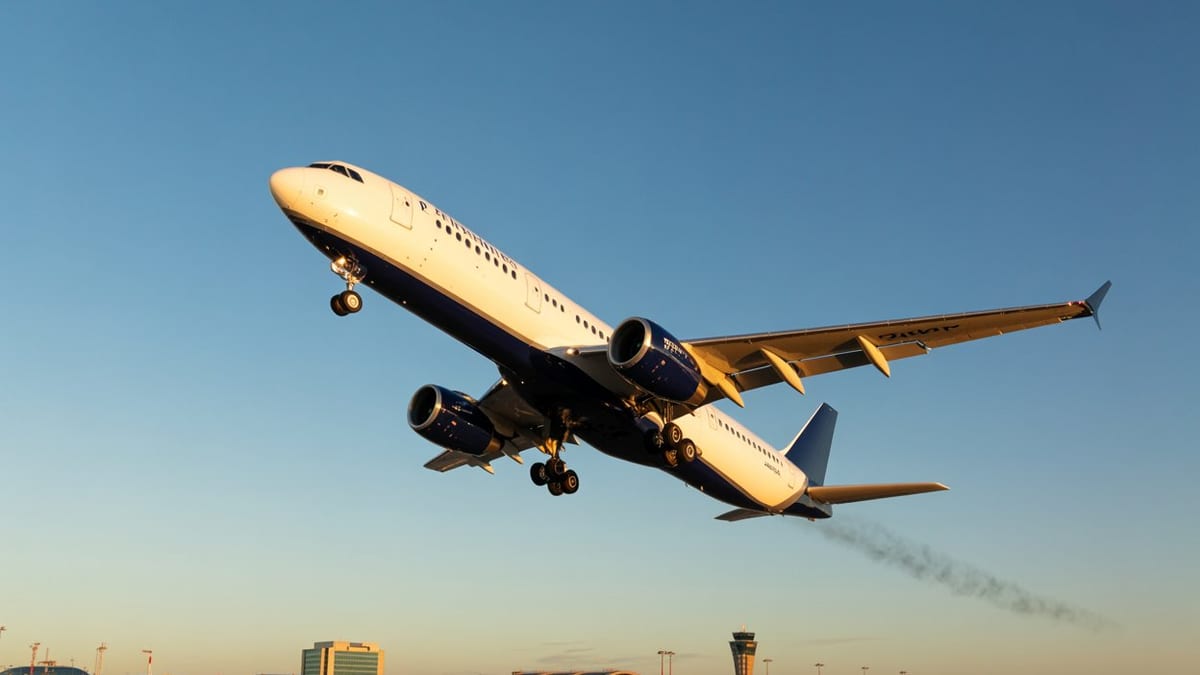
Summer 2026 is shaping up to be delay-prone
Recent analyses of airline punctuality suggest that travelers face a higher risk of disruption this summer as flight volumes stay near record highs and congestion returns across major hubs. Industry reports drawing on U.S. Bureau of Transportation Statistics data indicate that roughly one in five flights in 2024 arrived late, and early 2026 figures show average delays approaching 75 minutes for disrupted departures at some major U.S. airports.
European network data for 2024 shows a similar picture, with more than a quarter of flights arriving late and en route air traffic management delays increasing compared with the previous year. Summer peaks in July and August produced particularly heavy pressure on capacity, creating long chains of reactionary delays when an aircraft arrived late and pushed subsequent departures behind schedule.
Forecasts for the 2026 summer period point to continued staffing constraints in parts of the air traffic control system and dense schedules at busy hubs. Publicly available government data highlights facilities still operating below staffing targets, while airline schedules show limited slack built into peak travel days. For passengers, that combination makes the timing of a departure more important than ever.
Morning departures hold a clear on-time edge
Multiple independent analyses of flight data over the past two years report a consistent pattern: flights departing in the early morning are substantially more likely to leave on time than those scheduled for late afternoon or evening. One recent review of U.S. on-time performance found that flights before 8 a.m. had roughly an 11 percent chance of a delay of 15 minutes or more, compared with rates more than double or even triple that level for some evening departure windows.
Consumer travel coverage drawing on Bureau of Transportation Statistics figures has highlighted the same trend. In some markets, about 80 percent of flights between 6 a.m. and 9 a.m. left on time during recent peak seasons, compared with fewer than half of departures between 6 p.m. and 9 p.m. Data-focused travel services note that, on average, the first flights assigned to an aircraft each day enjoy on-time performance more than 10 percentage points higher than later trips using that same plane.
The reasons are largely structural. Early in the day, airspace is less crowded, runway queues are shorter and the aircraft operating those first departures have usually been at the gate overnight. Maintenance issues discovered during the night can often be resolved before boarding begins, and there are fewer accumulated disruptions feeding into the schedule. As a result, when the first wave of flights pushes back at dawn, they typically start from a clean slate.
How late-running aircraft ripple through the day
The main driver of many afternoon and evening delays is not a sudden problem at that time of day, but a series of small setbacks that began hours earlier. Transportation statistics for major U.S. airports consistently list late arriving aircraft as a leading cause of delay. Once an inbound flight arrives behind schedule, the same aircraft often departs late on its next leg, passing the disruption along to hundreds of passengers who were not on the original problem flight.
Analyses of recent U.S. and European summer seasons describe how this reactionary delay pattern intensifies as the day progresses. During the busiest periods, a single storm cell, ground stop or congestion event in the morning can throw off multiple rotations of an aircraft, particularly at tightly scheduled hubs. By late afternoon, departure boards at some airports show long lines of flights waiting for aircraft that are still finishing earlier segments.
Because first departures of the day are usually the starting point in an aircraft’s rotation, they are less exposed to this domino effect. They can still be disrupted by overnight maintenance issues or residual delays from the previous evening, but they are generally insulated from the cascading schedule problems that build up by late day. For travelers who must make a cruise departure, a long international connection or a time-sensitive event, that statistical edge can be significant.
Weather and staffing patterns favor earlier flights
Seasonal weather is another factor that often works against afternoon and evening departures. In many parts of North America and Europe, convective storms and intense heat, both more common later in the day during summer, can trigger ground stops, reroutes and capacity reductions. Aviation weather briefings and air traffic management performance summaries for recent summers show sharp spikes in delay minutes during the late afternoon as thunderstorm activity peaks.
Staffing patterns and operational constraints can add to these pressures. Public reports on air traffic control staffing in 2024 indicated that certain facilities were operating well below target levels, with overtime and schedule adjustments used to maintain coverage. While safety standards are maintained, lean staffing can limit flexibility when disruption hits, particularly during the evening push when traffic volume remains high but recovery time before the overnight lull is short.
Morning flights are not immune to weather or staffing issues, but they often benefit from more stable conditions. Overnight cooling can reduce convective storm activity, and the first shift of the day typically starts with a full staff complement. When delays do occur early, airlines and controllers have more of the day available to absorb them, instead of facing a hard cutoff as curfews, crew duty limits and airport night restrictions approach.
What this means for travelers this summer
For passengers planning summer 2026 trips, the data translates into a practical choice. If arriving on time is critical, booking the earliest feasible departure remains one of the most effective risk-reduction strategies, alongside selecting nonstop routes and airlines with strong on-time records. The trade-off is obvious: pre-dawn alarms, quieter airports and, in some cases, higher fares for those coveted first departures. But for many itineraries, the reduced delay risk and the extra usable hours at the destination make that compromise worthwhile.
Travel industry reports also point out that flexible change policies introduced in recent years give passengers more options. On many fares, travelers who originally booked later in the day can move to a morning flight when schedules or forecasts change, often paying only a fare difference rather than a full change fee. Monitoring aircraft and weather conditions in the days before departure can help travelers decide whether to make that switch.
With airlines, airports and air navigation providers all signaling another high-demand summer, the underlying message is simple. While no departure time can guarantee a perfectly smooth journey, the first flight of the day continues to offer the strongest odds of getting airborne close to schedule. For anyone who needs to be somewhere on time this summer, that long-standing piece of travel advice still holds up under the latest numbers.