


For a national park famous for lung-busting climbs and high-elevation viewpoints, Bryce Canyon’s Mossy Cave Trail feels almost like a cheat code. In less than a mile of easy walking, you get a desert waterfall, classic orange hoodoos, and a cool, mossy grotto that looks and feels completely different from the dry plateau above. But with limited parking and plenty of competing viewpoints, many travelers wonder: is the Mossy Cave Trail actually worth carving out time for?
Get the latest updates straight to your inbox!
Where Mossy Cave Fits Into a Bryce Canyon Itinerary
Mossy Cave Trail sits in the northern section of Bryce Canyon National Park, just off Utah Scenic Byway 12, about 3.5 to 4 miles east of the junction with Highway 63 and roughly a 10 minute drive from the main Bryce Canyon Visitor Center. Although the parking area is technically outside the main entrance gates, it is still part of the national park and park entry fees or a valid interagency pass are required. The setting feels quieter and more rural than the busy amphitheater rim, with the trail following a small stream through Water Canyon toward the park’s signature red rock formations.
The official National Park Service description lists the hike at about 0.8 miles round trip, with roughly 150 feet of elevation gain and a typical hiking time of around one hour at a relaxed pace. In practice, many visitors with average fitness complete the out and back in 30 to 45 minutes, even factoring in time for photos at the waterfall and the grotto. That makes it easy to squeeze Mossy Cave in before breakfast from Bryce Canyon City, as an early evening stroll on your way back from the scenic drive, or as a lower-effort add-on after tackling steeper trails like Navajo Loop or Queens Garden.
Because Mossy Cave is off the main park road, some people skip it entirely, assuming the best views are along the amphitheater rim. Travelers who do make the detour often describe it later as a surprise highlight of their trip, especially families with young children, older visitors who prefer easier terrain, and road trippers trying to balance limited time with a desire to see more than just roadside overlooks.
In short, Mossy Cave is not a replacement for Bryce’s iconic rim views, but it is one of the easiest ways to get down among hoodoos, water, and greenery without a long, steep descent. For many visitors, that mix is exactly what makes the short hike worth the stop.
What You Actually See on the Trail
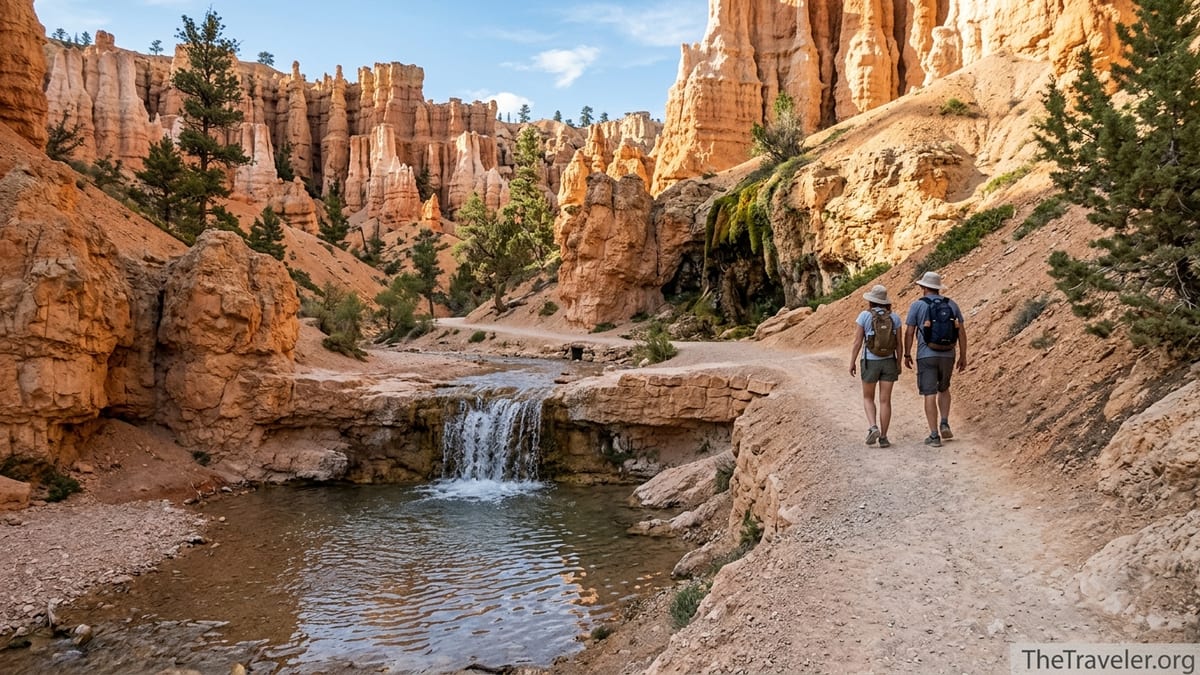
One reason Mossy Cave punches above its weight is how much variety you get in such a short distance. From the trailhead, the path starts with a gentle uphill walk along a packed gravel surface. Almost immediately, you are walking beside a flowing stream known as the Tropic Ditch, flanked by cottonwoods, willows, and low shrubs. For travelers arriving from Las Vegas or the drier sections of Utah’s Highway 89, simply seeing running water and green vegetation in this red rock landscape can feel refreshing.
After a few minutes, the trail crosses the stream on a sturdy footbridge and continues up the canyon. The walls gradually rise, and the classic Bryce Canyon colors begin to dominate the views: orange and cream cliffs, scattered hoodoos, and “windows” carved into the rock by erosion. This is a very accessible way to see the same geologic story that plays out along the main amphitheater, but with far less vertical effort and in a more intimate, canyon-scale setting rather than a massive, open bowl.
Roughly halfway along, the path reaches a signed junction. One branch continues toward the waterfall, where the Tropic Ditch tumbles over a short cliff into a pool before meandering downstream. In late spring after snowmelt, the flow can be surprisingly strong, while midsummer visits often reveal a gentler cascade that still photographs well. The other branch climbs a bit higher to the Mossy Cave grotto itself, an alcove tucked into the hillside where groundwater seeps keep the rock damp enough for mosses and ferns to cling to the walls.
In winter, that same seeping water freezes into clusters of icicles, sometimes forming pillars of ice that stand in striking contrast to the orange rock around them. Local outfitters and winter itineraries for Bryce Canyon often recommend Mossy Cave specifically for these icicle formations, which can make the trail feel almost like a miniature ice cave experience without any technical gear or long approach.
Why Visitors Say the Short Hike Is “Worth It”
Recent trip reports and reviews consistently describe Mossy Cave as an “easy win,” especially for mixed groups where not everyone wants to tackle the park’s steeper routes. Travelers in their 60s or 70s often mention appreciating the gentle grade and short distance, noting that they could still enjoy close-up views of hoodoos and water without worrying about the long climbs associated with more famous trails like Peekaboo Loop. Parents with young kids frequently highlight the waterfall and stream as natural entertainment, since children can watch tadpoles, throw small stones, or simply enjoy the novelty of water in a desert canyon.
Another common theme is that Mossy Cave offers a different side of Bryce Canyon. While the amphitheater viewpoints feel grand and panoramic, Mossy Cave feels enclosed and human-scale. Many visitors compare it to stepping into a hidden pocket of the park: the sound of water, bits of shade from the canyon walls and trees, and a closer look at individual rock formations rather than distant ridgelines. Photographers in particular often appreciate the side canyon perspective, which lets them frame the stream, waterfall, and hoodoos together in a single shot.
Travelers also like that Mossy Cave works well in shoulder seasons and different weather conditions. On hot summer afternoons, the canyon can feel marginally cooler than the exposed rim, especially near the water. In cold months, when some people do not want to risk icy descents into the amphitheater, Mossy Cave offers a shorter, more manageable winter walk, with the added bonus of frozen formations around the grotto and sometimes along the stream edges. Local tourism boards even feature the trail in winter hiking itineraries, emphasizing the combination of snow-dusted hoodoos and icicles in the cave.
For road trippers on a tight schedule, the biggest factor in favor of Mossy Cave is time. Travelers driving from Bryce toward Capitol Reef or Escalante often stop here for a final taste of Bryce Canyon scenery without committing to another multi-hour hike. Many describe it as the perfect last stop after checking out of a nearby lodge, grabbing coffee, and before tackling the next long stretch of Scenic Byway 12.
When Mossy Cave Might Not Live Up to the Hype
Despite its many strengths, Mossy Cave is not a must-do for every type of traveler. The most common complaint is crowding and parking frustration at peak times. The trailhead lot is small compared with the main amphitheater stops, and in recent years, Mossy Cave has gained popularity through social media and word of mouth. During busy summer weekends, it is increasingly common to find the lot full by late morning, forcing drivers to circle or wait for spaces to open. Some reviews mention that they had to skip the hike entirely because they could not secure parking within a reasonable time frame.
Several visitors also point out that the “cave” itself is more of a shallow overhang than a deep cavern. Travelers expecting a large, dramatic cave may come away underwhelmed, particularly in late summer when the moss is drier and less vibrant. The grotto is interesting as a geological feature, especially if you understand that it is a seep where groundwater emerges, but it will not feel like exploring Carlsbad Caverns or other classic cave destinations. If your primary interest is spelunking-style caves, this is not that experience.
Season and timing affect impressions as well. The waterfall can vary from a strong, photogenic cascade in spring to a lighter flow by late summer, particularly during drier years. Some travelers who visited in low water conditions note that the waterfall felt “small” compared with others they had seen in Utah, such as Lower Calf Creek Falls near Escalante. For them, Mossy Cave was still a pleasant walk but not the highlight of their Bryce trip. On the other hand, those who arrive after a summer rainstorm or during spring runoff often describe the falls as unexpectedly impressive for such a short approach.
Finally, travelers focused on Bryce Canyon’s classic amphitheater views sometimes feel that Mossy Cave does not add much if they already hiked Navajo Loop, Queens Garden, and walked the rim. If your time is extremely limited and you want only the biggest “wow” moments, you might prioritize sunrise at Sunrise Point, the Navajo and Queens Garden combination, and far-flung overlooks like Bryce Point or Rainbow Point before considering Mossy Cave.
Practical Details: Access, Parking, and Trail Conditions
Reaching Mossy Cave is straightforward. From Bryce Canyon City or the main park entrance, you drive north on Highway 63 to the junction with Highway 12, then turn east. After a few miles, the road crosses a small bridge; the signed Mossy Cave parking area appears shortly afterward on the right-hand side when approaching from Bryce. The lot serves both standard vehicles and smaller RVs, but there is no dedicated shuttle service at this time, so you should plan on driving yourself.
Because the lot is compact and the trail is popular, timing your visit can make the difference between a quick, enjoyable stop and a frustrating wait. Early mornings before 9 am often offer the best chance at easy parking, especially in June, July, and August. Late afternoon or early evening can also work well, particularly for travelers staying overnight nearby who can be flexible. Midday, especially on holiday weekends or during peak summer travel periods, is when visitors most commonly report having to leave due to lack of space.
The trail surface is generally well maintained, consisting mainly of compacted dirt and gravel, with a moderate but steady grade from the parking area up to the junction. There are a few short, steeper stretches near the fork and on the approach to the grotto, but nothing like the long series of switchbacks you will find on Navajo Loop. The National Park Service classifies the route as easy, with a relatively low total elevation gain. However, you are still at over 6,000 feet above sea level, so visitors coming from sea-level cities should expect to feel the altitude a bit, especially in the heat of the day.
Facilities at the trailhead are basic but useful. As of 2026, there are vault toilets and trash receptacles near the parking area, but no potable water. Travelers should arrive with their own water bottles filled, whether from lodging in Bryce Canyon City, a nearby campground, or from the main visitor center inside the park. Even for a short hike like Mossy Cave, carrying at least one small bottle per person is a good habit, particularly in sunny, dry weather.
Who Gets the Most Out of Mossy Cave
Families with kids are among the visitors who seem to enjoy Mossy Cave the most. The short distance and clear end goals, namely the waterfall and the “cave,” give children easy milestones to walk toward. Parents report that kids often like stopping to toss twigs into the stream, watching them float under the bridges, and then spotting the same water reappear below the falls. Because the trail is not long, it also works well for families who are adjusting to the high elevation before attempting steeper hikes inside the main amphitheater.
Older travelers and those with limited mobility also frequently rate Mossy Cave highly compared with longer park trails. While the entire route is not wheelchair accessible, the relatively mild grade and short distance make it possible for many people who would not attempt the amphitheater descents to still enjoy a meaningful walk surrounded by Bryce rock formations. Lightweight trekking poles can help with balance on the downhill sections, especially on the return when loose gravel can make the surface a bit slippery.
Photographers and content creators often appreciate the combination of elements that Mossy Cave offers: flowing water, layered canyon walls, seasonal greenery, and, in winter, ice formations. Because the canyon is narrower than the amphitheater, it is easier to compose images where the stream leads the eye toward hoodoos in the background. Arriving in the early morning or late afternoon, when the sun is lower, typically softens the light and reduces harsh shadows on the orange rock, resulting in richer colors and more pleasing images.
For travelers on a road trip connecting multiple Utah parks, Mossy Cave can also function as a low-effort “transition” stop. Visitors driving from Bryce Canyon toward Escalante, Capitol Reef, or back toward Zion often appreciate having a short hike that still feels like a proper outing but does not require the packing, planning, and timing considerations of a multi-hour trek. It can be the kind of stop where you throw on a pair of trail shoes, grab water and a hat, and be back at your car in under an hour feeling like you have truly seen something.
Tips to Make the Most of Your Visit
If you decide Mossy Cave belongs in your itinerary, a few simple strategies can help you get the best experience. First, choose your timing with parking and lighting in mind. Early morning provides cooler temperatures, better odds of a parking spot, and soft light filtering into the canyon. Evening visits can be equally pleasant, with the added bonus of golden-hour colors on the hoodoos as the sun lowers in the west. Midday is the most crowded and the harshest light for photography, so if your schedule is flexible, try to shift your visit earlier or later.
Second, dress for variable conditions despite the short distance. In summer, bring a hat, sunscreen, and light layers you can remove as the day warms. Even a brief walk in full sun at over 6,000 feet can feel intense to visitors from cooler climates. In shoulder seasons and winter, expect the trail to have icy or muddy patches, particularly near the water crossings and in the shaded sections closer to the grotto. Sturdy shoes with good traction are more important than you might expect for such a short hike, and small traction devices can be useful in the coldest months.
Third, set your expectations for the features themselves. The waterfall is scenic but relatively small compared with major desert waterfalls in the region, and the cave is a mossy alcove rather than a deep cavern. Approaching them as part of a broader experience that includes the canyon walls, the stream, and the chance to see Bryce hoodoos from below rather than above often leads to more satisfaction than focusing solely on a dramatic “wow” moment at the end.
Finally, practice standard Leave No Trace ethics. Stay on the established path rather than cutting new routes to the stream or climbing unstable slopes, avoid stacking rocks, and give plants and mosses around the grotto a wide berth. The short distance and easy access can sometimes tempt visitors to treat Mossy Cave like a casual roadside stop rather than a fragile canyon ecosystem. Simple choices like packing out all trash and keeping footsteps on the trail go a long way toward preserving the experience for the growing number of people who visit each year.
The Takeaway
So, is the Mossy Cave Trail worth it? For most visitors to Bryce Canyon, the answer is yes, as long as you understand what the trail offers and plan your timing. You are not coming here for a grand, sweeping overlook or a massive cave system. Instead, Mossy Cave delivers an intimate, easy-access glimpse into a side canyon, complete with running water, a small waterfall, and a mossy grotto framed by the orange hoodoos that make Bryce famous.
Travelers with limited time, families with children, older visitors, and anyone seeking a “low effort, high reward” experience are especially likely to call Mossy Cave a highlight. Even seasoned hikers often appreciate it as a relaxing change of pace after tackling Bryce’s more strenuous routes. As long as you arrive early or late enough to avoid the worst parking congestion and keep realistic expectations about the size of the cave and waterfall, Mossy Cave is one of the easiest ways to add a memorable, off-rim experience to your Bryce Canyon visit.
FAQ
Q1. How long does it take to hike the Mossy Cave Trail?
The Mossy Cave Trail is about 0.8 miles round trip, and most visitors complete it in 30 to 45 minutes, including time for photos at the waterfall and grotto.
Q2. Do I need to pay the Bryce Canyon entrance fee to visit Mossy Cave?
Yes. Even though the parking lot is outside the main entrance gates, Mossy Cave is inside Bryce Canyon National Park, so the standard park entry fee or an interagency pass is required.
Q3. Is the Mossy Cave Trail suitable for young children?
Most families find the trail very kid friendly because it is short, gently graded, and has engaging features like a stream, waterfall, and the mossy grotto to keep children interested.
Q4. When is the best time of day to visit Mossy Cave?
Early morning and late afternoon are usually best, with cooler temperatures, softer light for photography, and a better chance of finding a parking spot compared with the busy midday period.
Q5. What is the trail like in winter?
In winter, parts of the trail can be snowy or icy, especially near the water, but many visitors still hike it with proper footwear and warm layers to see impressive icicles forming in the grotto.
Q6. How impressive is the waterfall on the Mossy Cave Trail?
The waterfall is scenic but modest in size. It tends to be most impressive in late spring and after rainstorms, and more of a gentle cascade in late summer during drier periods.
Q7. Is Mossy Cave an actual cave you can go inside?
Mossy Cave is more of a shallow alcove than a deep cavern. You can walk up close to view the mosses and dripping water but should avoid entering or touching the delicate surfaces.
Q8. How difficult is the hike compared with other Bryce Canyon trails?
The National Park Service classifies Mossy Cave as an easy hike, with about 150 feet of elevation gain, making it significantly easier than trails like Navajo Loop or Peekaboo Loop.
Q9. Are there restrooms and water at the trailhead?
There are vault toilets and trash bins at the trailhead but no potable water, so you should bring filled water bottles from town or the main park visitor center.
Q10. Is Mossy Cave worth visiting if I only have one day in Bryce Canyon?
If you prioritize the main amphitheater views first, Mossy Cave can still be a worthwhile add-on, especially as a short, low-effort hike either early in the morning or later in the day.