


More news on this day
American Airlines Flight AAL695 made an unscheduled diversion to Palm Beach International Airport, disrupting travel plans for passengers but concluding without reports of injuries or major onboard incident.
Get the latest news straight to your inbox!
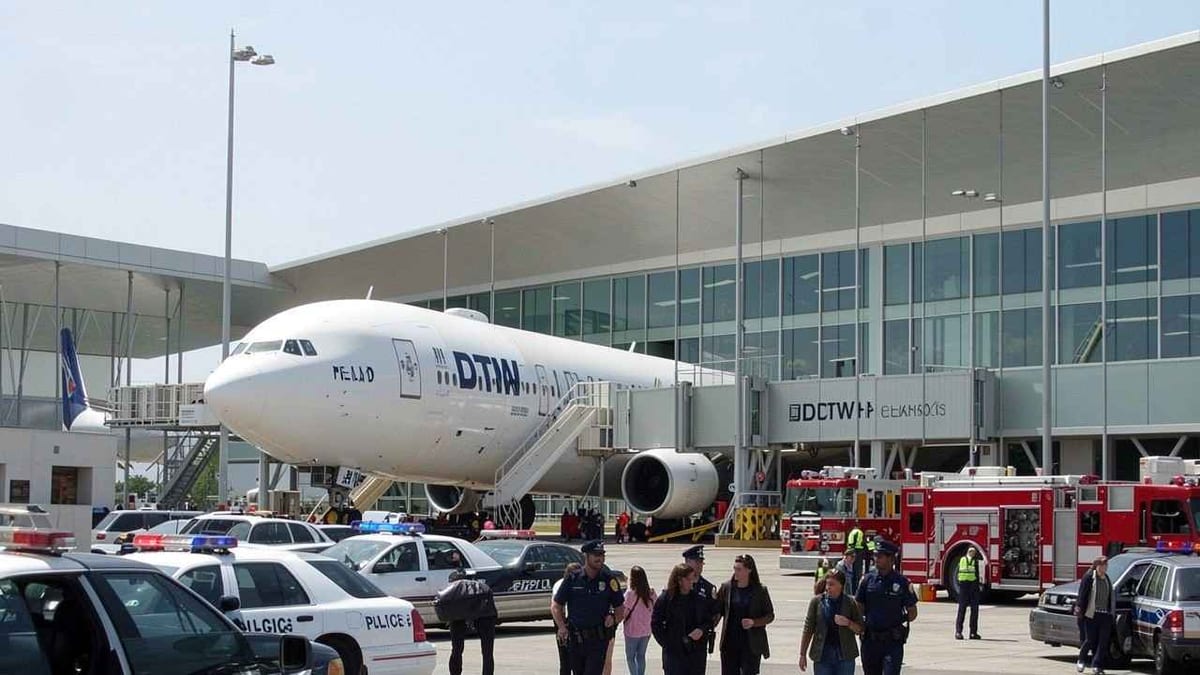
Unscheduled Stop Brings Flight to Palm Beach
Flight tracking data and publicly available operational records indicate that American Airlines Flight AAL695, operating as a scheduled passenger service, diverted to Palm Beach International Airport rather than continuing to its planned destination. The aircraft descended and landed at the South Florida airport after a change of course was initiated en route.
Available information shows that the diversion unfolded in a routine manner from an operational standpoint. The aircraft proceeded to Palm Beach, where it landed and taxied under its own power. There are no published indications of structural damage to the aircraft or emergency evacuation procedures being used.
Reports from flight data services suggest the flight remained on the ground long enough for standard post-diversion procedures, including assessments by airline and airport teams and arrangements for onward travel. Passengers experienced an extended travel day, but the situation appears to have remained controlled and orderly inside the terminal.
Possible Factors Behind the Diversion
As of the latest publicly available information, the specific trigger for the diversion of Flight AAL695 has not been definitively detailed. Diversions of this kind can result from a range of factors, including medical situations involving passengers or crew, weather impacts at the origin or destination, technical irregularities with the aircraft, air traffic control constraints, or crew duty-time limits.
Operational records and similar recent American Airlines diversion cases suggest that crew scheduling and legal duty-time limits, combined with conditions at the destination, are a recurring reason for unplanned stops at alternate airports. In other instances across the network, published coverage has pointed to weather-related congestion, airfield disruptions, or passenger medical needs as underlying causes.
In the absence of a formal, public incident statement specifying the cause for AAL695’s change of course, industry observers commonly look to patterns from prior diversions and timing of the flight to infer likely scenarios. However, at this stage, any single explanation remains speculative, and only a detailed operational log or later regulatory summary would provide a definitive account.
Impact on Passengers and Onward Travel
For travelers aboard Flight AAL695, the diversion to Palm Beach International translated into delays and, in many cases, disrupted connections. Based on comparable diversions reported in recent months, passengers are typically asked to remain seated while the aircraft is brought to a standstill, then either stay on board during assessments or disembark into the terminal if a longer ground stop is expected.
Publicly available accounts from similar events indicate that airlines generally focus first on safety checks and regulatory requirements before addressing rebooking and customer service. Once cleared, passengers on a diverted flight are commonly rebooked onto later services or, when necessary, provided with overnight accommodation and meal support according to airline policy and local availability.
At Palm Beach International, an airport with an established schedule of mainline and regional services, diversions can place additional strain on gates and ground services. Even so, the airport routinely manages irregular operations, and reports suggest that services continued alongside the handling of AAL695 and its passengers.
Diversions as a Feature of Modern Airline Operations
While often frustrating for travelers, diversions such as that of Flight AAL695 are a recognized component of modern airline operations. Large carriers like American Airlines operate thousands of daily flights, and irregular operations, including weather patterns, technical alerts, and medical contingencies, regularly require real-time adjustments.
Academic studies and industry analyses of airline operational data describe diversions as rare relative to total flights but highly impactful when they occur, affecting aircraft positioning, crew rosters, and passenger itineraries far beyond the single flight involved. Carriers maintain dedicated operations control centers to evaluate live data and select diversion airports with suitable runways, ground handling capacity, and onward connectivity.
Palm Beach International’s role as a diversion point reflects its runway infrastructure, airspace position within South Florida, and the presence of scheduled services that can help absorb disrupted itineraries. Historical records show that other American Airlines flights have previously used Palm Beach as an alternate airport in irregular situations, underscoring its strategic value in the region.
What Travelers Can Expect After a Diversion
The experience of Flight AAL695 illustrates what passengers can generally expect after a diversion. Once on the ground, travelers are typically informed of the immediate next steps through cabin announcements and airport display systems, though detailed explanations of the underlying cause may be limited, especially while operational assessments are ongoing.
Public consumer guidance from aviation agencies and travel organizations suggests that affected passengers should monitor their booking status through airline apps or airport kiosks, as rebooking and seat assignments are often processed automatically. For those with missed connections, overnight stays, or time-sensitive obligations, records from past incidents show that outcomes vary depending on the cause of the disruption, applicable regulations, and airline policies in place at the time.
In the case of AAL695, the diversion to Palm Beach International added an unplanned stop to the journey but concluded without reports of injury or serious onboard emergency. For travelers, the episode serves as a reminder that diversions, while disruptive, are typically managed with safety as the primary consideration, with schedule recovery and customer support following once the aircraft is safely on the ground.