


More news on this day
An American Airlines flight experienced an unusual delay after flight crew were briefly unable to access the cockpit, according to passenger accounts shared publicly, underscoring how even minor technical or procedural hitches can ripple through already strained airline operations.
Get the latest news straight to your inbox!
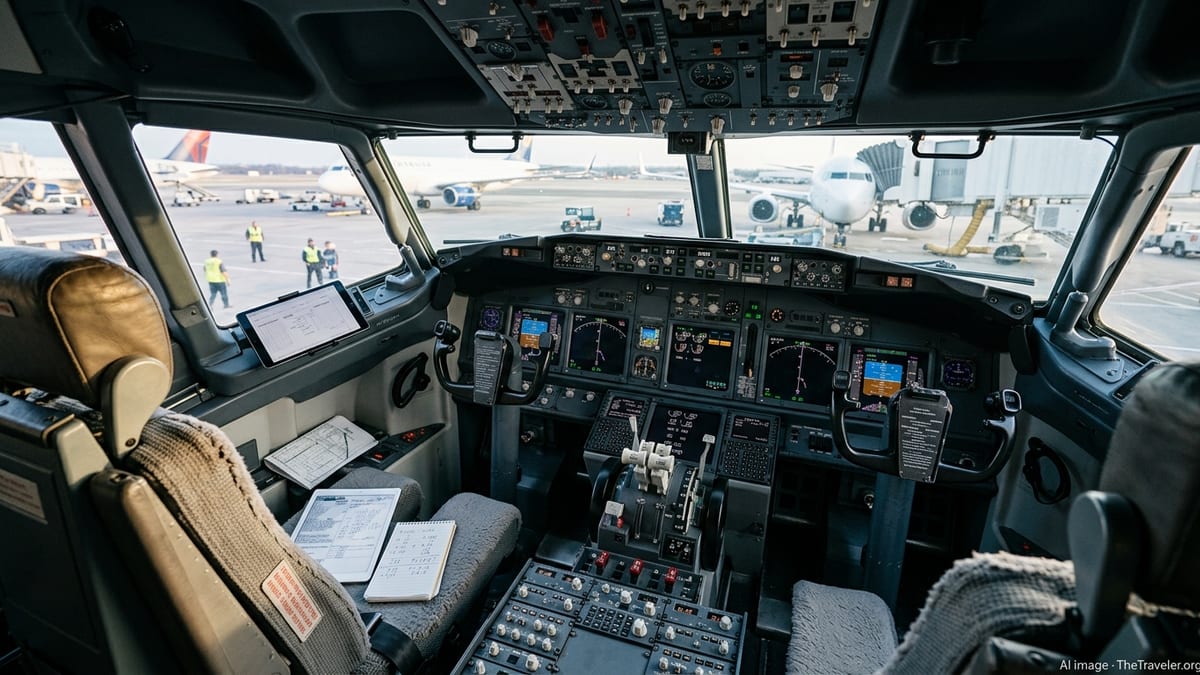
Passenger reports describe unexpected return to the gate
Details of the incident emerged through passenger accounts posted on social media and online forums, where travelers reported that boarding had begun as normal before the flight was abruptly sent back to the gate. One traveler wrote that they were halfway down the jet bridge for pre-boarding when a pilot exited the aircraft and told passengers to turn around because the cockpit was locked.
Publicly available posts indicate that the aircraft had already been prepared for departure when the issue arose, suggesting that the cockpit door mechanism or related access procedure did not function as intended. The crew reportedly informed passengers that they could not enter the flight deck and that boarding would be paused while the problem was addressed.
Comments from other travelers in the same discussion suggest that the delay ultimately stretched to around 90 minutes before the flight was able to continue. While such an interruption is relatively short compared with major cancellation events, it proved disruptive for passengers with connecting flights and tight schedules.
The airline involved has not issued a widely circulated public statement on this specific event, and available information about the episode is currently limited to traveler accounts and general operational guidance published by the carrier.
Cockpit security and complex door mechanisms
The incident has drawn attention to the balance between strict cockpit security measures and practical access for crew. Since international aviation security rules were tightened in the early 2000s, cockpit doors on commercial aircraft are reinforced, electronically controlled, and designed to remain locked against unauthorized entry in most circumstances.
Industry explanations published in aviation safety materials describe cockpit doors that can be operated from the flight deck side and, in limited ways, from the cabin side using coded keypads and timed unlocking systems. These systems are intended to protect pilots while still allowing entry if one crew member temporarily leaves the flight deck.
Aviation commentators note that malfunctions or misconfigurations can occasionally leave pilots temporarily unable to re-enter, particularly if standard procedures are interrupted or if there is a fault in the locking mechanism or power supply. In those situations, crews typically follow established checklists, coordinate with maintenance staff, and keep passengers on the ground until the issue is resolved.
Recent coverage of other cockpit related incidents across the industry, including false alarms about attempted breaches and technical issues with intercom systems, indicates that airlines and regulators remain highly sensitive to any irregularities involving the flight deck. Even when there is no direct safety threat, crews are expected to prioritize security and delay departure if cockpit access cannot be guaranteed.
Operational ripple effects and passenger impact
Although the reported delay from the cockpit lockout incident appears to have been contained to roughly an hour and a half, it occurred against a broader backdrop of schedule strain for American Airlines and other major carriers. Travelers have recently reported a range of disruptions, from weather related ground stops to crew availability problems and aircraft being taken out of service for unscheduled inspections.
Publicly available information from airline operations experts indicates that a delay caused by an unexpected technical or procedural issue can quickly cascade. Aircraft and crew are often scheduled tightly across multiple legs in a single day, so a late departure on one flight can jeopardize connections, duty time limits for pilots, and onward flights using the same aircraft.
Passenger accounts from the affected flight suggest that, while the delay was frustrating, most travelers ultimately completed their journeys the same day. Travelers commenting on similar disruptions have highlighted the importance of monitoring mobile apps and airport displays closely, rebooking when necessary, and documenting delays for potential compensation or travel credit where airline policies apply.
Consumer advocates generally recommend that passengers build extra time into connections when possible, especially when traveling through busy hubs or during peak weather seasons, because seemingly minor issues such as a jammed door, a communication fault, or a missing crew member can translate into missed onward flights.
Safety protocols prioritize caution on the ground
Reports on the cockpit lockout episode indicate that the situation unfolded at the gate, before pushback and takeoff, which meant the crew and ground teams could troubleshoot without the added pressure of being airborne. Aviation safety materials emphasize that resolving anomalies on the ground is significantly safer and operationally simpler than managing them in flight.
Training documents and public guidance from regulators describe how crews are encouraged to treat unusual situations conservatively. If cockpit access, communications, or systems cannot be quickly verified as safe, the expectation is that departures will be postponed or flights will return to the gate to allow engineers to investigate.
In recent months, American Airlines has dealt with other high profile operational events, including diversions after technical issues and flights returning to their origin airports following security misunderstandings. In each case, publicly available coverage has underscored that while passengers face inconvenience, airlines tend to frame these decisions as examples of safety and security procedures functioning as designed.
Aviation analysts note that incidents such as the reported cockpit lockout are rare relative to the total number of daily flights, but they resonate strongly with travelers because they involve the most sensitive area of the aircraft. As airlines continue to refine digital tools, ground staffing, and maintenance planning, operational experts suggest that clear communication about such events is key to maintaining passenger confidence.
Growing scrutiny of airline reliability
The episode comes as American Airlines and its competitors face heightened scrutiny over reliability, customer service, and compensation when trips are disrupted. Recent coverage of storms, lightning strikes, and staffing shortages has highlighted how quickly a normal travel day can unravel into rolling delays for thousands of passengers.
Regulators and passenger rights groups have pushed for clearer rules around when travelers are entitled to refunds or vouchers for delays that are deemed within an airline’s control. While unusual technical issues like cockpit access problems may be classified differently from weather related disruptions, passengers increasingly compare their experiences across carriers and expect consistent treatment when delays occur.
For American Airlines, the reported cockpit lockout delay is one more example of how operational complexities can surface in unexpected ways. Even when flights ultimately depart safely, each irregularity adds to a wider public conversation about airline preparedness, contingency planning, and investment in maintenance and ground support.
As the peak travel season continues, industry observers indicate that carriers will be judged not only on how often such disruptions occur, but also on how transparently they communicate with passengers and how quickly they restore normal operations after unexpected setbacks.