


More news on this day
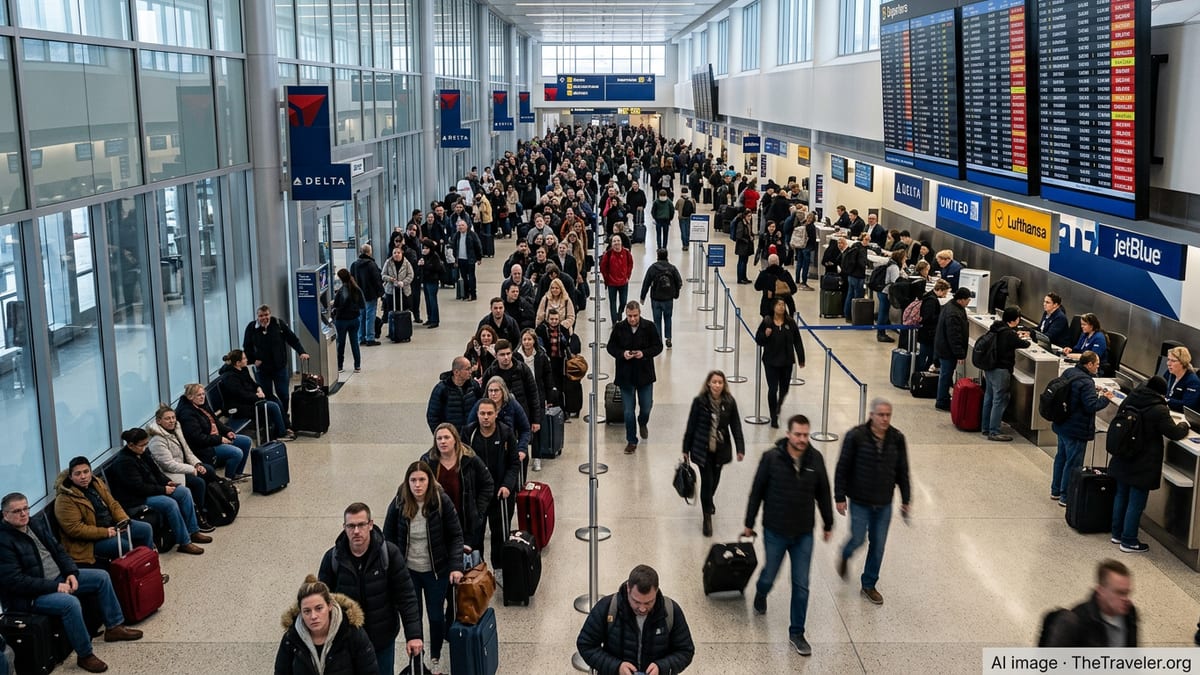
Passengers at Milwaukee Mitchell International Airport faced an afternoon of gridlock after a cluster of cancellations by Delta Air Lines, United Airlines and Southwest Airlines left travelers scrambling to rebook and reroute around a suddenly snarled regional aviation network.
Get the latest news straight to your inbox!
Five Key Cancellations Expose a Fragile Schedule
Publicly available flight-tracking and schedule data indicate that five mainline flights touching Milwaukee were scrubbed in quick succession, affecting operations by Delta, United and Southwest. The cancellations, spread across key hub routes, amplified knock-on delays across the late-afternoon and evening bank of departures.
The affected services included a mix of inbound and outbound flights, turning what might otherwise have been a routine schedule adjustment into a broader disruption for passengers attempting to connect through Milwaukee or reach neighboring Midwest cities. Even a small cluster of cancellations can have an outsized impact at a mid-sized airport where runway capacity, security checkpoints and gate availability are more constrained than at major coastal hubs.
Reports indicate that some of the canceled flights served major connecting cities such as Chicago, Detroit and other regional hubs, limiting easy alternatives for travelers attempting same-day rebooking. With limited spare aircraft and tightly timed crew rotations, airlines at Milwaukee had few immediate options to absorb displaced passengers.
As the cancellations rippled outward, subsequent departures faced heavier loads and longer lines at check-in counters and rebooking desks. Passengers already on tight itineraries were particularly vulnerable, with missed connections and forced overnight stays emerging as common outcomes once the gridlock set in.
Why a Handful of Flights Can Snarl an Entire Airport
Milwaukee Mitchell International operates a single terminal with two primary concourses handling most commercial traffic. Industry analyses of the airport’s layout describe separate security checkpoints for each concourse and no secure-side connection between them, leaving little flexibility to redistribute passenger flows once congestion begins to build.
Delta, United and Southwest rank among the most active carriers at Milwaukee, supporting a network of regional and long-haul routes that rely heavily on punctual turnarounds and precise crew scheduling. When multiple flights on these carriers are scrapped within a compressed window, the resulting imbalance of passengers, crews and available seats can quickly overwhelm the airport’s day-to-day operating rhythm.
Aviation operations specialists often note that while larger hubs may absorb several cancellations with minimal visible impact, mid-sized airports can experience disproportionate disruption when just a few key services are removed from the schedule. In Milwaukee’s case, the five canceled flights functioned as critical links in a larger chain of Midwest connections, so their removal triggered delays not only on remaining departures, but also on itineraries that depended on those flights to feed traffic onward.
The result, according to data-driven assessments of similar events, is an environment in which even flights that depart on time may see stressed boarding processes, elevated risk of missed connections for inbound passengers and increased likelihood of baggage misrouting as ground teams attempt to reconcile adjusted passenger lists and rebooked itineraries.
Passenger Impact: Missed Connections and Full Rebooked Flights
For travelers, the most immediate consequence of the Milwaukee gridlock was uncertainty. Canceled flights often force passengers into a limited pool of remaining seats, and during busy travel periods those alternatives may already be close to full. Publicly accessible booking platforms showed shrinking same-day availability on other services operated by Delta, United and Southwest, especially on popular business and leisure routes into larger hubs.
Passengers attempting to salvage their plans increasingly turned to nearby airports, with regional travel forums noting increased interest in flights from Chicago or Madison as travelers weighed ground transfers against the possibility of securing a later Milwaukee departure. Comparable disruption events have previously pushed travelers to drive several hours to alternative airports in order to regain control over their timelines.
Customer experiences shared across social media and online travel communities frequently highlight the domino effect of such cancellations. Even when airlines provide rebooking options, replacement flights can depart many hours later or on the following day, and overnight hotel stays or missed events become common consequences. In instances where multiple major carriers face parallel schedule issues, rental car availability and nearby hotel occupancy can tighten rapidly.
Advisories from travel experts consistently recommend that passengers impacted by cancellations document all communications and keep boarding passes, booking confirmations and receipts for potential reimbursement claims. While specific policies differ among Delta, United and Southwest, publicly posted contract-of-carriage documents generally outline when passengers may be eligible for refunds, vouchers or meal and hotel support during disruptions that are within an airline’s control.
Weather, Staffing and Network Strain Behind the Gridlock
The precise mix of factors behind the Milwaukee cancellations has not been fully detailed in carrier statements, but comparable events in recent months across the United States point to a recurring set of pressures. Industry reporting has linked waves of cancellations at major airlines to localized weather systems, lingering staffing challenges and complex recovery efforts after earlier delays.
When storms or low-visibility conditions develop across the Midwest, airlines often preemptively thin their schedules to maintain safety margins and avoid leaving large numbers of aircraft and crew stranded in the wrong cities. Even when Milwaukee itself experiences relatively mild conditions, disruptions at upstream hubs can cascade into the schedule, leaving aircraft or flight crews out of position for later legs into and out of the city.
Publicly available analyses of recent national disruption events also note that once a carrier begins canceling flights in a region, the recovery window can extend well beyond the end of the immediate weather system or technical issue. Airlines may be forced to rebuild rotations over several days, and mid-sized airports on key connecting routes, such as Milwaukee, can feel extended aftershocks as carriers realign aircraft and crews.
Observers point out that Delta, United and Southwest have each faced periods of elevated cancellations over the past few years, often driven by network-wide challenges rather than problems isolated to any single airport. The concentrated impact at Milwaukee this time illustrates how vulnerable regional passengers remain when those broader strains intersect at a single, capacity-limited field.
What Travelers Through Milwaukee Should Do Next
In the wake of the latest gridlock, consumer advocates recommend that passengers planning to fly through Milwaukee in the coming days treat schedules as fluid, even if their own flights currently appear on time. Checking status frequently through airline apps and sign-up for push alerts can provide earlier notice of schedule changes than airport departure boards alone.
For those who have already experienced cancellations involving Delta, United or Southwest at Milwaukee, experts advise exploring multiple rebooking pathways. Online self-service tools can sometimes reveal open seats more quickly than crowded airport counters, and adding nearby airports as alternative departure or arrival points may expand the range of options. In some cases, passengers may find viable routings by mixing carriers or accepting longer layovers to preserve the core of their trip.
Travel planning specialists also underscore the value of building buffers into itineraries that involve onward connections, particularly on busy travel days or during seasons with volatile weather. Longer layovers can reduce the risk that a single delayed or canceled segment will unravel a complex, multi-stop journey.
While five canceled flights might appear modest in raw numbers, the disruption they produced in Milwaukee highlights an ongoing tension in modern air travel. Tight schedules, high load factors and lean staffing leave little slack in the system, meaning even localized issues can quickly evolve into broader travel chaos for passengers who happen to be in the wrong place at the wrong time.