


More news on this day
American Airlines flights are gradually resuming across the United States after a nationwide technology outage triggered a temporary ground stop, leaving passengers at Rochester’s airport facing delays, cancellations and hours-long waits on Tuesday.
Get the latest news straight to your inbox!
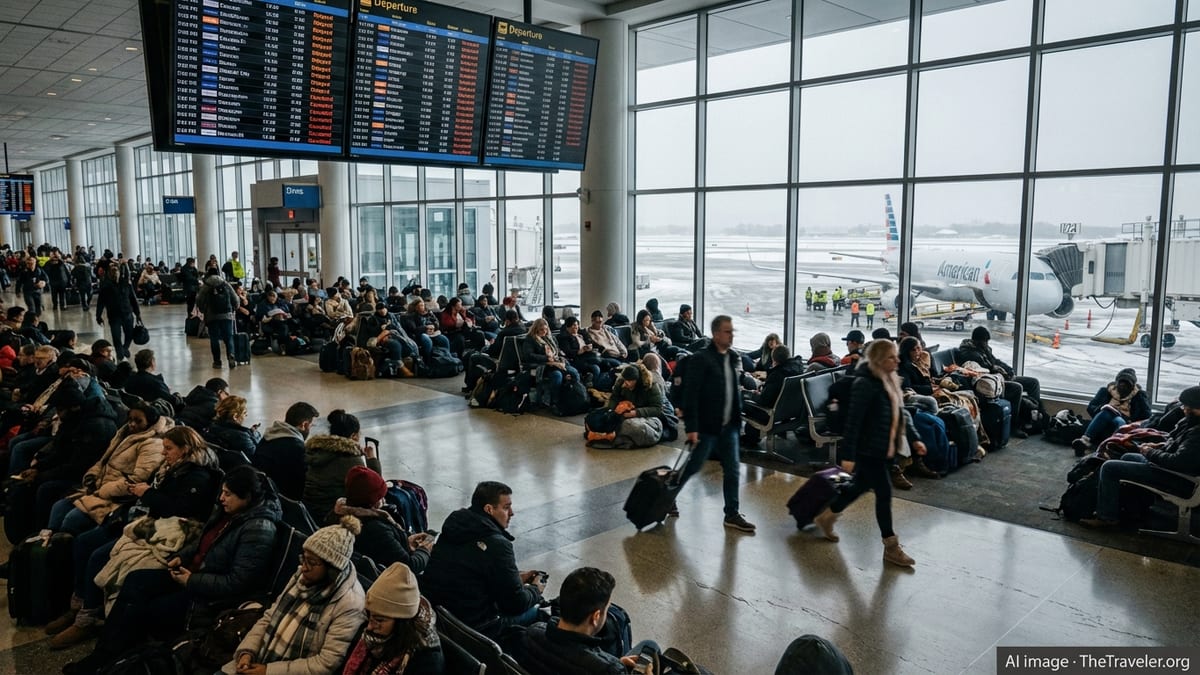
Nationwide IT disruption halts American Airlines departures
Publicly available flight and passenger reports indicate that American Airlines experienced a broad technology failure on Tuesday, affecting airport systems, mobile apps and websites used for check-in, boarding and flight operations. The disruption led to a nationwide ground stop that applied to American’s mainline and regional flights not already in the air.
Accounts from major hubs such as Dallas Fort Worth, Charlotte and Miami describe aircraft held at gates or on taxiways while crews waited for the airline’s systems to come back online. Travelers reported being unable to check in, retrieve boarding passes or access updated departure information through the carrier’s digital channels during the height of the outage.
According to published coverage referencing federal aviation advisories, the ground stop was framed as a safety measure while dispatch and flight-planning systems were restored. Arriving flights already in the air were generally allowed to continue to their destinations, but many subsequent departures were paused as the outage rippled across American’s network.
Industry observers note that large U.S. airlines rely on complex, interconnected IT platforms for everything from crew scheduling to gate assignments. When those systems fail, even briefly, the resulting disruption can cascade quickly across hundreds of flights and dozens of airports.
Delays and cancellations cascade through Rochester’s schedule
Rochester’s airport, served by American Airlines regional flights that connect through larger hubs, experienced a disproportionate impact from the outage despite handling a smaller volume of traffic than major coastal gateways. Flight-status boards on Tuesday showed a series of rolling delays and select cancellations on American-operated routes to key connecting cities.
Public flight tracking data indicates that some American flights bound for Rochester departed late from their hubs, arriving behind schedule and compressing already tight turnaround times. In several cases, the aircraft and crews scheduled to operate onward segments from Rochester were out of position, forcing airport staff to juggle gate assignments and revised departure times.
Travelers described crowded gate areas as passengers on multiple delayed flights waited for updates. With digital tools intermittently unavailable, many relied on in-terminal announcements and airport display screens for information, contributing to longer lines at service counters as people sought rebooking options or confirmation of their itineraries.
Regional airports like Rochester are particularly vulnerable when national-level disruptions occur at a single large carrier, since they often depend on a limited number of daily departures to major hubs. When one or two flights are delayed or canceled, the options for same-day rebooking can narrow quickly, leaving some passengers stranded until seats open up on later services.
Flights resume as systems are restored and crews repositioned
By late Tuesday and into early Wednesday, reports from multiple airports pointed to a gradual normalization of American’s operations as core systems came back online. Travelers noted that online check-in and mobile boarding passes began working again, while flight tracking tools started reflecting more accurate departure times across the network.
At Rochester, publicly available schedules show American flights back in operation, though some departures are running behind their original times as aircraft and crews are repositioned. Aviation analysts explain that even after a technical issue is resolved, airlines often need several hours or more to realign aircraft, flight crews and gate availability into their planned patterns.
Recovery efforts are influenced by factors such as crew duty-time limits, overnight aircraft parking arrangements and slot allocations at congested hub airports. As those pieces are gradually brought back into balance, smaller spoke airports tend to see their service stabilize, albeit sometimes with residual delays built into the following day’s timetable.
Operational data suggests that American’s broader schedule is moving toward normal, with departures from key hubs steadily increasing. For passengers originating in or connecting through Rochester, that trend is expected to ease the backlog of disrupted itineraries as additional flights operate through the midweek period.
Rochester travelers face missed connections and rebooking challenges
For many passengers at Rochester’s airport, the outage’s most immediate effect was the loss of confirmed connections at distant hubs. Travelers with tight layovers in cities such as Philadelphia, Charlotte or Dallas Fort Worth reported missing onward flights when inbound legs arrived late, forcing them to seek alternate routings or overnight stays.
Consumer travel resources note that during large-scale operational disruptions, rebooking can be constrained by limited seat availability, especially on peak travel days or popular routes. Some Rochester passengers described being shifted to later same-day flights, while others were rebooked for the following day when earlier options were already full.
Passenger accounts also highlight the strain on customer service channels during the outage. Phone lines, airport counters and online chat functions reportedly experienced heavy demand as travelers sought to adjust itineraries, secure hotel vouchers or clarify the status of checked bags. With systems gradually recovering, those channels are expected to process remaining requests over the coming day.
Travel advisers generally encourage affected passengers to retain all documentation related to disruptions, including updated boarding passes and receipts for out-of-pocket expenses, as these records can support later reimbursement or travel credit requests when an interruption is tied to an airline-controlled issue.
Renewed scrutiny of airline technology resilience
The American Airlines disruption has renewed discussion about the resilience of airline IT systems and the potential for single points of failure to affect nationwide air travel. Recent years have seen several high-profile technology incidents at major carriers and service providers, underlining how closely aviation operations are tied to digital infrastructure.
Analysts point out that airlines have invested heavily in redundancy and backup systems, but that complex software environments, third-party vendors and legacy platforms can still leave vulnerabilities. When disruptions occur, the priority is typically to restore safe operations, followed by stabilizing the schedule and addressing the passenger backlog.
For airports like Rochester that rely on a mix of mainline and regional service, such incidents underscore the importance of real-time communication with travelers. Aviation commentators suggest that clear, frequent updates through public address systems, flight boards and verified digital channels can help reduce confusion, even when exact departure times are still in flux.
While American’s flights are now operating again at Rochester and across the country, travel experts say the outage will likely feature in ongoing industry conversations about contingency planning, vendor management and the need for continued modernization of critical aviation technology systems.