


More news on this day
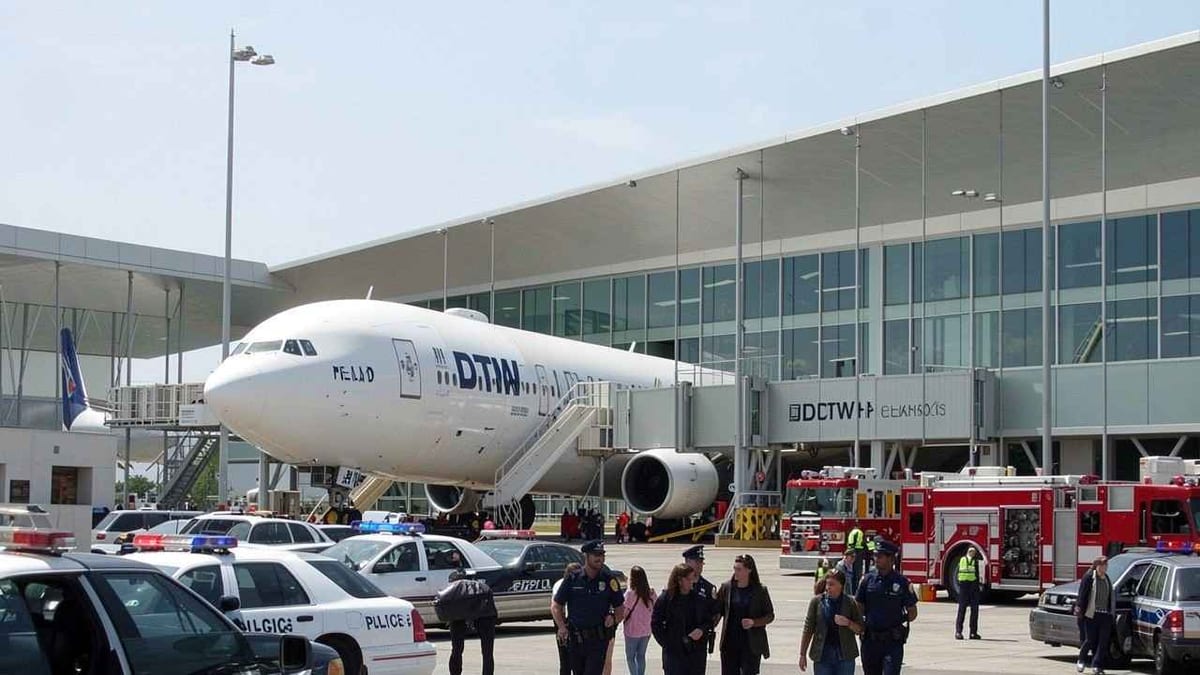
An American Airlines Boeing 737-800 operating as Flight AA869 from Milwaukee to Dallas made an unplanned landing in Oklahoma City on August 7, after weather and traffic constraints around the Dallas Fort Worth region prompted a diversion, according to publicly available flight tracking information and media coverage.
Get the latest news straight to your inbox!
Unexpected Diversion on Routine Midwest Route
Flight AA869 departed Milwaukee’s General Mitchell International Airport on August 7 for Dallas Fort Worth International Airport, a busy domestic corridor typically covered in just over two hours under normal conditions. The service was operated by a Boeing 737-823, part of American’s mainline narrowbody fleet commonly used on high-frequency routes into the Dallas hub.
Tracking data for the flight shows that instead of continuing directly to Dallas, the aircraft altered course toward central Oklahoma and landed at Will Rogers World Airport in Oklahoma City. The diversion occurred after the aircraft had already progressed well into its southbound leg, indicating that conditions affecting Dallas emerged or intensified while the flight was en route rather than before departure.
The Boeing 737-800 series is widely used in American’s network and is certified for a broad range of domestic operations. Diversions involving this aircraft type are generally linked to external factors such as weather, air traffic control programs, or ground congestion at busy hubs rather than to the basic performance characteristics of the jet.
Publicly available information for the August 7 operation indicates that the aircraft remained on the ground in Oklahoma City for refueling and operational checks before continuing toward Dallas once conditions improved along the arrival corridor.
Weather and Traffic Pressures Around Dallas Fort Worth
The Dallas Fort Worth area experiences recurring summer disruptions, with convective storms, low cloud ceilings, and lightning frequently triggering capacity reductions. On August 7, reports from flight tracking platforms and traveler accounts pointed to another period of unsettled conditions around Dallas, leading to airborne holding, ground stops, and multiple diversions into surrounding airports, including Oklahoma City.
American Airlines relies heavily on Dallas Fort Worth as its primary domestic hub, which means relatively minor weather systems can have wider operational consequences. When arrival rates are reduced, flights already in the air may be assigned extended holding patterns. If those holds approach fuel planning limits, diversion to a nearby airport becomes the preferred option to maintain regulatory reserves and ensure safe operations.
Oklahoma City is a frequent alternate for flights bound for Dallas because it offers sufficient runway length, full-service ground handling, and comparatively lighter traffic than other large regional airports. Aviation discussion forums and past flight records show that American mainline and regional aircraft are routinely rerouted there during stormy periods around Dallas, often in clusters when traffic levels spike.
On August 7, AA869 joined a series of flights that adjusted their routes to avoid congestion and weather in the North Texas airspace, highlighting how a single weather system can ripple through a tightly scheduled hub-and-spoke network.
Impact on Passengers and Downline Operations
For passengers on board AA869, the diversion to Oklahoma City added unplanned time on the ground and altered the timing of their arrival in Dallas. While exact onboard timelines vary by individual account, the sequence generally involves landing at the diversion airport, refueling, waiting for a revised slot into the original destination, and then completing the final leg once clearance is granted.
Diversions can complicate connections at large hubs such as Dallas Fort Worth. Missed onward flights, changes to gate assignments, and rebooking needs often arise, particularly late in the day when available seats are more limited. Although AA869 was operating within the domestic network, a delay of several hours can still cascade into missed domestic connections and overnight stays for some travelers.
Operationally, a single aircraft diverting to Oklahoma City can affect aircraft rotations throughout the day. Airlines use complex recovery tools to reposition jets and crews after irregular operations, with decisions balancing the needs of the diverted flight against subsequent departures that rely on the same aircraft or flight crew.
In this case, AA869’s Boeing 737-800 was expected to return to regular service after completing the modified routing, but any downstream schedule adjustments would have depended on how long the aircraft remained off its planned track and how tightly it was tied to later Dallas-originating flights.
Diversions to Oklahoma City Becoming a Familiar Pattern
While an individual diversion may feel unusual to travelers, Oklahoma City’s role as a relief destination for Dallas Fort Worth has become increasingly visible. Public flight tracking feeds and user reports show recurring patterns each storm season, with groups of American Airlines flights bound for Dallas briefly parking at Oklahoma City, Tulsa, or other nearby airports until weather and traffic constraints ease.
Aviation enthusiasts and local observers note that these clusters often coincide with short-lived but intense thunderstorms around Dallas, where safety margins and air traffic control spacing rules require temporary pauses in arrivals. Oklahoma City’s relative proximity, available airspace, and infrastructure make it a practical alternate when these pauses occur.
The diversion of AA869 on August 7 aligns with this broader pattern. The aircraft’s route, timing, and subsequent continuation to Dallas reflect standard industry practice for managing flights that reach the limits of their planned holding time near a congested hub. Although each event is operationally unique, the sequence of flying to an alternate, refueling, and rejoining the arrival stream mirrors procedures used across the U.S. airline system.
For American Airlines, diversions like this represent both a safety-driven necessity and a logistical challenge. While passengers experience delays and disruptions, the decision to divert is rooted in fuel planning, weather avoidance, and the need to maintain orderly flows into some of the world’s busiest airspace.
What Travelers Can Learn From the AA869 Diversion
The August 7 diversion offers several practical takeaways for travelers regularly flying into major hubs. First, even seemingly short domestic segments can be affected by conditions hundreds of miles away, especially when the destination is a high-density airport with complex arrival routes such as Dallas Fort Worth.
Second, diversions are not inherently an indication of mechanical issues or emergencies. In many cases, including flights like AA869, publicly available data indicates that the primary triggers are weather, traffic restrictions, or fuel reserve considerations while holding, all of which lead carriers to seek alternate airports as a precaution.
Finally, travelers with tight connections at hub airports may wish to build extra time into their itineraries during peak storm seasons. While diversions cannot be predicted on a flight-by-flight basis, seasonal patterns around regions like North Texas suggest that late-afternoon and evening services are more exposed to convective weather and subsequent network disruptions.
AA869’s unplanned stop in Oklahoma City underscores the complexity of modern hub operations. What appeared on paper as a routine Milwaukee to Dallas flight ultimately became an example of how airlines and air traffic managers adjust in real time to keep aircraft, crews, and passengers safe when weather and congestion narrow the options into one of the country’s busiest hubs.