


More news on this day
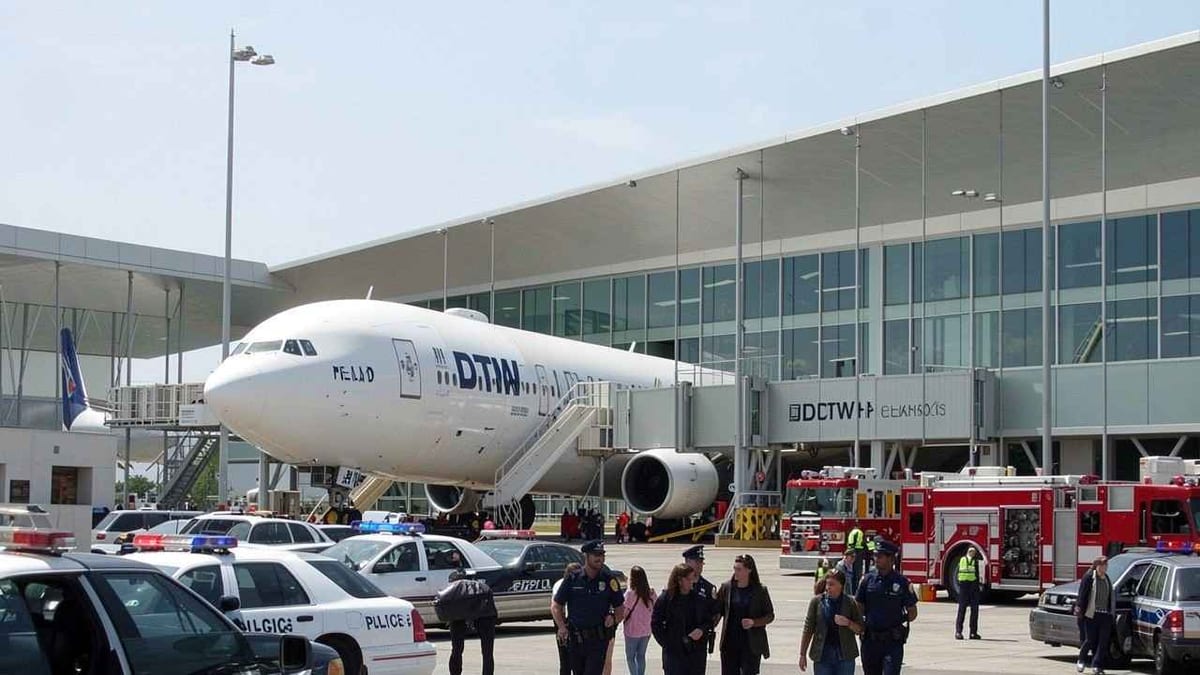
A Southwest Airlines flight operating from Charlotte to Dallas on August 7 made an unscheduled diversion to Oklahoma City Will Rogers World Airport, with publicly available flight-tracking data indicating the Boeing 737 landed safely after the precautionary stop.
Get the latest news straight to your inbox!
Charlotte to Dallas Service Alters Course Midflight
Southwest Airlines Flight SWA1360 was operating a regular domestic service from Charlotte in North Carolina to Dallas in Texas when the crew altered course toward central Oklahoma on August 7. The flight, operated with a Boeing 737-76N, had departed as scheduled before routing changes appeared on flight-tracking platforms, showing the aircraft leaving its expected path toward North Texas.
Data available from public flight-tracking services indicates the aircraft turned north of its original routing and proceeded toward Oklahoma City Will Rogers World Airport. The change in course occurred while the aircraft was in cruise, with the jet then descending gradually toward Oklahoma’s primary commercial airport.
According to those same tracking logs, the flight landed at Oklahoma City without further incident. Ground arrival times recorded online suggest the aircraft taxied to the terminal normally, with no immediate indication of an emergency evacuation or runway closure associated with the diversion.
Information published as of August 9 does not specify a single confirmed cause for the diversion. In comparable cases, U.S. domestic flights have diverted for reasons that can include onboard medical situations, technical concerns identified by flight crews, or weather and traffic constraints at the intended destination.
Oklahoma City Will Rogers World Airport Serves as Alternate
Oklahoma City Will Rogers World Airport frequently serves as an alternate landing option for flights crossing the central United States, including services bound for major Texas hubs. The airport handles a mix of mainline and low cost carriers and has the infrastructure to support unscheduled arrivals such as diversions, with parallel runways, instrument approaches and regular Southwest Airlines operations.
Public information on the airport shows that it is situated southwest of downtown Oklahoma City, with airspace that often provides flexibility for rerouting around weather systems across Texas and the southern Plains. For airlines, these characteristics make it a practical choice when a flight cannot continue to its original destination as planned.
Past records of commercial operations into Oklahoma City highlight that diversions are not uncommon in the region, particularly during periods of convective weather or when downstream airports experience congestion. In such circumstances, re-routing aircraft to an alternate field allows carriers to prioritize safety while maintaining a controlled environment for any additional inspections or passenger care that may be needed.
Because Southwest already serves Oklahoma City on its regular network, operational logistics such as ground handling, refueling and crew coordination are often easier to arrange there than at airports without existing service. That network presence can also simplify the process of rebooking travelers onto later flights toward their intended destination.
Passenger Impact and Downline Scheduling
While detailed accounts from passengers were not immediately available, a diversion of this type typically results in extended travel times and, in some cases, missed onward connections. Travelers on a through flight from Charlotte to Dallas would likely have faced delays while the aircraft was inspected, refueled or repositioned, depending on the reason and duration of the stop in Oklahoma City.
Operationally, a diversion can disrupt an airline’s broader daily schedule. Aircraft and crew assigned to multi-leg rotations may need to be rescheduled, with knock-on effects for subsequent flights using the same aircraft. For a carrier with a high aircraft utilization model, a mid-journey disruption can require adjustments across several routes later in the day.
U.S. carriers including Southwest routinely use a combination of spare aircraft, crew reassignments and selective delays to absorb the impact of such events. Publicly available performance data and prior industry analyses show that most diversions affect a limited number of flights directly, though they can contribute to broader congestion during peak travel periods.
For customers, airlines typically provide updated departure times through mobile apps, text messages and airport display boards. When diversions extend long enough to make same-day continuation impossible, passengers may be rerouted through other hubs on the carrier’s network or accommodated on later departures once the aircraft is cleared to resume service.
Safety Context for U.S. Domestic Diversions
Within commercial aviation, diversions are generally treated as a precautionary measure that places safety ahead of schedule. Industry guidance and historical case studies emphasize that crews are trained to prioritize a timely landing at the most suitable airport whenever conditions on board or at the destination make continuation uncertain.
Studies of U.S. domestic flight operations show that the number of diversions represents a small fraction of total flights each day, even during busy travel seasons. Many are related to weather patterns that can develop quickly along busy corridors, such as those between the southeastern United States and Texas, while others stem from individual aircraft or passenger-related circumstances.
In the case of Flight SWA1360 on August 7, the safe arrival in Oklahoma City aligns with that broader safety-first approach. Public flight-tracking data and the absence of immediate reports of injuries suggest that the diversion was managed in a controlled manner, with the Boeing 737 completing its landing and rollout normally.
As with most similar events, further information about the specific operational rationale may become clearer as schedule data, fleet movements and any subsequent maintenance activity are compiled in the days following the incident. For travelers, the episode serves as a reminder that unscheduled stops are a built-in part of the risk management framework that underpins modern air travel.