


More news on this day
A detailed online account from an American Airlines customer describing an 11-hour disruption at Dallas Fort Worth International Airport is drawing fresh attention to how the carrier manages severe delays at its largest hub.
Get the latest news straight to your inbox!
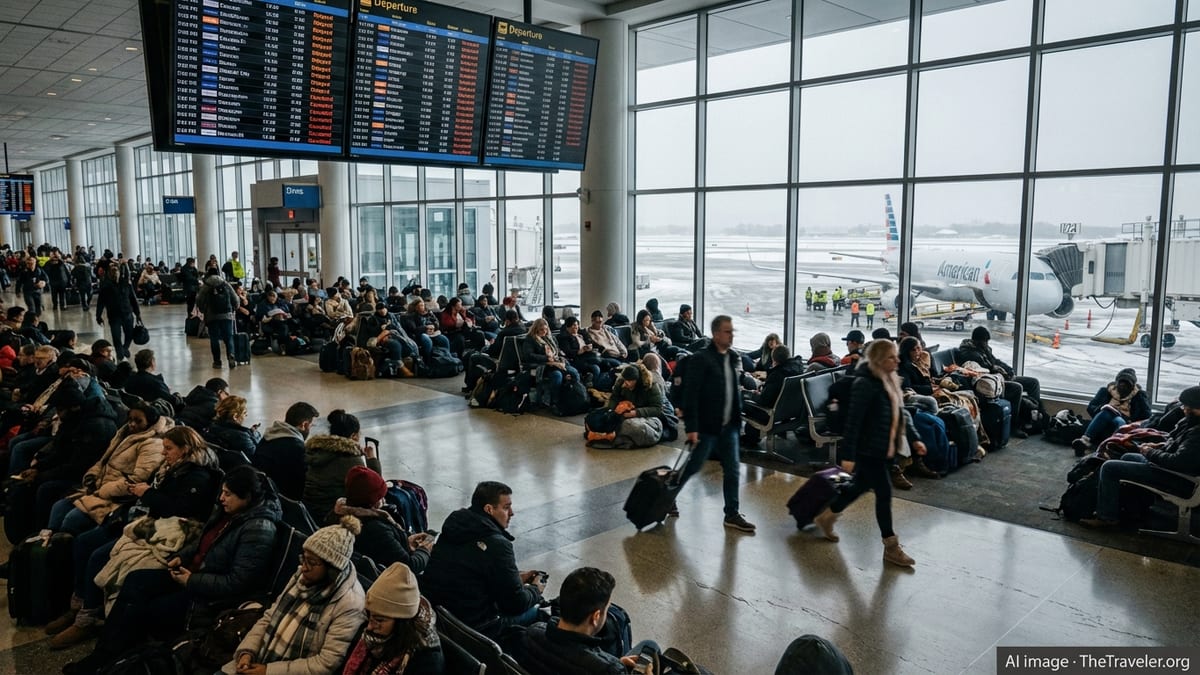
Viral Post Describes Day-Long Delay at Fortress Hub
The incident, described in a lengthy post shared to a popular airline-focused discussion forum in mid-June, recounts an American Airlines customer’s experience of spending roughly 11 hours at Dallas Fort Worth International Airport while attempting to complete a trip with a seven-month-old child. The traveler describes multiple rolling departure-time changes, repeated assurances that the flight would operate, and hours spent in the gate area before the service was ultimately canceled late in the evening.
According to the account, the disruption began with weather in North Texas, triggering a wave of delays and cancellations across American’s schedule at DFW. The passenger writes that what began as a manageable delay turned into an all-day ordeal as crew availability, aircraft swaps and ground stops compounded the original problem. The family ultimately arrived much later than planned and reported compensation of just a few dollars in electronic meal credit for the full day of disruption.
The post quickly attracted extensive responses from other travelers who reported similar experiences at the airport, with several contributors saying they had spent 12 hours or more at DFW during recent storms while waiting for replacement crews that never arrived. Some users characterized the pattern as a recurring issue each late spring and early summer, when thunderstorms regularly sweep across North Texas during peak travel periods.
While individual forum posts cannot be independently verified in full, the themes described by the traveler mirror broader public complaints about rolling delays, limited in-person support and difficulty rebooking when American’s largest hub experiences weather-related disruptions.
Hub Strategy Meets Seasonal Weather and Staffing Constraints
Publicly available information shows that American operates a fortress hub at Dallas Fort Worth, with several hundred daily departures across five terminals and a network built around tight connections. Industry analyses note that this concentration of traffic magnifies the impact of any local disruption, particularly when storms arrive during banked periods when large clusters of flights are scheduled to depart or arrive.
Travelers responding to the 11-hour-delay account pointed out that while airlines cannot control convective weather, network design and staffing decisions influence how quickly an operation can recover. Several contributors argued that the combination of aggressive schedules, limited spare aircraft and crew duty-time limits at DFW can turn an afternoon thunderstorm into an overnight problem, leaving passengers facing long waits at the hub even after weather has moved on.
Commentary from aviation watchers in recent months has also highlighted how automated tools are reshaping airline recovery strategies. American has invested in systems that preemptively adjust schedules and reroute aircraft in response to forecast disruptions, a shift that can reduce last-minute chaos but may also result in earlier cancellations for some flights on days when storms are expected around DFW.
The viral account from the June disruption suggests that, for at least some customers, those tools did not translate into a smoother on-the-ground experience. The traveler reported limited proactive outreach, long lines for assistance and scarce hotel options near the airport once the delay stretched into late night, outcomes that echo complaints posted during earlier weather events at the hub this year.
Digital-First Support Model Tested During Irregular Operations
In parallel with its network investments, American has increasingly shifted customer service at its hubs toward digital channels such as mobile rebooking, automated text updates and QR codes at gates that direct passengers to self-service tools. According to recent coverage of a separate disruption at Ronald Reagan Washington National Airport, the airline has in some cases reduced staffed service desks in favor of directing travelers to online assistance during major schedule interruptions.
Responses to the DFW ordeal describe how that digital-first strategy can become a point of frustration when weather or cascading delays affect large numbers of passengers simultaneously. Several travelers writing about June disruptions at DFW said mobile rebooking tools showed limited options, repeatedly reassigned seats or produced itineraries with missed or unrealistic connections, sending them back to crowded help desks and phone lines.
Other passengers who posted about the same week of storms described receiving hotel vouchers only to find that nearby properties had no remaining rooms, or learning that meal credits did not cover the cost of food at many airport concessions. These reports suggest that, during extended irregular operations, the gap between what is promised in apps and what is actually available on the ground can widen, especially when thousands of travelers are seeking the same limited resources.
Advocacy groups and frequent flyer communities have responded by circulating detailed checklists advising travelers to monitor connecting flights independently, proactively request rerouting to alternative hubs and secure hotel rooms early when forecasts point to severe weather in the Dallas area.
Recent Investments at DFW Highlight Contrast Between Vision and Reality
The passenger’s account emerges at a time when American is publicly promoting a multi-year modernization program at Dallas Fort Worth. The airline and the airport have recently announced new gates, expanded terminals and pilot projects aimed at speeding security, boarding and international connections, positioning DFW as a showcase for the carrier’s future operations.
New pier-style expansions and electronic boarding gates are being framed as part of a broader effort to make the hub more resilient to disruptions and easier to navigate during peak periods. The initiatives include upgraded gate areas, improved baggage systems and technology intended to smooth the flow of passengers through security and onto aircraft.
However, the 11-hour ordeal and similar accounts from this year’s storm season illustrate how infrastructure upgrades and digital tools can collide with the realities of crew scheduling, air traffic control restrictions and sudden changes in weather. For stranded travelers, enhanced boarding gates and modernized terminals offer limited comfort when flights repeatedly slip into later time slots or cancel outright after hours of waiting.
Aviation analysts note that hub reliability is shaped not only by physical facilities but also by how aggressively an airline schedules aircraft, the size of its spare fleet, and its policies around protecting connections when storms or ground stops hit. The latest round of passenger complaints suggests that, for some customers, perceived shortcomings in those operational decisions are overshadowing the benefits of DFW’s modernization.
Growing Scrutiny of Passenger Treatment During Extreme Delays
The DFW passenger’s story also feeds into a wider discussion about what protections travelers should expect when long delays and cancellations occur. Consumer advocates point out that, under current United States rules, airlines are not required in most circumstances to provide hotel rooms or meal vouchers when disruptions are caused by weather, leaving passengers dependent on carrier-specific policies and discretion.
Public databases and prior enforcement actions show that American, like other major carriers, has previously faced regulatory scrutiny over lengthy tarmac delays in which travelers remained onboard aircraft for extended periods. While the recent DFW ordeal took place primarily inside the terminal, the sense of being unable to leave without forfeiting a chance to travel onward was a recurring theme in passengers’ online accounts.
As more travelers document their experiences in real time through social platforms and forums, long days spent at hub airports have become highly visible episodes that can shape public perceptions of an airline’s brand. For American, which depends heavily on DFW as a connecting gateway for both domestic and international traffic, repeated stories of 10 and 12 hour disruptions risk undermining messaging around reliability and customer care.
Travel industry observers say the growing trove of public accounts from hubs such as Dallas Fort Worth is likely to remain a focal point in ongoing debates about airline accountability, passenger rights and how carriers balance operational efficiency with the human cost of lengthy delays.